

9 Aperiodic Order in Nanoplasmonics
337
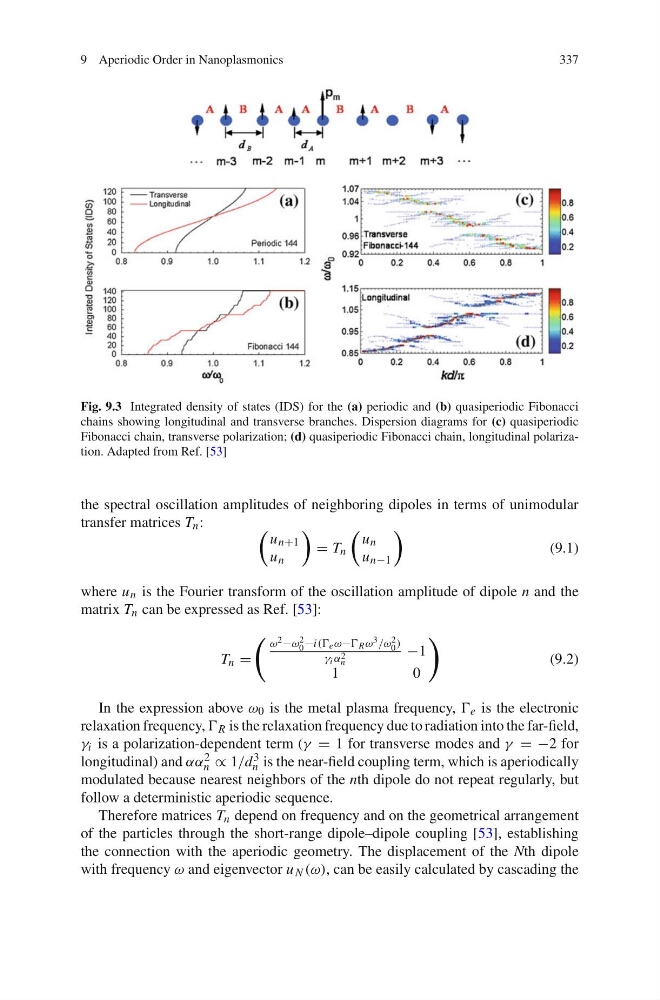
Fig. 9.3 Integrated density of states (IDS) for the (a) periodic and (b) quasiperiodic Fibonacci
chains showing longitudinal and transverse branches. Dispersion diagrams for (c) quasiperiodic
Fibonacci chain, transverse polarization; (d) quasiperiodic Fibonacci chain, longitudinal polarization. Adapted from Ref. [53]
the spectral oscillation amplitudes of neighboring dipoles in terms of unimodular
transfer matrices T n :
u n+1
u n
= T n
u n
u n−1
(9.1)
where u n is the Fourier transform of the oscillation amplitude of dipole n and the
matrix T n can be expressed as Ref. [53]:
T n =
λ 2 −λ 2
0 −i(ω e λ−ω R λ 3 /λ 2
0 )
α i γ 2
n
−1
1
0
(9.2)
In the expression above λ 0 is the metal plasma frequency, ω e is the electronic
relaxation frequency, ω R is the relaxation frequency due to radiation into the far-field,
α i is a polarization-dependent term (α = 1 for transverse modes and α = −2 for
longitudinal) and γγ 2
n ∝ 1/d 3
n is the near-field coupling term, which is aperiodically
modulated because nearest neighbors of the nth dipole do not repeat regularly, but
follow a deterministic aperiodic sequence.
Therefore matrices T n depend on frequency and on the geometrical arrangement
of the particles through the short-range dipole–dipole coupling [53], establishing
the connection with the aperiodic geometry. The displacement of the Nth dipole
with frequency λ and eigenvector u N (λ), can be easily calculated by cascading the
337
Fig. 9.3 Integrated density of states (IDS) for the (a) periodic and (b) quasiperiodic Fibonacci
chains showing longitudinal and transverse branches. Dispersion diagrams for (c) quasiperiodic
Fibonacci chain, transverse polarization; (d) quasiperiodic Fibonacci chain, longitudinal polarization. Adapted from Ref. [53]
the spectral oscillation amplitudes of neighboring dipoles in terms of unimodular
transfer matrices T n :
u n+1
u n
= T n
u n
u n−1
(9.1)
where u n is the Fourier transform of the oscillation amplitude of dipole n and the
matrix T n can be expressed as Ref. [53]:
T n =
λ 2 −λ 2
0 −i(ω e λ−ω R λ 3 /λ 2
0 )
α i γ 2
n
−1
1
0
(9.2)
In the expression above λ 0 is the metal plasma frequency, ω e is the electronic
relaxation frequency, ω R is the relaxation frequency due to radiation into the far-field,
α i is a polarization-dependent term (α = 1 for transverse modes and α = −2 for
longitudinal) and γγ 2
n ∝ 1/d 3
n is the near-field coupling term, which is aperiodically
modulated because nearest neighbors of the nth dipole do not repeat regularly, but
follow a deterministic aperiodic sequence.
Therefore matrices T n depend on frequency and on the geometrical arrangement
of the particles through the short-range dipole–dipole coupling [53], establishing
the connection with the aperiodic geometry. The displacement of the Nth dipole
with frequency λ and eigenvector u N (λ), can be easily calculated by cascading the