

16 Wooden Material and Environmental Sciences
367
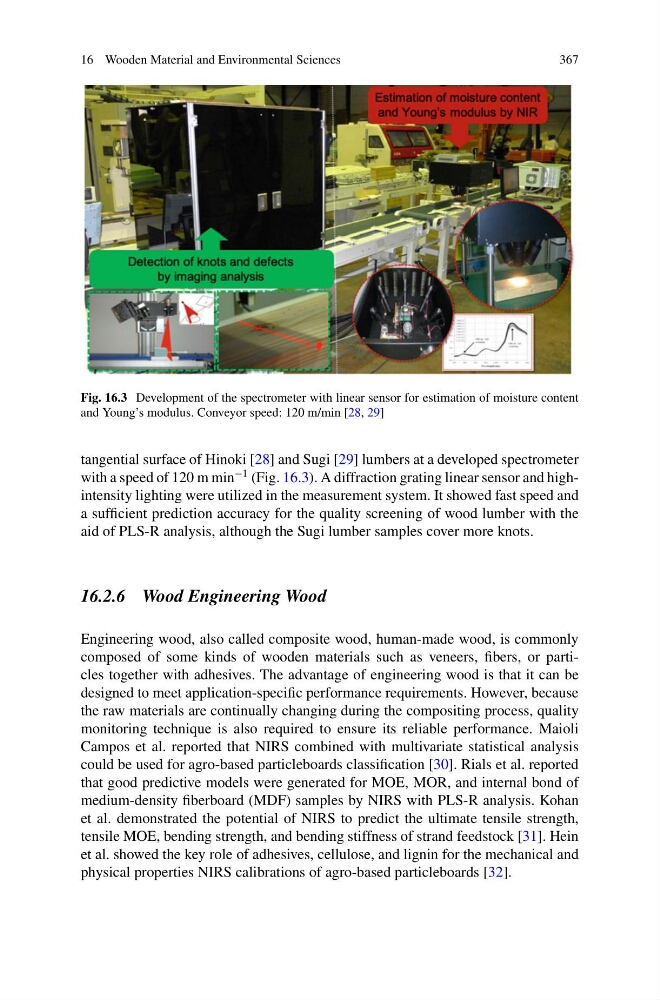
Fig. 16.3 Development of the spectrometer with linear sensor for estimation of moisture content
and Young’s modulus. Conveyor speed: 120 m/min [28, 29]
tangential surface of Hinoki [28] and Sugi [29] lumbers at a developed spectrometer
with a speed of 120 m min
−1 (Fig. 16.3). A diffraction grating linear sensor and highintensity lighting were utilized in the measurement system. It showed fast speed and
a sufficient prediction accuracy for the quality screening of wood lumber with the
aid of PLS-R analysis, although the Sugi lumber samples cover more knots.
16.2.6 Wood Engineering Wood
Engineering wood, also called composite wood, human-made wood, is commonly
composed of some kinds of wooden materials such as veneers, fibers, or particles together with adhesives. The advantage of engineering wood is that it can be
designed to meet application-specific performance requirements. However, because
the raw materials are continually changing during the compositing process, quality
monitoring technique is also required to ensure its reliable performance. Maioli
Campos et al. reported that NIRS combined with multivariate statistical analysis
could be used for agro-based particleboards classification [30]. Rials et al. reported
that good predictive models were generated for MOE, MOR, and internal bond of
medium-density fiberboard (MDF) samples by NIRS with PLS-R analysis. Kohan
et al. demonstrated the potential of NIRS to predict the ultimate tensile strength,
tensile MOE, bending strength, and bending stiffness of strand feedstock [31]. Hein
et al. showed the key role of adhesives, cellulose, and lignin for the mechanical and
physical properties NIRS calibrations of agro-based particleboards [32].
367
Fig. 16.3 Development of the spectrometer with linear sensor for estimation of moisture content
and Young’s modulus. Conveyor speed: 120 m/min [28, 29]
tangential surface of Hinoki [28] and Sugi [29] lumbers at a developed spectrometer
with a speed of 120 m min
−1 (Fig. 16.3). A diffraction grating linear sensor and highintensity lighting were utilized in the measurement system. It showed fast speed and
a sufficient prediction accuracy for the quality screening of wood lumber with the
aid of PLS-R analysis, although the Sugi lumber samples cover more knots.
16.2.6 Wood Engineering Wood
Engineering wood, also called composite wood, human-made wood, is commonly
composed of some kinds of wooden materials such as veneers, fibers, or particles together with adhesives. The advantage of engineering wood is that it can be
designed to meet application-specific performance requirements. However, because
the raw materials are continually changing during the compositing process, quality
monitoring technique is also required to ensure its reliable performance. Maioli
Campos et al. reported that NIRS combined with multivariate statistical analysis
could be used for agro-based particleboards classification [30]. Rials et al. reported
that good predictive models were generated for MOE, MOR, and internal bond of
medium-density fiberboard (MDF) samples by NIRS with PLS-R analysis. Kohan
et al. demonstrated the potential of NIRS to predict the ultimate tensile strength,
tensile MOE, bending strength, and bending stiffness of strand feedstock [31]. Hein
et al. showed the key role of adhesives, cellulose, and lignin for the mechanical and
physical properties NIRS calibrations of agro-based particleboards [32].