

9 NIR Optics and Measurement Methods
229
(a)
(b)
light path
sample
incidence
detecƟon
Incidence
Detection
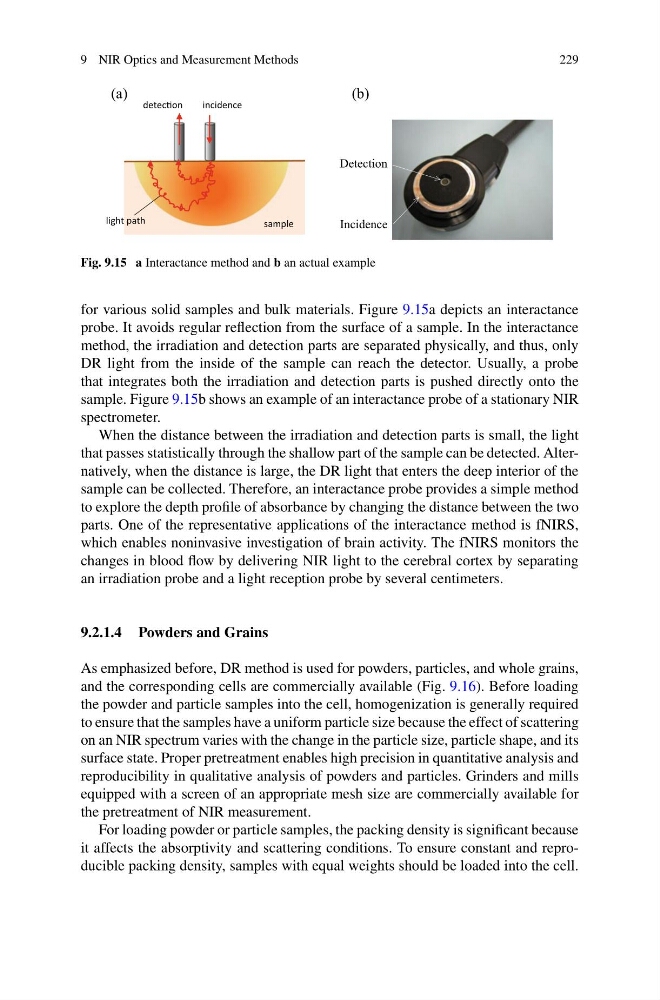
Fig. 9.15 a Interactance method and b an actual example
for various solid samples and bulk materials. Figure 9.15a depicts an interactance
probe. It avoids regular reflection from the surface of a sample. In the interactance
method, the irradiation and detection parts are separated physically, and thus, only
DR light from the inside of the sample can reach the detector. Usually, a probe
that integrates both the irradiation and detection parts is pushed directly onto the
sample. Figure 9.15b shows an example of an interactance probe of a stationary NIR
spectrometer.
When the distance between the irradiation and detection parts is small, the light
that passes statistically through the shallow part of the sample can be detected. Alternatively, when the distance is large, the DR light that enters the deep interior of the
sample can be collected. Therefore, an interactance probe provides a simple method
to explore the depth profile of absorbance by changing the distance between the two
parts. One of the representative applications of the interactance method is fNIRS,
which enables noninvasive investigation of brain activity. The fNIRS monitors the
changes in blood flow by delivering NIR light to the cerebral cortex by separating
an irradiation probe and a light reception probe by several centimeters.
9.2.1.4 Powders and Grains
As emphasized before, DR method is used for powders, particles, and whole grains,
and the corresponding cells are commercially available (Fig. 9.16). Before loading
the powder and particle samples into the cell, homogenization is generally required
to ensure that the samples have a uniform particle size because the effect of scattering
on an NIR spectrum varies with the change in the particle size, particle shape, and its
surface state. Proper pretreatment enables high precision in quantitative analysis and
reproducibility in qualitative analysis of powders and particles. Grinders and mills
equipped with a screen of an appropriate mesh size are commercially available for
the pretreatment of NIR measurement.
For loading powder or particle samples, the packing density is significant because
it affects the absorptivity and scattering conditions. To ensure constant and reproducible packing density, samples with equal weights should be loaded into the cell.
229
(a)
(b)
light path
sample
incidence
detecƟon
Incidence
Detection
Fig. 9.15 a Interactance method and b an actual example
for various solid samples and bulk materials. Figure 9.15a depicts an interactance
probe. It avoids regular reflection from the surface of a sample. In the interactance
method, the irradiation and detection parts are separated physically, and thus, only
DR light from the inside of the sample can reach the detector. Usually, a probe
that integrates both the irradiation and detection parts is pushed directly onto the
sample. Figure 9.15b shows an example of an interactance probe of a stationary NIR
spectrometer.
When the distance between the irradiation and detection parts is small, the light
that passes statistically through the shallow part of the sample can be detected. Alternatively, when the distance is large, the DR light that enters the deep interior of the
sample can be collected. Therefore, an interactance probe provides a simple method
to explore the depth profile of absorbance by changing the distance between the two
parts. One of the representative applications of the interactance method is fNIRS,
which enables noninvasive investigation of brain activity. The fNIRS monitors the
changes in blood flow by delivering NIR light to the cerebral cortex by separating
an irradiation probe and a light reception probe by several centimeters.
9.2.1.4 Powders and Grains
As emphasized before, DR method is used for powders, particles, and whole grains,
and the corresponding cells are commercially available (Fig. 9.16). Before loading
the powder and particle samples into the cell, homogenization is generally required
to ensure that the samples have a uniform particle size because the effect of scattering
on an NIR spectrum varies with the change in the particle size, particle shape, and its
surface state. Proper pretreatment enables high precision in quantitative analysis and
reproducibility in qualitative analysis of powders and particles. Grinders and mills
equipped with a screen of an appropriate mesh size are commercially available for
the pretreatment of NIR measurement.
For loading powder or particle samples, the packing density is significant because
it affects the absorptivity and scattering conditions. To ensure constant and reproducible packing density, samples with equal weights should be loaded into the cell.