

Crystallization of Amorphous Pharmaceuticals at Ambient and Elevated …
59
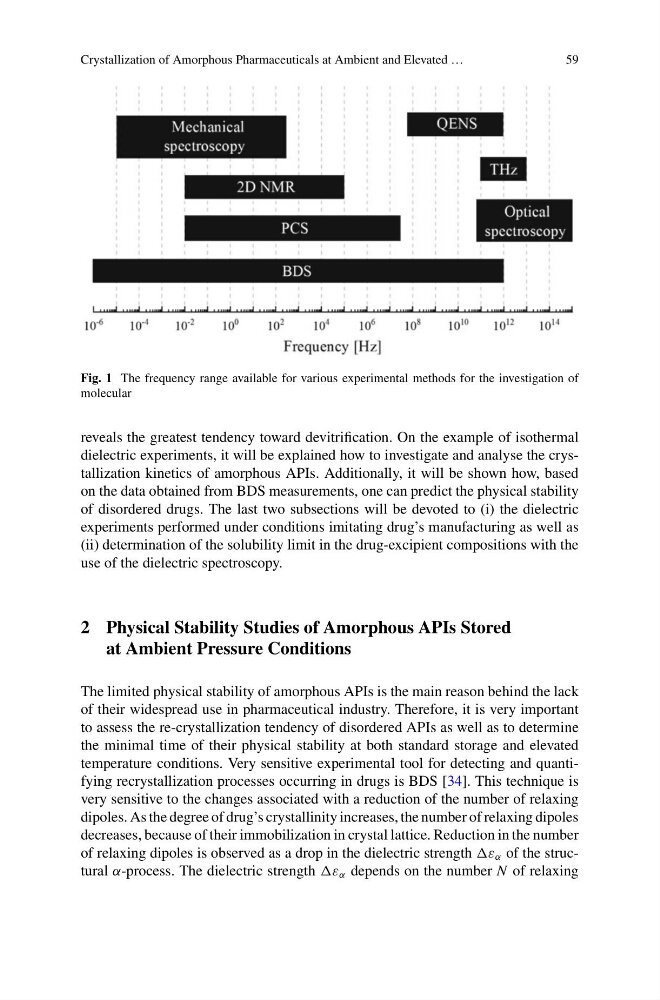
Fig. 1 The frequency range available for various experimental methods for the investigation of
molecular
reveals the greatest tendency toward devitrification. On the example of isothermal
dielectric experiments, it will be explained how to investigate and analyse the crystallization kinetics of amorphous APIs. Additionally, it will be shown how, based
on the data obtained from BDS measurements, one can predict the physical stability
of disordered drugs. The last two subsections will be devoted to (i) the dielectric
experiments performed under conditions imitating drug’s manufacturing as well as
(ii) determination of the solubility limit in the drug-excipient compositions with the
use of the dielectric spectroscopy.
2 Physical Stability Studies of Amorphous APIs Stored
at Ambient Pressure Conditions
The limited physical stability of amorphous APIs is the main reason behind the lack
of their widespread use in pharmaceutical industry. Therefore, it is very important
to assess the re-crystallization tendency of disordered APIs as well as to determine
the minimal time of their physical stability at both standard storage and elevated
temperature conditions. Very sensitive experimental tool for detecting and quantifying recrystallization processes occurring in drugs is BDS [34]. This technique is
very sensitive to the changes associated with a reduction of the number of relaxing
dipoles. As the degree of drug’s crystallinity increases, the number of relaxing dipoles
decreases, because of their immobilization in crystal lattice. Reduction in the number
of relaxing dipoles is observed as a drop in the dielectric strength ε α of the structural α-process. The dielectric strength ε α depends on the number N of relaxing
59
Fig. 1 The frequency range available for various experimental methods for the investigation of
molecular
reveals the greatest tendency toward devitrification. On the example of isothermal
dielectric experiments, it will be explained how to investigate and analyse the crystallization kinetics of amorphous APIs. Additionally, it will be shown how, based
on the data obtained from BDS measurements, one can predict the physical stability
of disordered drugs. The last two subsections will be devoted to (i) the dielectric
experiments performed under conditions imitating drug’s manufacturing as well as
(ii) determination of the solubility limit in the drug-excipient compositions with the
use of the dielectric spectroscopy.
2 Physical Stability Studies of Amorphous APIs Stored
at Ambient Pressure Conditions
The limited physical stability of amorphous APIs is the main reason behind the lack
of their widespread use in pharmaceutical industry. Therefore, it is very important
to assess the re-crystallization tendency of disordered APIs as well as to determine
the minimal time of their physical stability at both standard storage and elevated
temperature conditions. Very sensitive experimental tool for detecting and quantifying recrystallization processes occurring in drugs is BDS [34]. This technique is
very sensitive to the changes associated with a reduction of the number of relaxing
dipoles. As the degree of drug’s crystallinity increases, the number of relaxing dipoles
decreases, because of their immobilization in crystal lattice. Reduction in the number
of relaxing dipoles is observed as a drop in the dielectric strength ε α of the structural α-process. The dielectric strength ε α depends on the number N of relaxing