

Machine Learning and the Bigdata Paradigm
163
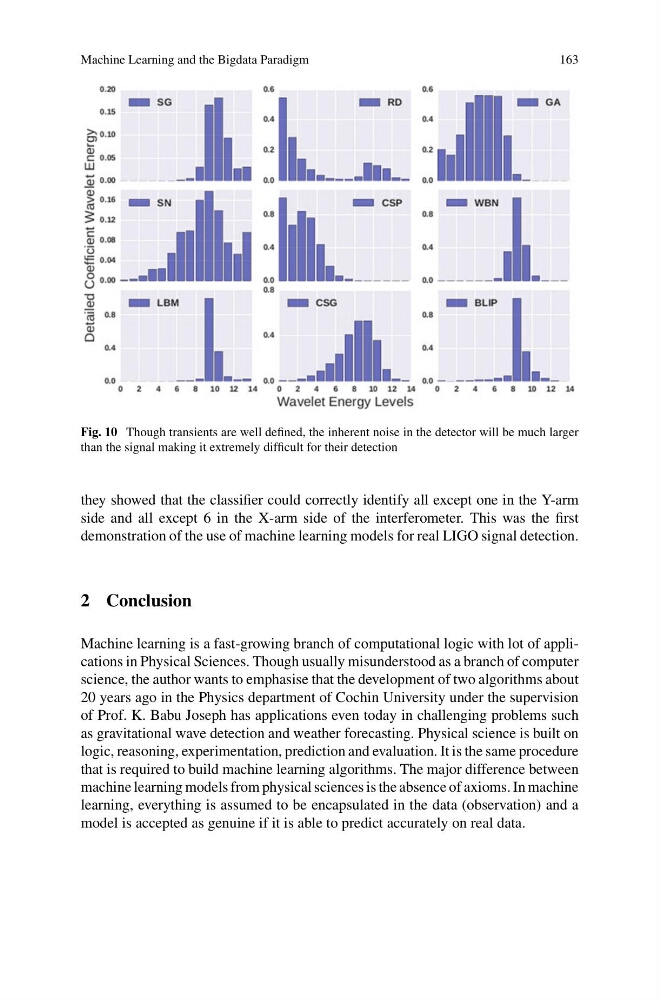
Fig. 10 Though transients are well defined, the inherent noise in the detector will be much larger
than the signal making it extremely difficult for their detection
they showed that the classifier could correctly identify all except one in the Y-arm
side and all except 6 in the X-arm side of the interferometer. This was the first
demonstration of the use of machine learning models for real LIGO signal detection.
2 Conclusion
Machine learning is a fast-growing branch of computational logic with lot of applications in Physical Sciences. Though usually misunderstood as a branch of computer
science, the author wants to emphasise that the development of two algorithms about
20 years ago in the Physics department of Cochin University under the supervision
of Prof. K. Babu Joseph has applications even today in challenging problems such
as gravitational wave detection and weather forecasting. Physical science is built on
logic, reasoning, experimentation, prediction and evaluation. It is the same procedure
that is required to build machine learning algorithms. The major difference between
machine learning models from physical sciences is the absence of axioms. In machine
learning, everything is assumed to be encapsulated in the data (observation) and a
model is accepted as genuine if it is able to predict accurately on real data.
163
Fig. 10 Though transients are well defined, the inherent noise in the detector will be much larger
than the signal making it extremely difficult for their detection
they showed that the classifier could correctly identify all except one in the Y-arm
side and all except 6 in the X-arm side of the interferometer. This was the first
demonstration of the use of machine learning models for real LIGO signal detection.
2 Conclusion
Machine learning is a fast-growing branch of computational logic with lot of applications in Physical Sciences. Though usually misunderstood as a branch of computer
science, the author wants to emphasise that the development of two algorithms about
20 years ago in the Physics department of Cochin University under the supervision
of Prof. K. Babu Joseph has applications even today in challenging problems such
as gravitational wave detection and weather forecasting. Physical science is built on
logic, reasoning, experimentation, prediction and evaluation. It is the same procedure
that is required to build machine learning algorithms. The major difference between
machine learning models from physical sciences is the absence of axioms. In machine
learning, everything is assumed to be encapsulated in the data (observation) and a
model is accepted as genuine if it is able to predict accurately on real data.