

150
R. P. Ignatius
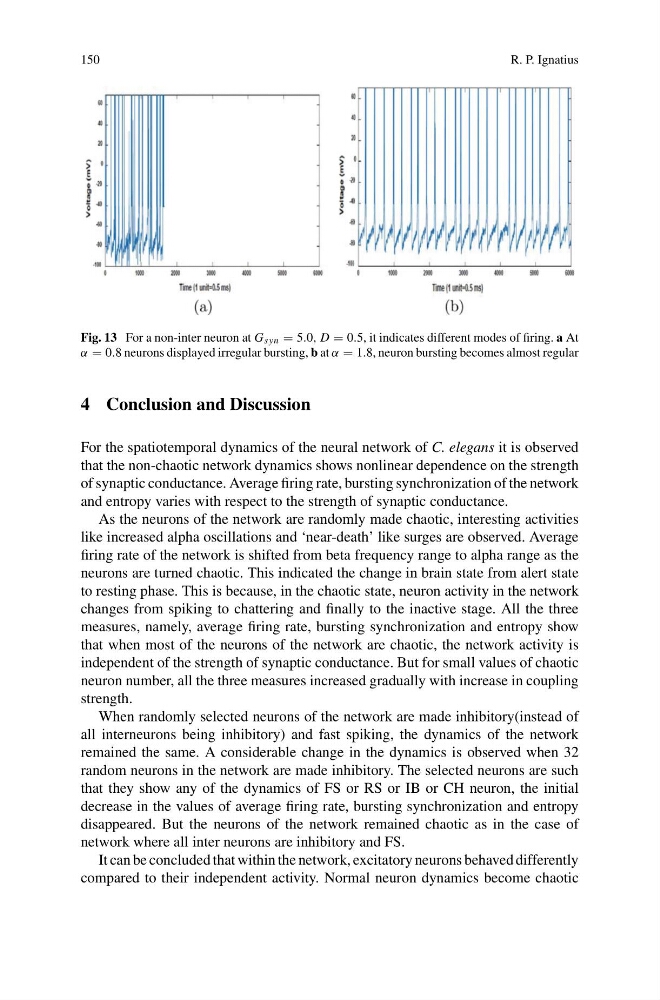
Fig. 13 For a non-inter neuron at G syn = 5.0, D = 0.5, it indicates different modes of firing. a At
α = 0.8 neurons displayed irregular bursting, b at α = 1.8, neuron bursting becomes almost regular
4 Conclusion and Discussion
For the spatiotemporal dynamics of the neural network of C. elegans it is observed
that the non-chaotic network dynamics shows nonlinear dependence on the strength
of synaptic conductance. Average firing rate, bursting synchronization of the network
and entropy varies with respect to the strength of synaptic conductance.
As the neurons of the network are randomly made chaotic, interesting activities
like increased alpha oscillations and ‘near-death’ like surges are observed. Average
firing rate of the network is shifted from beta frequency range to alpha range as the
neurons are turned chaotic. This indicated the change in brain state from alert state
to resting phase. This is because, in the chaotic state, neuron activity in the network
changes from spiking to chattering and finally to the inactive stage. All the three
measures, namely, average firing rate, bursting synchronization and entropy show
that when most of the neurons of the network are chaotic, the network activity is
independent of the strength of synaptic conductance. But for small values of chaotic
neuron number, all the three measures increased gradually with increase in coupling
strength.
When randomly selected neurons of the network are made inhibitory(instead of
all interneurons being inhibitory) and fast spiking, the dynamics of the network
remained the same. A considerable change in the dynamics is observed when 32
random neurons in the network are made inhibitory. The selected neurons are such
that they show any of the dynamics of FS or RS or IB or CH neuron, the initial
decrease in the values of average firing rate, bursting synchronization and entropy
disappeared. But the neurons of the network remained chaotic as in the case of
network where all inter neurons are inhibitory and FS.
It can be concluded that within the network, excitatory neurons behaved differently
compared to their independent activity. Normal neuron dynamics become chaotic
R. P. Ignatius
Fig. 13 For a non-inter neuron at G syn = 5.0, D = 0.5, it indicates different modes of firing. a At
α = 0.8 neurons displayed irregular bursting, b at α = 1.8, neuron bursting becomes almost regular
4 Conclusion and Discussion
For the spatiotemporal dynamics of the neural network of C. elegans it is observed
that the non-chaotic network dynamics shows nonlinear dependence on the strength
of synaptic conductance. Average firing rate, bursting synchronization of the network
and entropy varies with respect to the strength of synaptic conductance.
As the neurons of the network are randomly made chaotic, interesting activities
like increased alpha oscillations and ‘near-death’ like surges are observed. Average
firing rate of the network is shifted from beta frequency range to alpha range as the
neurons are turned chaotic. This indicated the change in brain state from alert state
to resting phase. This is because, in the chaotic state, neuron activity in the network
changes from spiking to chattering and finally to the inactive stage. All the three
measures, namely, average firing rate, bursting synchronization and entropy show
that when most of the neurons of the network are chaotic, the network activity is
independent of the strength of synaptic conductance. But for small values of chaotic
neuron number, all the three measures increased gradually with increase in coupling
strength.
When randomly selected neurons of the network are made inhibitory(instead of
all interneurons being inhibitory) and fast spiking, the dynamics of the network
remained the same. A considerable change in the dynamics is observed when 32
random neurons in the network are made inhibitory. The selected neurons are such
that they show any of the dynamics of FS or RS or IB or CH neuron, the initial
decrease in the values of average firing rate, bursting synchronization and entropy
disappeared. But the neurons of the network remained chaotic as in the case of
network where all inter neurons are inhibitory and FS.
It can be concluded that within the network, excitatory neurons behaved differently
compared to their independent activity. Normal neuron dynamics become chaotic