

142
R. P. Ignatius
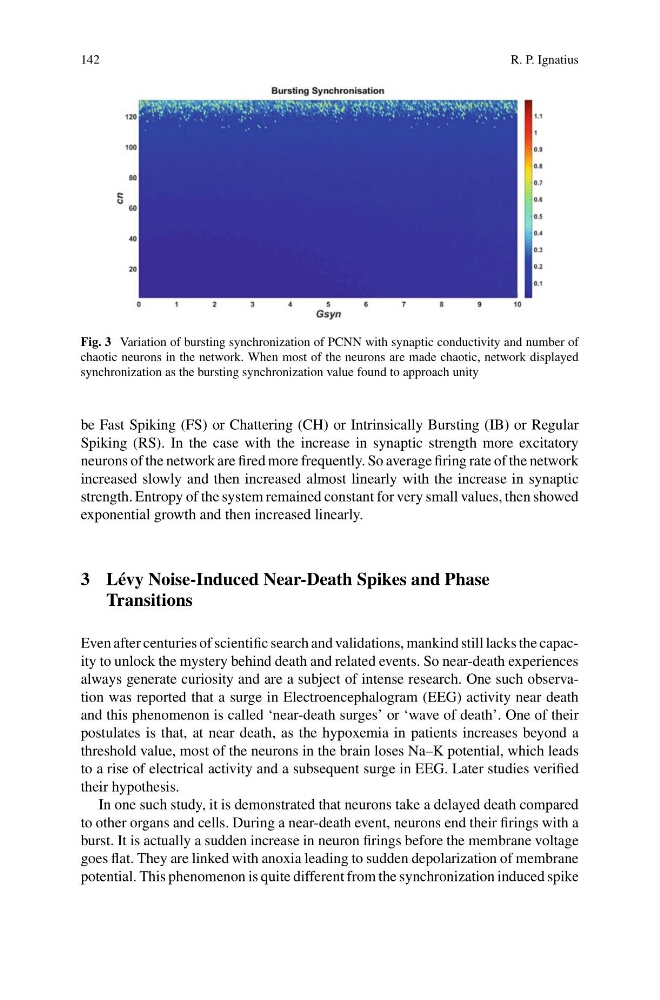
Fig. 3 Variation of bursting synchronization of PCNN with synaptic conductivity and number of
chaotic neurons in the network. When most of the neurons are made chaotic, network displayed
synchronization as the bursting synchronization value found to approach unity
be Fast Spiking (FS) or Chattering (CH) or Intrinsically Bursting (IB) or Regular
Spiking (RS). In the case with the increase in synaptic strength more excitatory
neurons of the network are fired more frequently. So average firing rate of the network
increased slowly and then increased almost linearly with the increase in synaptic
strength. Entropy of the system remained constant for very small values, then showed
exponential growth and then increased linearly.
3 Lévy Noise-Induced Near-Death Spikes and Phase
Transitions
Even after centuries of scientific search and validations, mankind still lacks the capacity to unlock the mystery behind death and related events. So near-death experiences
always generate curiosity and are a subject of intense research. One such observation was reported that a surge in Electroencephalogram (EEG) activity near death
and this phenomenon is called ‘near-death surges’ or ‘wave of death’. One of their
postulates is that, at near death, as the hypoxemia in patients increases beyond a
threshold value, most of the neurons in the brain loses Na–K potential, which leads
to a rise of electrical activity and a subsequent surge in EEG. Later studies verified
their hypothesis.
In one such study, it is demonstrated that neurons take a delayed death compared
to other organs and cells. During a near-death event, neurons end their firings with a
burst. It is actually a sudden increase in neuron firings before the membrane voltage
goes flat. They are linked with anoxia leading to sudden depolarization of membrane
potential. This phenomenon is quite different from the synchronization induced spike
R. P. Ignatius
Fig. 3 Variation of bursting synchronization of PCNN with synaptic conductivity and number of
chaotic neurons in the network. When most of the neurons are made chaotic, network displayed
synchronization as the bursting synchronization value found to approach unity
be Fast Spiking (FS) or Chattering (CH) or Intrinsically Bursting (IB) or Regular
Spiking (RS). In the case with the increase in synaptic strength more excitatory
neurons of the network are fired more frequently. So average firing rate of the network
increased slowly and then increased almost linearly with the increase in synaptic
strength. Entropy of the system remained constant for very small values, then showed
exponential growth and then increased linearly.
3 Lévy Noise-Induced Near-Death Spikes and Phase
Transitions
Even after centuries of scientific search and validations, mankind still lacks the capacity to unlock the mystery behind death and related events. So near-death experiences
always generate curiosity and are a subject of intense research. One such observation was reported that a surge in Electroencephalogram (EEG) activity near death
and this phenomenon is called ‘near-death surges’ or ‘wave of death’. One of their
postulates is that, at near death, as the hypoxemia in patients increases beyond a
threshold value, most of the neurons in the brain loses Na–K potential, which leads
to a rise of electrical activity and a subsequent surge in EEG. Later studies verified
their hypothesis.
In one such study, it is demonstrated that neurons take a delayed death compared
to other organs and cells. During a near-death event, neurons end their firings with a
burst. It is actually a sudden increase in neuron firings before the membrane voltage
goes flat. They are linked with anoxia leading to sudden depolarization of membrane
potential. This phenomenon is quite different from the synchronization induced spike