

2.7 Numerical Simulation of Fluid Flow in Weld Pool …
57
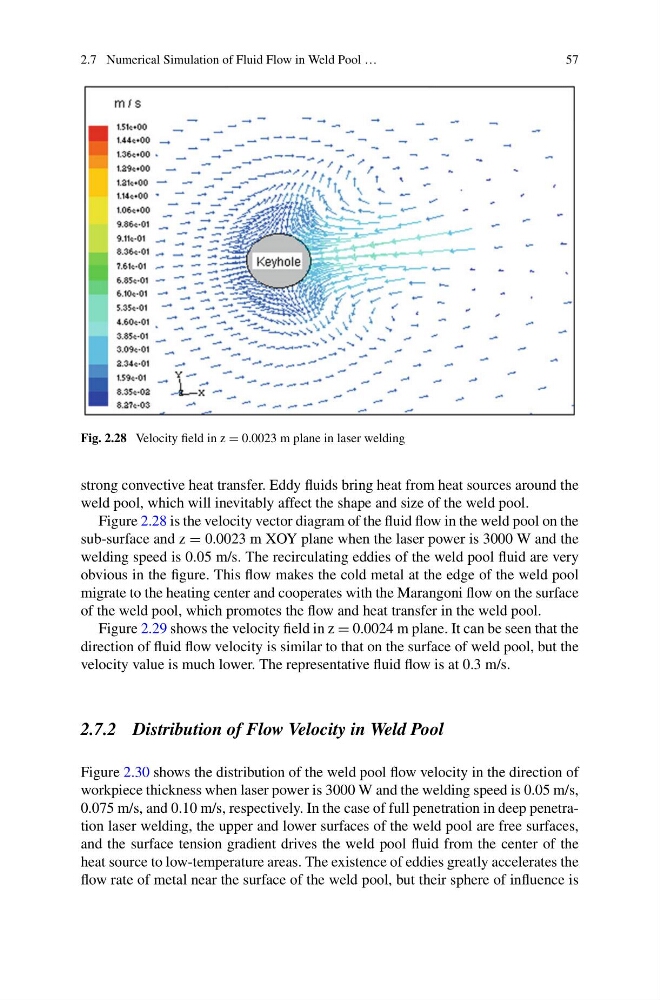
Fig. 2.28 Velocity field in z = 0.0023 m plane in laser welding
strong convective heat transfer. Eddy fluids bring heat from heat sources around the
weld pool, which will inevitably affect the shape and size of the weld pool.
Figure 2.28 is the velocity vector diagram of the fluid flow in the weld pool on the
sub-surface and z = 0.0023 m XOY plane when the laser power is 3000 W and the
welding speed is 0.05 m/s. The recirculating eddies of the weld pool fluid are very
obvious in the figure. This flow makes the cold metal at the edge of the weld pool
migrate to the heating center and cooperates with the Marangoni flow on the surface
of the weld pool, which promotes the flow and heat transfer in the weld pool.
Figure 2.29 shows the velocity field in z = 0.0024 m plane. It can be seen that the
direction of fluid flow velocity is similar to that on the surface of weld pool, but the
velocity value is much lower. The representative fluid flow is at 0.3 m/s.
2.7.2 Distribution of Flow Velocity in Weld Pool
Figure 2.30 shows the distribution of the weld pool flow velocity in the direction of
workpiece thickness when laser power is 3000 W and the welding speed is 0.05 m/s,
0.075 m/s, and 0.10 m/s, respectively. In the case of full penetration in deep penetration laser welding, the upper and lower surfaces of the weld pool are free surfaces,
and the surface tension gradient drives the weld pool fluid from the center of the
heat source to low-temperature areas. The existence of eddies greatly accelerates the
flow rate of metal near the surface of the weld pool, but their sphere of influence is
57
Fig. 2.28 Velocity field in z = 0.0023 m plane in laser welding
strong convective heat transfer. Eddy fluids bring heat from heat sources around the
weld pool, which will inevitably affect the shape and size of the weld pool.
Figure 2.28 is the velocity vector diagram of the fluid flow in the weld pool on the
sub-surface and z = 0.0023 m XOY plane when the laser power is 3000 W and the
welding speed is 0.05 m/s. The recirculating eddies of the weld pool fluid are very
obvious in the figure. This flow makes the cold metal at the edge of the weld pool
migrate to the heating center and cooperates with the Marangoni flow on the surface
of the weld pool, which promotes the flow and heat transfer in the weld pool.
Figure 2.29 shows the velocity field in z = 0.0024 m plane. It can be seen that the
direction of fluid flow velocity is similar to that on the surface of weld pool, but the
velocity value is much lower. The representative fluid flow is at 0.3 m/s.
2.7.2 Distribution of Flow Velocity in Weld Pool
Figure 2.30 shows the distribution of the weld pool flow velocity in the direction of
workpiece thickness when laser power is 3000 W and the welding speed is 0.05 m/s,
0.075 m/s, and 0.10 m/s, respectively. In the case of full penetration in deep penetration laser welding, the upper and lower surfaces of the weld pool are free surfaces,
and the surface tension gradient drives the weld pool fluid from the center of the
heat source to low-temperature areas. The existence of eddies greatly accelerates the
flow rate of metal near the surface of the weld pool, but their sphere of influence is