

2.5 Effect of Welding Speed on Keyhole Profile
41
Top of weld pool
Top of keyhole
Local temperature /K
Position (m)
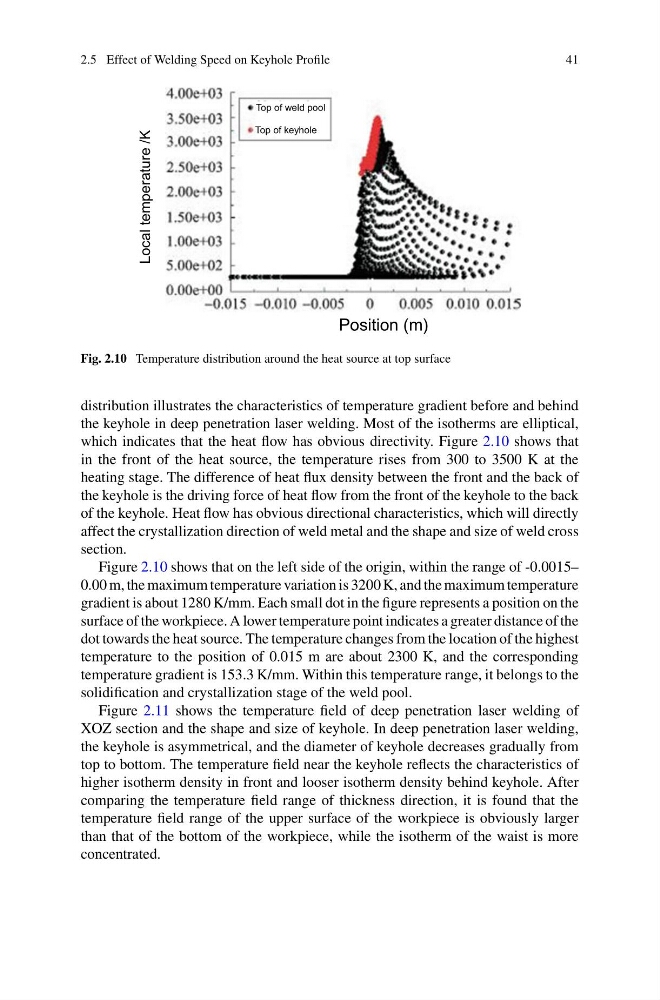
Fig. 2.10 Temperature distribution around the heat source at top surface
distribution illustrates the characteristics of temperature gradient before and behind
the keyhole in deep penetration laser welding. Most of the isotherms are elliptical,
which indicates that the heat flow has obvious directivity. Figure 2.10 shows that
in the front of the heat source, the temperature rises from 300 to 3500 K at the
heating stage. The difference of heat flux density between the front and the back of
the keyhole is the driving force of heat flow from the front of the keyhole to the back
of the keyhole. Heat flow has obvious directional characteristics, which will directly
affect the crystallization direction of weld metal and the shape and size of weld cross
section.
Figure 2.10 shows that on the left side of the origin, within the range of -0.0015–
0.00 m, the maximum temperature variation is 3200 K, and the maximum temperature
gradient is about 1280 K/mm. Each small dot in the figure represents a position on the
surface of the workpiece. A lower temperature point indicates a greater distance of the
dot towards the heat source. The temperature changes from the location of the highest
temperature to the position of 0.015 m are about 2300 K, and the corresponding
temperature gradient is 153.3 K/mm. Within this temperature range, it belongs to the
solidification and crystallization stage of the weld pool.
Figure 2.11 shows the temperature field of deep penetration laser welding of
XOZ section and the shape and size of keyhole. In deep penetration laser welding,
the keyhole is asymmetrical, and the diameter of keyhole decreases gradually from
top to bottom. The temperature field near the keyhole reflects the characteristics of
higher isotherm density in front and looser isotherm density behind keyhole. After
comparing the temperature field range of thickness direction, it is found that the
temperature field range of the upper surface of the workpiece is obviously larger
than that of the bottom of the workpiece, while the isotherm of the waist is more
concentrated.
41
Top of weld pool
Top of keyhole
Local temperature /K
Position (m)
Fig. 2.10 Temperature distribution around the heat source at top surface
distribution illustrates the characteristics of temperature gradient before and behind
the keyhole in deep penetration laser welding. Most of the isotherms are elliptical,
which indicates that the heat flow has obvious directivity. Figure 2.10 shows that
in the front of the heat source, the temperature rises from 300 to 3500 K at the
heating stage. The difference of heat flux density between the front and the back of
the keyhole is the driving force of heat flow from the front of the keyhole to the back
of the keyhole. Heat flow has obvious directional characteristics, which will directly
affect the crystallization direction of weld metal and the shape and size of weld cross
section.
Figure 2.10 shows that on the left side of the origin, within the range of -0.0015–
0.00 m, the maximum temperature variation is 3200 K, and the maximum temperature
gradient is about 1280 K/mm. Each small dot in the figure represents a position on the
surface of the workpiece. A lower temperature point indicates a greater distance of the
dot towards the heat source. The temperature changes from the location of the highest
temperature to the position of 0.015 m are about 2300 K, and the corresponding
temperature gradient is 153.3 K/mm. Within this temperature range, it belongs to the
solidification and crystallization stage of the weld pool.
Figure 2.11 shows the temperature field of deep penetration laser welding of
XOZ section and the shape and size of keyhole. In deep penetration laser welding,
the keyhole is asymmetrical, and the diameter of keyhole decreases gradually from
top to bottom. The temperature field near the keyhole reflects the characteristics of
higher isotherm density in front and looser isotherm density behind keyhole. After
comparing the temperature field range of thickness direction, it is found that the
temperature field range of the upper surface of the workpiece is obviously larger
than that of the bottom of the workpiece, while the isotherm of the waist is more
concentrated.