

74
societies, either human or not. It is in this context that the señas, perceived as hints
of the intentions of a great diversity of social beings, become crucial in the organization of the Moqoit experience of the world.
sphere, and ‘politics’ to eradicate the notion of a given list of relevant entities from ‘cosmos’. Other
authors such as Marisol de La Cadena (2010) or Mario Blaser (2016) use this concept in a similar
fashion. Likewise, our use of the term is related to that of Viveiros de Castro (2010), which can be
linked with his comments on Amazonic shamans (Viveiros de Castro, 1996: 119–120). According
to the author, the latter are characterized by their ability to ‘deliberately cross bodily barriers and
adopt the perspective of [other] subjectivities […] in order to manage the relationships between
these and human beings’ (Viveiros de Castro, 2002: 358). He sees this as a true ‘political art, a
diplomacy’ (Viveiros de Castro, 2002: 358). In this direction, we understand Moqoit cosmo-politics as practices and theories on the power relations of diverse human and non-human social collectives, which structure the Moqoit world.
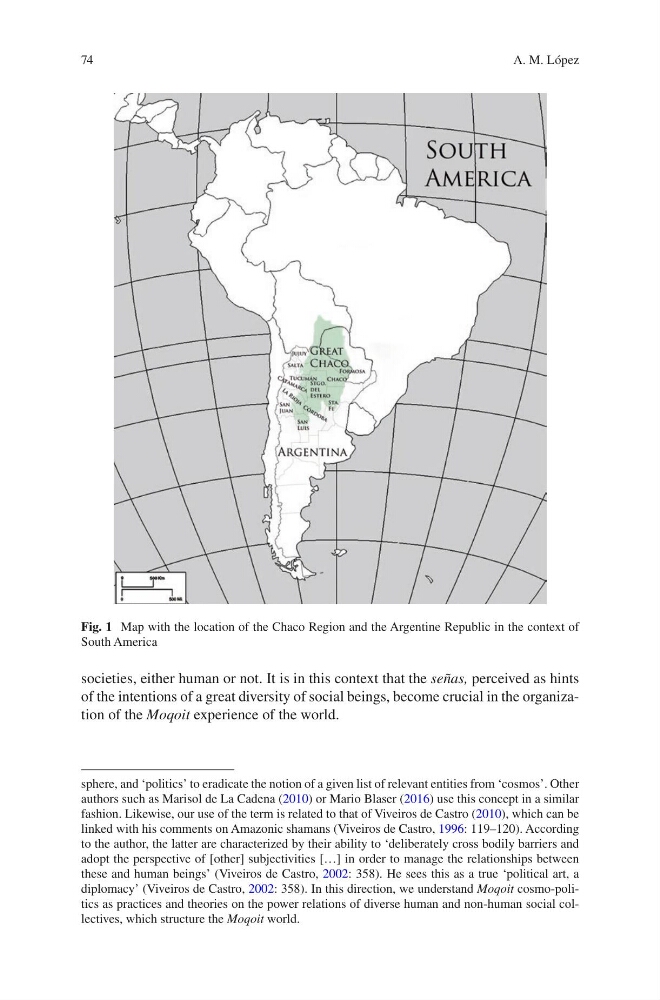
Fig. 1 Map with the location of the Chaco Region and the Argentine Republic in the context of
South America
A. M. López
societies, either human or not. It is in this context that the señas, perceived as hints
of the intentions of a great diversity of social beings, become crucial in the organization of the Moqoit experience of the world.
sphere, and ‘politics’ to eradicate the notion of a given list of relevant entities from ‘cosmos’. Other
authors such as Marisol de La Cadena (2010) or Mario Blaser (2016) use this concept in a similar
fashion. Likewise, our use of the term is related to that of Viveiros de Castro (2010), which can be
linked with his comments on Amazonic shamans (Viveiros de Castro, 1996: 119–120). According
to the author, the latter are characterized by their ability to ‘deliberately cross bodily barriers and
adopt the perspective of [other] subjectivities […] in order to manage the relationships between
these and human beings’ (Viveiros de Castro, 2002: 358). He sees this as a true ‘political art, a
diplomacy’ (Viveiros de Castro, 2002: 358). In this direction, we understand Moqoit cosmo-politics as practices and theories on the power relations of diverse human and non-human social collectives, which structure the Moqoit world.
Fig. 1 Map with the location of the Chaco Region and the Argentine Republic in the context of
South America
A. M. López