

296
2.3 Octagonal Shape: Inspired by the Tower of the Winds
in Athens
The architect Sir Christopher Wren (1632–1723) constructed the Royal Greenwich
Observatory (1675) for the first Astronomer Royal John Flamsteed (1646–1719).
We find here an interesting feature, inspired by Antiquity, the octagonal observing
room in the centre, in order to have observation possibilities in all cardinal directions. This can be found relatively often in observatories until around 1800 and first
emerges in Antiquity. Such an example is this famous building in the Roman Agora
in Athens, the Tower of the Winds, with wind deities (Greek: Ἄνεμοι) carved on
each of their respective eight cardinal directions, as well as sun dials on the walls.
Andronikos of Kyrrhos, ca. 100 BC, built this 14-m-high tower with a conical roof
and a weather vane (in the shape of a blowing Triton). It is mentioned in Vitruvius
(De architectura libri decem I.6, 4–5) as “turris marmorea octagonos” and Varro
(De re rustica III.5, 17) calls it “Horologium”. A round annex in the South contained a water tank and tubes. Kienast (2014) presented a new interesting interpretation of the tower not only as clock tower with water meter (clepsydra), but also as a
planetarium, a symbol of the cosmic order. The “dome” inside is interpreted as a
representation of the starry sky, decorated with golden stars, whilst the water mechanism drives a large bronze armillary sphere with the orbits of the planets.
The best example, copying the Tower of the Winds in Athens, is Radcliffe
Observatory of Oxford University (Fig. 4). In 1772 the octagonal Tower of the
Winds (decorated with eight wind gods and zodiac signs), was placed above a
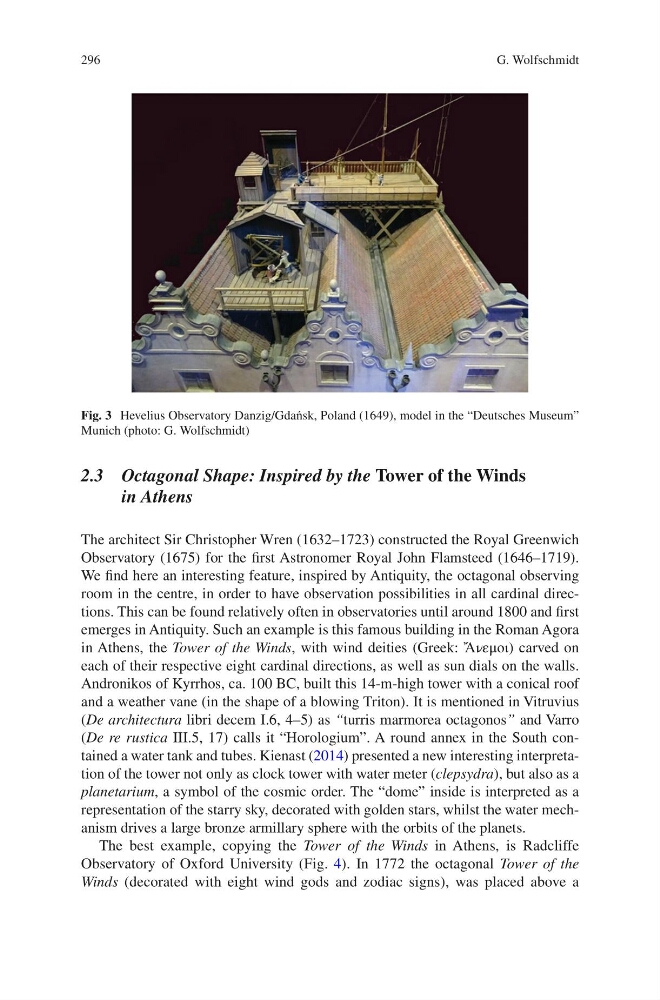
Fig. 3 Hevelius Observatory Danzig/Gdańsk, Poland (1649), model in the “Deutsches Museum”
Munich (photo: G. Wolfschmidt)
G. Wolfschmidt
2.3 Octagonal Shape: Inspired by the Tower of the Winds
in Athens
The architect Sir Christopher Wren (1632–1723) constructed the Royal Greenwich
Observatory (1675) for the first Astronomer Royal John Flamsteed (1646–1719).
We find here an interesting feature, inspired by Antiquity, the octagonal observing
room in the centre, in order to have observation possibilities in all cardinal directions. This can be found relatively often in observatories until around 1800 and first
emerges in Antiquity. Such an example is this famous building in the Roman Agora
in Athens, the Tower of the Winds, with wind deities (Greek: Ἄνεμοι) carved on
each of their respective eight cardinal directions, as well as sun dials on the walls.
Andronikos of Kyrrhos, ca. 100 BC, built this 14-m-high tower with a conical roof
and a weather vane (in the shape of a blowing Triton). It is mentioned in Vitruvius
(De architectura libri decem I.6, 4–5) as “turris marmorea octagonos” and Varro
(De re rustica III.5, 17) calls it “Horologium”. A round annex in the South contained a water tank and tubes. Kienast (2014) presented a new interesting interpretation of the tower not only as clock tower with water meter (clepsydra), but also as a
planetarium, a symbol of the cosmic order. The “dome” inside is interpreted as a
representation of the starry sky, decorated with golden stars, whilst the water mechanism drives a large bronze armillary sphere with the orbits of the planets.
The best example, copying the Tower of the Winds in Athens, is Radcliffe
Observatory of Oxford University (Fig. 4). In 1772 the octagonal Tower of the
Winds (decorated with eight wind gods and zodiac signs), was placed above a
Fig. 3 Hevelius Observatory Danzig/Gdańsk, Poland (1649), model in the “Deutsches Museum”
Munich (photo: G. Wolfschmidt)
G. Wolfschmidt