

20
Few studies, if any, have been performed in the shores of Levant that can offer a
clue of an ‘equinoctial’ custom perhaps imported from the Middle East (see Steele,
this volume). Hittite data shows a preference for near due-east orientations (González
García & Belmonte, 2011) and, as we will see later on, Nabataeans played with the
concept of equinox (sun entering the ‘sign of Aries’) and aligned their sacred structures accordingly. However, it is still in the West where some more clues could be
ascertained. An example of that are Iberian sanctuaries.
For more than two decades, César Esteban (2016) has been analysing the importance of the equinox in the Iron Age Iberian culture of Mediterranean Spain. He has
discovered that more than one third of the explored shrines had equinoctial ‘markers’. Some of them are very precise, such as El Amarejo (Fig. 7). However, the vast
majority show a remarkable preference for the day midway between the solstices
(which he terms the ‘temporal midpoint between solstices’ and abbreviates as
TMPS) when the sun declination is between +0.3° and +1°. Iberian culture developed between the sixth and first centuries BC and most of these ‘equinoctial’ sanctuaries are dated in that epoch. Esteban (2016) supports a possible Punic-Greek
(from western Greeks) inspiration for the use of equinoctial markers in the Iberian
ritual, an influence which is also reflected in many other aspects of the culture, such
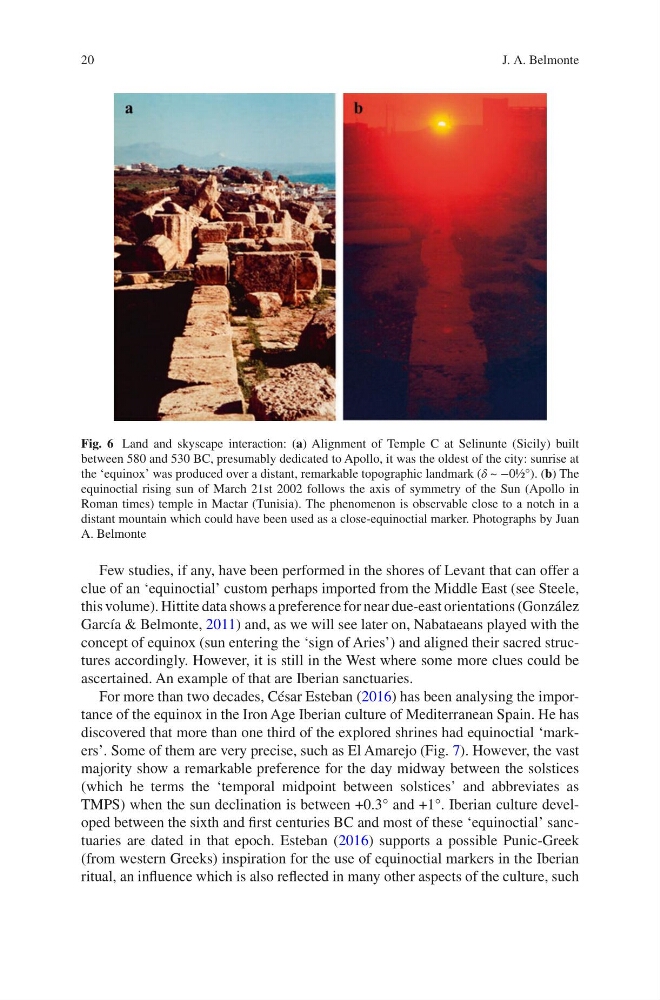
Fig. 6 Land and skyscape interaction: (a) Alignment of Temple C at Selinunte (Sicily) built
between 580 and 530 BC, presumably dedicated to Apollo, it was the oldest of the city: sunrise at
the ‘equinox’ was produced over a distant, remarkable topographic landmark (δ ~ −0½°). (b) The
equinoctial rising sun of March 21st 2002 follows the axis of symmetry of the Sun (Apollo in
Roman times) temple in Mactar (Tunisia). The phenomenon is observable close to a notch in a
distant mountain which could have been used as a close-equinoctial marker. Photographs by Juan
A. Belmonte
J. A. Belmonte
Few studies, if any, have been performed in the shores of Levant that can offer a
clue of an ‘equinoctial’ custom perhaps imported from the Middle East (see Steele,
this volume). Hittite data shows a preference for near due-east orientations (González
García & Belmonte, 2011) and, as we will see later on, Nabataeans played with the
concept of equinox (sun entering the ‘sign of Aries’) and aligned their sacred structures accordingly. However, it is still in the West where some more clues could be
ascertained. An example of that are Iberian sanctuaries.
For more than two decades, César Esteban (2016) has been analysing the importance of the equinox in the Iron Age Iberian culture of Mediterranean Spain. He has
discovered that more than one third of the explored shrines had equinoctial ‘markers’. Some of them are very precise, such as El Amarejo (Fig. 7). However, the vast
majority show a remarkable preference for the day midway between the solstices
(which he terms the ‘temporal midpoint between solstices’ and abbreviates as
TMPS) when the sun declination is between +0.3° and +1°. Iberian culture developed between the sixth and first centuries BC and most of these ‘equinoctial’ sanctuaries are dated in that epoch. Esteban (2016) supports a possible Punic-Greek
(from western Greeks) inspiration for the use of equinoctial markers in the Iberian
ritual, an influence which is also reflected in many other aspects of the culture, such
Fig. 6 Land and skyscape interaction: (a) Alignment of Temple C at Selinunte (Sicily) built
between 580 and 530 BC, presumably dedicated to Apollo, it was the oldest of the city: sunrise at
the ‘equinox’ was produced over a distant, remarkable topographic landmark (δ ~ −0½°). (b) The
equinoctial rising sun of March 21st 2002 follows the axis of symmetry of the Sun (Apollo in
Roman times) temple in Mactar (Tunisia). The phenomenon is observable close to a notch in a
distant mountain which could have been used as a close-equinoctial marker. Photographs by Juan
A. Belmonte
J. A. Belmonte