

243
equals 8 × 360–20 days. Such peculiarities always raise questions about calendrical
manipulations concerning astronomical events. The eclipse date offers an opportunity to check whether the inscriptional record on Stela 3 represents the knowledge
recorded in the Eclipse Table.
The introductory section to the Eclipse Table provides three entry dates that
allow it to be anchored in the Long Count. Though those entry dates consist of the
Long Count and tzolk’in dates lacking the corresponding haab’ cycle, scholars
instead unanimously regard them as the dates given in the Long Count format as is
given in case of monumental inscriptions. Lacking month names are given within
the brackets. In what is written below, the lacking haab’ details are inserted into the
brackets. As seen, the dates are spaced by 15 days and painted either in black
or in red:
9.16.4.10.8 12 Lamat [1 Muan] black
9.16.4.11.3 1 Ak’bal. [16 Muan] red
9.16.4.11.18 3 Etz’nab [11 Pax] black
Bricker and Bricker (2011: 276) determined that these dates denote 31-day intervals
9
and found that they can be compared to eclipse seasons, i.e., periods during
which eclipses (lunar and solar) are possible. In other words, the dates of 9.16.4.10.8
12 Lamat [1 Muan] and 9.16.4.11.18 3 Etz’nab [11 Pax] functioned to indicate the
limits (or the width) of the interval around the node within which eclipses were
expected to occur. Astronomically, each such season can last between 31 and
37 days. Each of those three dates initiates a string of days that run through the
entire cycle, finishing after the completion of 11,960 days. Bricker and Bricker
(2011) tracked three strings of dates, separated by 15 days, examining their functioning at each of 69 eclipse seasons, noticing that at least one of those dates was
found within the limits of each of those eclipse seasons (Bricker & Bricker, 2011:
277–282, Tables 9-2). They also found that the eclipse season shifted in relation to
the three strings of dates provided by the table, so the inclusion of a 5-month group
9 Though it contains two 15-day periods, they count as 31 days because reckoning is from the last
day before the start of this interval.
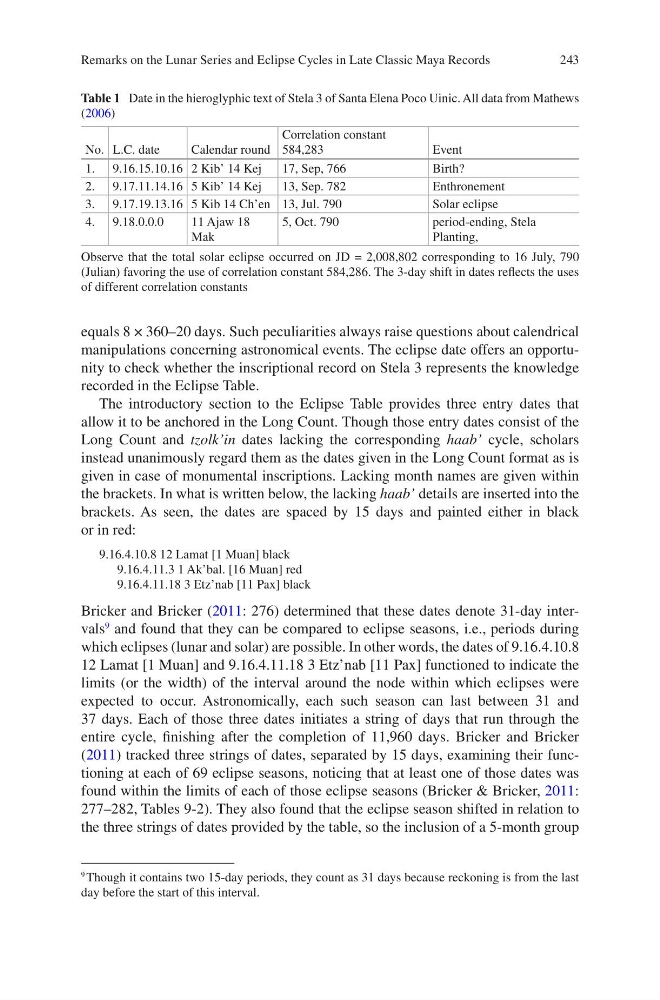
Table 1 Date in the hieroglyphic text of Stela 3 of Santa Elena Poco Uinic. All data from Mathews
(2006)
No. L.C. date
Calendar round
Correlation constant
584,283
Event
1. 9.16.15.10.16 2 Kib’ 14 Kej
17, Sep, 766
Birth?
2. 9.17.11.14.16 5 Kib’ 14 Kej
13, Sep. 782
Enthronement
3. 9.17.19.13.16 5 Kib 14 Ch’en 13, Jul. 790
Solar eclipse
4. 9.18.0.0.0
11 Ajaw 18
Mak
5, Oct. 790
period-ending, Stela
Planting,
Observe that the total solar eclipse occurred on JD = 2,008,802 corresponding to 16 July, 790
(Julian) favoring the use of correlation constant 584,286. The 3-day shift in dates reflects the uses
of different correlation constants
Remarks on the Lunar Series and Eclipse Cycles in Late Classic Maya Records
equals 8 × 360–20 days. Such peculiarities always raise questions about calendrical
manipulations concerning astronomical events. The eclipse date offers an opportunity to check whether the inscriptional record on Stela 3 represents the knowledge
recorded in the Eclipse Table.
The introductory section to the Eclipse Table provides three entry dates that
allow it to be anchored in the Long Count. Though those entry dates consist of the
Long Count and tzolk’in dates lacking the corresponding haab’ cycle, scholars
instead unanimously regard them as the dates given in the Long Count format as is
given in case of monumental inscriptions. Lacking month names are given within
the brackets. In what is written below, the lacking haab’ details are inserted into the
brackets. As seen, the dates are spaced by 15 days and painted either in black
or in red:
9.16.4.10.8 12 Lamat [1 Muan] black
9.16.4.11.3 1 Ak’bal. [16 Muan] red
9.16.4.11.18 3 Etz’nab [11 Pax] black
Bricker and Bricker (2011: 276) determined that these dates denote 31-day intervals
9
and found that they can be compared to eclipse seasons, i.e., periods during
which eclipses (lunar and solar) are possible. In other words, the dates of 9.16.4.10.8
12 Lamat [1 Muan] and 9.16.4.11.18 3 Etz’nab [11 Pax] functioned to indicate the
limits (or the width) of the interval around the node within which eclipses were
expected to occur. Astronomically, each such season can last between 31 and
37 days. Each of those three dates initiates a string of days that run through the
entire cycle, finishing after the completion of 11,960 days. Bricker and Bricker
(2011) tracked three strings of dates, separated by 15 days, examining their functioning at each of 69 eclipse seasons, noticing that at least one of those dates was
found within the limits of each of those eclipse seasons (Bricker & Bricker, 2011:
277–282, Tables 9-2). They also found that the eclipse season shifted in relation to
the three strings of dates provided by the table, so the inclusion of a 5-month group
9 Though it contains two 15-day periods, they count as 31 days because reckoning is from the last
day before the start of this interval.
Table 1 Date in the hieroglyphic text of Stela 3 of Santa Elena Poco Uinic. All data from Mathews
(2006)
No. L.C. date
Calendar round
Correlation constant
584,283
Event
1. 9.16.15.10.16 2 Kib’ 14 Kej
17, Sep, 766
Birth?
2. 9.17.11.14.16 5 Kib’ 14 Kej
13, Sep. 782
Enthronement
3. 9.17.19.13.16 5 Kib 14 Ch’en 13, Jul. 790
Solar eclipse
4. 9.18.0.0.0
11 Ajaw 18
Mak
5, Oct. 790
period-ending, Stela
Planting,
Observe that the total solar eclipse occurred on JD = 2,008,802 corresponding to 16 July, 790
(Julian) favoring the use of correlation constant 584,286. The 3-day shift in dates reflects the uses
of different correlation constants
Remarks on the Lunar Series and Eclipse Cycles in Late Classic Maya Records