

116
5 Naming and Necessity
5.1 ‘The West Yet Glimmers with Some Streaks of Day’: What’s
in a Name?
Proper names do not express essences, even if they have a definite etymology or are
homonymous with meaningful words.
33
Trivially, when we see a mention of a person surnamed Redhead we do not for a moment suppose them to have red hair. More
tellingly, a place called Newtown is not necessarily either new or a town even
though, if it is not now, it probably was both of those at one time; the most we can
say about its connotations is that on hearing its name we will probably assume it is
a settlement. A weak application of this thesis to the present discussion would be
that the four cardinal directions in English, even though their remote ancestries have
been reconstructed—‘north’ being tentatively derived from roots meaning left or
down, ‘east’ more confidently from dawn, ‘south’ from sun, and ‘west’ from dwelling or night
34
—cannot ever be thought to carry such connotations when used in
discourse today.
33 See e.g. the classic lectures of Kripke 1972, republished as Kripke 1980.
34 Etymologies claimed for ‘east’, ‘south’, and ‘west’ are documented by Skeat 1888, who regards
the origin of ‘north’ as unknown, though in the revised edition of his shorter dictionary (Skeat
1901) he notes that some link it to ‘left’ or ‘lower’. See also Onions 1933; Onions 1936. Nielsen
1945, 4, broadly concurs with Skeat.
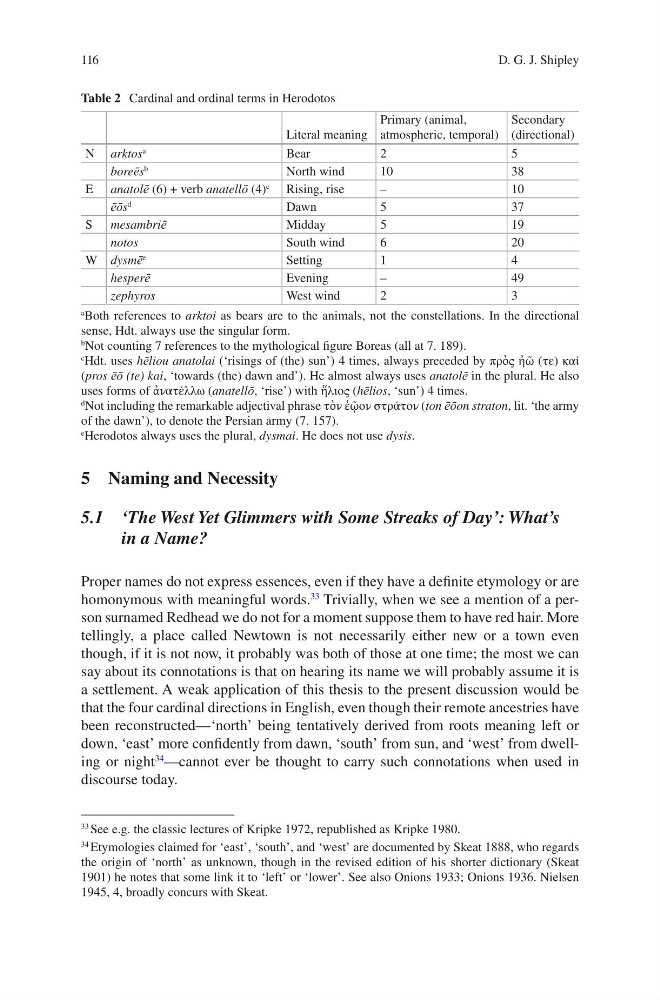
Table 2 Cardinal and ordinal terms in Herodotos
Literal meaning
Primary (animal,
atmospheric, temporal)
Secondary
(directional)
N arktos
a
Bear
2
5
boreēs
b
North wind
10
38
E anatolē (6) + verb anatellō (4)
c
Rising, rise
–
10
ēōs
d
Dawn
5
37
S mesambriē
Midday
5
19
notos
South wind
6
20
W dysmē
e
Setting
1
4
hesperē
Evening
–
49
zephyros
West wind
2
3
a
Both references to arktoi as bears are to the animals, not the constellations. In the directional
sense, Hdt. always use the singular form.
b
Not counting 7 references to the mythological figure Boreas (all at 7. 189).
c
Hdt. uses hēliou anatolai (‘risings of (the) sun’) 4 times, always preceded by πρὸς ἠῶ (τε) καί
(pros ēō (te) kai, ‘towards (the) dawn and’). He almost always uses anatolē in the plural. He also
uses forms of ἀνατέλλω (anatellō, ‘rise’) with ἥλιος (hēlios, ‘sun’) 4 times.
d
Not including the remarkable adjectival phrase τὸν ἑῷον στράτον (ton ēōon straton, lit. ‘the army
of the dawn’), to denote the Persian army (7. 157).
e
Herodotos always uses the plural, dysmai. He does not use dysis.
D. G. J. Shipley
5 Naming and Necessity
5.1 ‘The West Yet Glimmers with Some Streaks of Day’: What’s
in a Name?
Proper names do not express essences, even if they have a definite etymology or are
homonymous with meaningful words.
33
Trivially, when we see a mention of a person surnamed Redhead we do not for a moment suppose them to have red hair. More
tellingly, a place called Newtown is not necessarily either new or a town even
though, if it is not now, it probably was both of those at one time; the most we can
say about its connotations is that on hearing its name we will probably assume it is
a settlement. A weak application of this thesis to the present discussion would be
that the four cardinal directions in English, even though their remote ancestries have
been reconstructed—‘north’ being tentatively derived from roots meaning left or
down, ‘east’ more confidently from dawn, ‘south’ from sun, and ‘west’ from dwelling or night
34
—cannot ever be thought to carry such connotations when used in
discourse today.
33 See e.g. the classic lectures of Kripke 1972, republished as Kripke 1980.
34 Etymologies claimed for ‘east’, ‘south’, and ‘west’ are documented by Skeat 1888, who regards
the origin of ‘north’ as unknown, though in the revised edition of his shorter dictionary (Skeat
1901) he notes that some link it to ‘left’ or ‘lower’. See also Onions 1933; Onions 1936. Nielsen
1945, 4, broadly concurs with Skeat.
Table 2 Cardinal and ordinal terms in Herodotos
Literal meaning
Primary (animal,
atmospheric, temporal)
Secondary
(directional)
N arktos
a
Bear
2
5
boreēs
b
North wind
10
38
E anatolē (6) + verb anatellō (4)
c
Rising, rise
–
10
ēōs
d
Dawn
5
37
S mesambriē
Midday
5
19
notos
South wind
6
20
W dysmē
e
Setting
1
4
hesperē
Evening
–
49
zephyros
West wind
2
3
a
Both references to arktoi as bears are to the animals, not the constellations. In the directional
sense, Hdt. always use the singular form.
b
Not counting 7 references to the mythological figure Boreas (all at 7. 189).
c
Hdt. uses hēliou anatolai (‘risings of (the) sun’) 4 times, always preceded by πρὸς ἠῶ (τε) καί
(pros ēō (te) kai, ‘towards (the) dawn and’). He almost always uses anatolē in the plural. He also
uses forms of ἀνατέλλω (anatellō, ‘rise’) with ἥλιος (hēlios, ‘sun’) 4 times.
d
Not including the remarkable adjectival phrase τὸν ἑῷον στράτον (ton ēōon straton, lit. ‘the army
of the dawn’), to denote the Persian army (7. 157).
e
Herodotos always uses the plural, dysmai. He does not use dysis.
D. G. J. Shipley