

94
covers a land area of around 43,000 km
2 . About 20 years ago, the GPRD portion in
Guangdong Province largely contained underdeveloped rural villages. Since then,
there has been an enormous transformation in the GPRD. The “reform and opening
up” policy of China has had a dramatic impact on society and the economy over the
past 30 years, allowing the country to enter an era of rapid development. Megacity
regions, like the GPRD, are one of forerunners in this transformation.
But this rapid change has led to a development that is not only skewed towards
economic improvement but it has also created a society with disparities and
deprivation. Economically, the GPRD has developed into a renowned world factory,
while Hong Kong has been restructured as a regional service center, providing
industries in the GPRD with frontend functions, such as research, marketing, and
distribution. A regional division of labor, the “front shops, back factories” model
began to take shape in the 1990s. Spatially, the GPRD as a whole has become
increasingly polycentric; many cities and towns that were formerly peripheral and
rural areas have developed into active economic centers. The polycentric spatial
form has combined with the rise of urban entrepreneurialism, resulting in a rapidly
developing political environment that encourages cities to compete against one
another for mobile capital.
The undesirable consequences of political fragmentation are becoming more and
more acute. The impacts of Hong Kong and Macao, under the “one country, two
systems” model, are added complications to this fragmentation. Political borders
stand in the way of coordinated planning. Socially, the GPRD has faced challenges
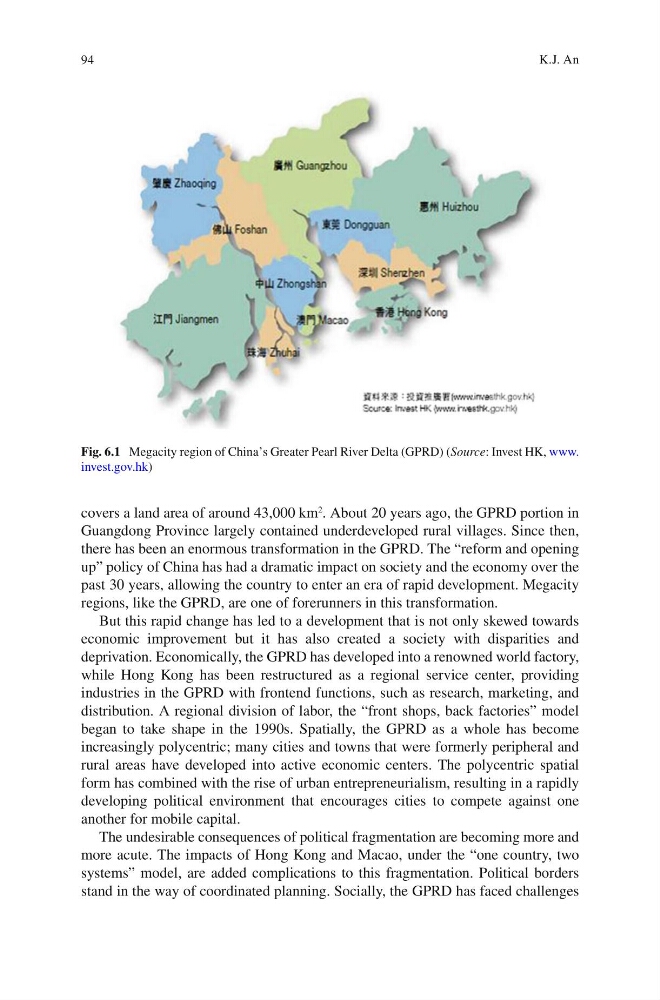
Fig. 6.1 Megacity region of China’s Greater Pearl River Delta (GPRD) ( Source : Invest HK, www.
invest.gov.hk )
K.J. An
covers a land area of around 43,000 km
2 . About 20 years ago, the GPRD portion in
Guangdong Province largely contained underdeveloped rural villages. Since then,
there has been an enormous transformation in the GPRD. The “reform and opening
up” policy of China has had a dramatic impact on society and the economy over the
past 30 years, allowing the country to enter an era of rapid development. Megacity
regions, like the GPRD, are one of forerunners in this transformation.
But this rapid change has led to a development that is not only skewed towards
economic improvement but it has also created a society with disparities and
deprivation. Economically, the GPRD has developed into a renowned world factory,
while Hong Kong has been restructured as a regional service center, providing
industries in the GPRD with frontend functions, such as research, marketing, and
distribution. A regional division of labor, the “front shops, back factories” model
began to take shape in the 1990s. Spatially, the GPRD as a whole has become
increasingly polycentric; many cities and towns that were formerly peripheral and
rural areas have developed into active economic centers. The polycentric spatial
form has combined with the rise of urban entrepreneurialism, resulting in a rapidly
developing political environment that encourages cities to compete against one
another for mobile capital.
The undesirable consequences of political fragmentation are becoming more and
more acute. The impacts of Hong Kong and Macao, under the “one country, two
systems” model, are added complications to this fragmentation. Political borders
stand in the way of coordinated planning. Socially, the GPRD has faced challenges
Fig. 6.1 Megacity region of China’s Greater Pearl River Delta (GPRD) ( Source : Invest HK, www.
invest.gov.hk )
K.J. An