

warm nights (Tn90p) and a decrease in the number of frost
days are seen from early-1990s (Fig. 2h–g of Sun et al.
2017). Throughout the HKH region, the annual mean diurnal
temperature range (DTR) anomalies showed an apparent
decline before 1980s, while DTR exhibits a rising trend after
the mid-1980s. The spatial distribution of linear trends for
extreme temperature indices indicate that extremely cold
days and nights in the Tibetan Plateau (TP) region decreased
by −0.85 and −2.3 days per decade, respectively, while the
warm days and warm nights increased by 1.2 and 2.5 days
per decade, respectively (Sun et al. 2017). The number of
frost days and ice days is also seen to be decreasing significantly at a rate of −4.3 and −2.4 days per decade,
respectively. Overall, the length of the growing season
appears to have increased at a rate of 4.5 days per decade
(Liu et al. 2006).
The frequency and intensity of observed precipitation
extremes in the HKH region exhibit significant changes
since the 1960s. Light precipitation amounts (below 50th
percentile) show a significant rising tendency over northern
TP and southern Tarim Basin, while there has been a
declining trend over southwest China (Zhan et al. 2017). The
intensity of light precipitation shows significant reductions
over the northern part of the Hindu Kush and Central India
(cf. Figs. 2 and 3 of Zhan et al. 2017). In addition, the
frequency and intensity of heavy precipitation show significant increasing trends mostly over the TP, with opposite
trends over southwest China, and South-Central Asia. Linear
trends of regional average maximum 5-day consecutive
precipitation (RX5DAY) index show a clear increasing trend
over the HKH region by 2.3% per decade during 1961–
2012. Consecutive wet days significantly increased over the
Indian side of Himalayan and Karakoram ranges and moderate rise over most of the other locales of the TP. The
spatial distribution pattern of consecutive dry-day trend is
nearly opposite to that of consecutive wet days. In summary,
several areas in the TP indicate a rising tendency in intense
precipitation, whereas the change is heterogeneous over
other areas of the HKH region.
11.4 Future Projections Over HKH
Precipitation from the summer monsoon rainfall is an
important source of water for the river basins in the eastern
and central HKH. River basins originating in the WH are
predominantly fed by snow and glacial melt with precipitation largely coming from wintertime western disturbances
(e.g. Bookhagen and Burbank 2006; Immerzeel et al. 2009;
Lutz et al. 2014; Madhura et al. 2015; SAC 2016). The HKH
region is warming at a much higher rate than the global
mean (Shrestha et al. 2015; Van Vuuren et al. 2011). With
continued global warming, future changes in temperature
and precipitation are expected to alter the sensitive cryospheric processes over the HKH region substantially
(Shrestha and Aryal 2011; Xu et al. 2008). Accelerated
warming over the ice-covered mountain peaks and valleys
exert profound impacts on the climate-dependent sectors like
agriculture and water resources of the HKH region, thereby
warranting a robust and reliable future outlook of the
regional climate (Shrestha et al. 2015; Krishnan et al. 2019b;
Sharma et al. 2019).
11.4.1 Projected Changes in Mean Temperature
and Precipitation
Analysis of annual mean surface temperature projections
based on the CMIP5 multi-models (Table 3.2b of Chap. 3)
indicates an increase of temperature in the HKH region by
2.2 ± 0.9 °C (3.3 ± 1.4°C) for the near future; 2040–2069
(far future; 2070–2099) of the twenty-first century, following the RCP4.5 scenario. Under the extreme scenario
RCP8.5, the temperature increase in the HKH region is
projected to be 2.8 ± 1.2 °C (4.8 ± 1.7 °C) for the near
future (far future) of the twenty-first century (Fig. 11.5a).
Wintertime (DJF) temperatures are projected to increase by
2.4 ± 1 °C (3.5 ± 1.4 °C) for the near future (far future) of
the twenty-first century, following RCP4.5. The corresponding wintertime temperatures for the two epochs under
the RCP8.5 scenario are projected to increase by 3.1 ± 1.4 °
C (5.1 ± 1.8 °C), respectively (Fig. 11.5b).
Significant warming is projected over the HKH region in
the near and far future, with prominent temperature increase
projected over the Tibetan Plateau with magnitudes
exceeding 5 °C under the RCP8.5 scenario by the end of the
twenty-first century (Xu et al. 2014; Wu et al. 2017). The
projected warming also differs by more than 1 °C between
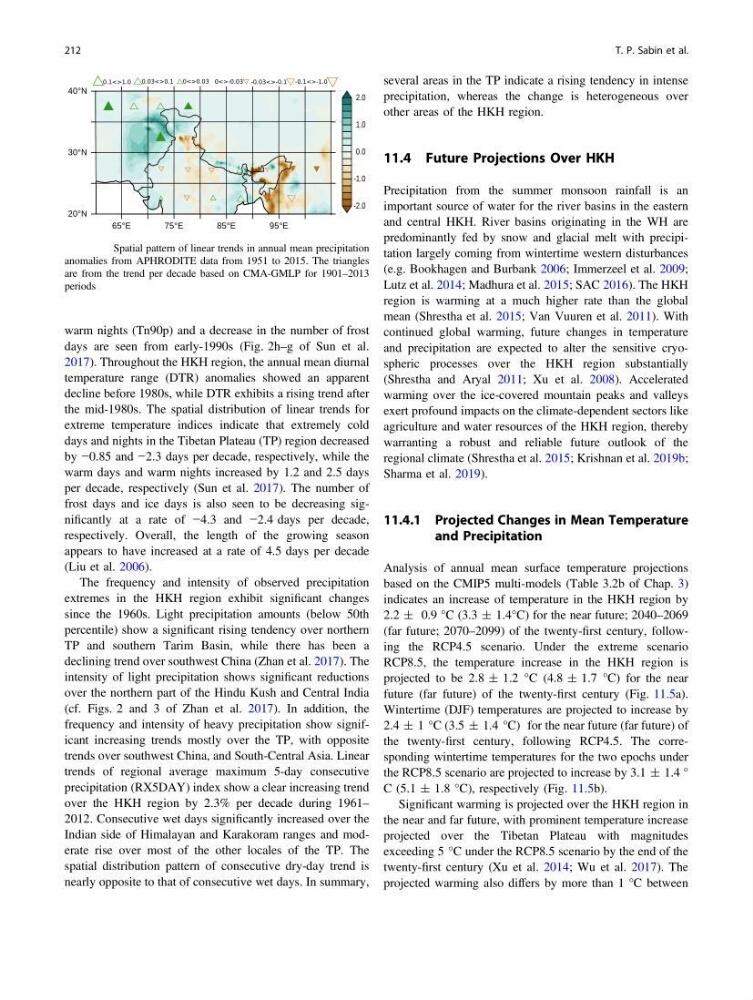
Fig. 11.4 Spatial pattern of linear trends in annual mean precipitation
anomalies from APHRODITE data from 1951 to 2015. The triangles
are from the trend per decade based on CMA-GMLP for 1901–2013
periods
212
T. P. Sabin et al.
days are seen from early-1990s (Fig. 2h–g of Sun et al.
2017). Throughout the HKH region, the annual mean diurnal
temperature range (DTR) anomalies showed an apparent
decline before 1980s, while DTR exhibits a rising trend after
the mid-1980s. The spatial distribution of linear trends for
extreme temperature indices indicate that extremely cold
days and nights in the Tibetan Plateau (TP) region decreased
by −0.85 and −2.3 days per decade, respectively, while the
warm days and warm nights increased by 1.2 and 2.5 days
per decade, respectively (Sun et al. 2017). The number of
frost days and ice days is also seen to be decreasing significantly at a rate of −4.3 and −2.4 days per decade,
respectively. Overall, the length of the growing season
appears to have increased at a rate of 4.5 days per decade
(Liu et al. 2006).
The frequency and intensity of observed precipitation
extremes in the HKH region exhibit significant changes
since the 1960s. Light precipitation amounts (below 50th
percentile) show a significant rising tendency over northern
TP and southern Tarim Basin, while there has been a
declining trend over southwest China (Zhan et al. 2017). The
intensity of light precipitation shows significant reductions
over the northern part of the Hindu Kush and Central India
(cf. Figs. 2 and 3 of Zhan et al. 2017). In addition, the
frequency and intensity of heavy precipitation show significant increasing trends mostly over the TP, with opposite
trends over southwest China, and South-Central Asia. Linear
trends of regional average maximum 5-day consecutive
precipitation (RX5DAY) index show a clear increasing trend
over the HKH region by 2.3% per decade during 1961–
2012. Consecutive wet days significantly increased over the
Indian side of Himalayan and Karakoram ranges and moderate rise over most of the other locales of the TP. The
spatial distribution pattern of consecutive dry-day trend is
nearly opposite to that of consecutive wet days. In summary,
several areas in the TP indicate a rising tendency in intense
precipitation, whereas the change is heterogeneous over
other areas of the HKH region.
11.4 Future Projections Over HKH
Precipitation from the summer monsoon rainfall is an
important source of water for the river basins in the eastern
and central HKH. River basins originating in the WH are
predominantly fed by snow and glacial melt with precipitation largely coming from wintertime western disturbances
(e.g. Bookhagen and Burbank 2006; Immerzeel et al. 2009;
Lutz et al. 2014; Madhura et al. 2015; SAC 2016). The HKH
region is warming at a much higher rate than the global
mean (Shrestha et al. 2015; Van Vuuren et al. 2011). With
continued global warming, future changes in temperature
and precipitation are expected to alter the sensitive cryospheric processes over the HKH region substantially
(Shrestha and Aryal 2011; Xu et al. 2008). Accelerated
warming over the ice-covered mountain peaks and valleys
exert profound impacts on the climate-dependent sectors like
agriculture and water resources of the HKH region, thereby
warranting a robust and reliable future outlook of the
regional climate (Shrestha et al. 2015; Krishnan et al. 2019b;
Sharma et al. 2019).
11.4.1 Projected Changes in Mean Temperature
and Precipitation
Analysis of annual mean surface temperature projections
based on the CMIP5 multi-models (Table 3.2b of Chap. 3)
indicates an increase of temperature in the HKH region by
2.2 ± 0.9 °C (3.3 ± 1.4°C) for the near future; 2040–2069
(far future; 2070–2099) of the twenty-first century, following the RCP4.5 scenario. Under the extreme scenario
RCP8.5, the temperature increase in the HKH region is
projected to be 2.8 ± 1.2 °C (4.8 ± 1.7 °C) for the near
future (far future) of the twenty-first century (Fig. 11.5a).
Wintertime (DJF) temperatures are projected to increase by
2.4 ± 1 °C (3.5 ± 1.4 °C) for the near future (far future) of
the twenty-first century, following RCP4.5. The corresponding wintertime temperatures for the two epochs under
the RCP8.5 scenario are projected to increase by 3.1 ± 1.4 °
C (5.1 ± 1.8 °C), respectively (Fig. 11.5b).
Significant warming is projected over the HKH region in
the near and far future, with prominent temperature increase
projected over the Tibetan Plateau with magnitudes
exceeding 5 °C under the RCP8.5 scenario by the end of the
twenty-first century (Xu et al. 2014; Wu et al. 2017). The
projected warming also differs by more than 1 °C between
Fig. 11.4 Spatial pattern of linear trends in annual mean precipitation
anomalies from APHRODITE data from 1951 to 2015. The triangles
are from the trend per decade based on CMA-GMLP for 1901–2013
periods
212
T. P. Sabin et al.