

Distribution of trace gases in the UTLS is also affected by
the stratospheric Brewer–Dobson circulation (Brewer 1949;
Dobson 1956). The Asian summer monsoon is an important
pathway for the transport of Asian tropospheric constituents
into the stratosphere (Fadnavis et al. 2013, 2017).
The HALOE aircraft observations of N 2 O, CO, and O 3
indicate a significant increase in the impact of the South
Asian tropospheric pollutants on the extratropical lower
stratosphere (Müller et al. 2016). Inter-annual variations of
stratospheric N 2 O, CFC-11 (CCl3F), and CFC-12 (CCl2F2)
are modulated by the BDC. Satellite observations show that
the transport of water vapor and HCN from the South and
Southeast Asia occurs into the lower stratosphere by the
monsoon convection and is then re-circulated by the
Brewer–Dobson circulations. Thus, Asian trace gases and
aerosols affect the chemical composition of the extratropical
stratosphere (Fadnavis et al. 2013).
5.4.2 Influence of Transport Associated
with Quasi-biennial Oscillation
The phenomenon of the equatorial quasi-biennial oscillation
(QBO) is known to produce a significant impact on
dynamics and chemistry over the tropical region. Studies
indicate that the secondary meridional circulation induced by
QBO produces a double peak structure in the stratosphere at
the equator with maximum amplitude in the temperature and
ozone at two pressure levels 30 and 9 hPa and a node at
14 hPa. Phase structure reveals that the temperature QBO
descends faster than the ozone QBO (Fadnavis et al. 2008).
Past studies indicate that cyclones are modulated by the
phases of the QBO (Fadnavis et al. 2011, 2014b). In
post-monsoon season, during the east phase, cyclones move
westward/northwestward while during the westerly phase,
they move northward/northeastward. During pre-monsoon
season, cyclones move northward/northeastward irrespective
of phases of QBO. The possible interaction between the
stratospheric QBO and cyclone is explained from the variation of winds, geopotential height, tropopause pressure,
OLR, and SST (Fadnavis et al. 2011). QBO shows an
influence on Indian Summer Monsoon Rainfall (ISMR).
The ISMR is stronger during the west phase of QBO and
weak during the east phase (Rai and Dimri 2017). QBO also
influences the stratospheric aerosol layer. Satellite observations show that QBO modulates the vertical extent of the
stratospheric aerosol layer in the tropics by up to 6 km, or
*35% of its mean vertical extent between 100 and 7 hPa
(about 16–33 km) (Hommel et al. 2015).
5.5 Impact of Volcanic Eruptions
Volcanoes inject huge amounts of aerosols and trace gases in
the upper troposphere and stratosphere, thereby drive the
natural mode of climate variability through alteration of
radiative forcing (Robock 2015). A volcanic eruption in the
vicinity of India, e.g., Mt. Nabro during 11–13 June 2011,
injected a large amount of water vapor, and SO2
(1.3–2.0 Tg) in the upper troposphere and lower stratosphere
over India. The aerosols injected into the stratosphere traveled large distances and thickened the stratospheric aerosol
layer. The global lidar networks (EARLINET, MPLNET,
and NDACC) and satellite (Cloud-Aerosol Lidar and Infrared Pathfinder Satellite Observation, (CALIPSO)) show that
Mt. Nabro has increased stratospheric volcanic AOD by
0.003–0.04 (global mean) and heating by *0.3 K day
−1
between 16 and 17 km altitude (Fairlie et al. 2014). The
aerosol surge causes tropospheric cooling and stratospheric
warming by scattering and reflecting incoming solar radiation (von Glasow et al. 2009). Large volcanoes modulate
the Inter-Tropical Convergence Zone via changes in the
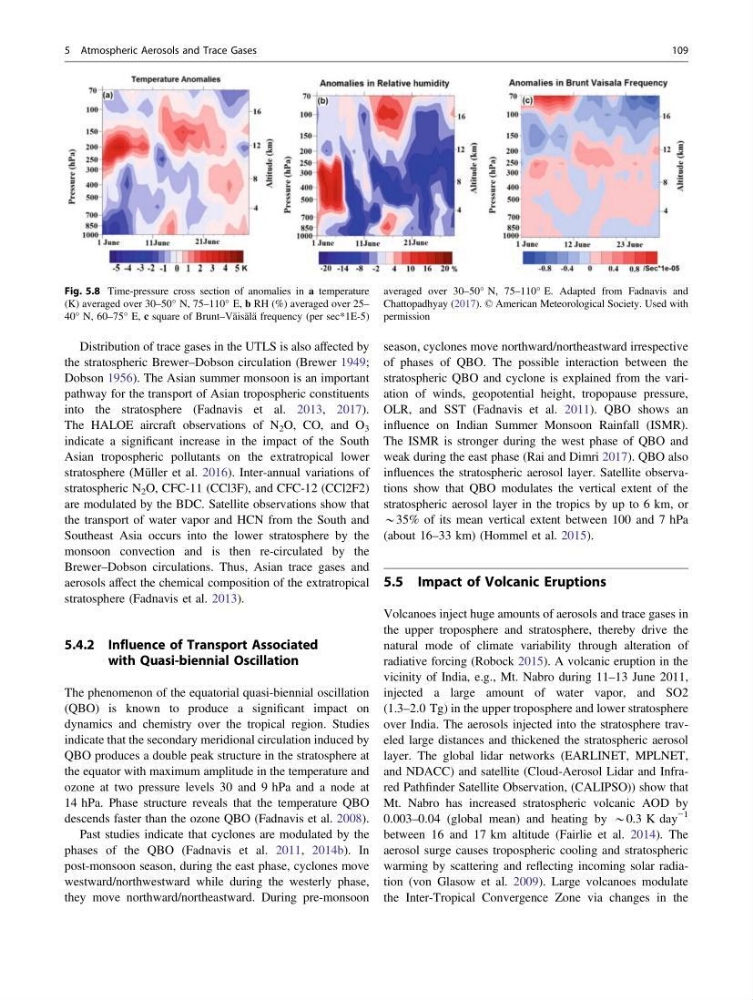
Fig. 5.8 Time-pressure cross section of anomalies in a temperature
(K) averaged over 30–50° N, 75–110° E, b RH (%) averaged over 25–
40° N, 60–75° E, c square of Brunt–Väisälä frequency (per sec*1E-5)
averaged over 30–50° N, 75–110° E. Adapted from Fadnavis and
Chattopadhyay (2017). © American Meteorological Society. Used with
permission
5 Atmospheric Aerosols and Trace Gases
109
the stratospheric Brewer–Dobson circulation (Brewer 1949;
Dobson 1956). The Asian summer monsoon is an important
pathway for the transport of Asian tropospheric constituents
into the stratosphere (Fadnavis et al. 2013, 2017).
The HALOE aircraft observations of N 2 O, CO, and O 3
indicate a significant increase in the impact of the South
Asian tropospheric pollutants on the extratropical lower
stratosphere (Müller et al. 2016). Inter-annual variations of
stratospheric N 2 O, CFC-11 (CCl3F), and CFC-12 (CCl2F2)
are modulated by the BDC. Satellite observations show that
the transport of water vapor and HCN from the South and
Southeast Asia occurs into the lower stratosphere by the
monsoon convection and is then re-circulated by the
Brewer–Dobson circulations. Thus, Asian trace gases and
aerosols affect the chemical composition of the extratropical
stratosphere (Fadnavis et al. 2013).
5.4.2 Influence of Transport Associated
with Quasi-biennial Oscillation
The phenomenon of the equatorial quasi-biennial oscillation
(QBO) is known to produce a significant impact on
dynamics and chemistry over the tropical region. Studies
indicate that the secondary meridional circulation induced by
QBO produces a double peak structure in the stratosphere at
the equator with maximum amplitude in the temperature and
ozone at two pressure levels 30 and 9 hPa and a node at
14 hPa. Phase structure reveals that the temperature QBO
descends faster than the ozone QBO (Fadnavis et al. 2008).
Past studies indicate that cyclones are modulated by the
phases of the QBO (Fadnavis et al. 2011, 2014b). In
post-monsoon season, during the east phase, cyclones move
westward/northwestward while during the westerly phase,
they move northward/northeastward. During pre-monsoon
season, cyclones move northward/northeastward irrespective
of phases of QBO. The possible interaction between the
stratospheric QBO and cyclone is explained from the variation of winds, geopotential height, tropopause pressure,
OLR, and SST (Fadnavis et al. 2011). QBO shows an
influence on Indian Summer Monsoon Rainfall (ISMR).
The ISMR is stronger during the west phase of QBO and
weak during the east phase (Rai and Dimri 2017). QBO also
influences the stratospheric aerosol layer. Satellite observations show that QBO modulates the vertical extent of the
stratospheric aerosol layer in the tropics by up to 6 km, or
*35% of its mean vertical extent between 100 and 7 hPa
(about 16–33 km) (Hommel et al. 2015).
5.5 Impact of Volcanic Eruptions
Volcanoes inject huge amounts of aerosols and trace gases in
the upper troposphere and stratosphere, thereby drive the
natural mode of climate variability through alteration of
radiative forcing (Robock 2015). A volcanic eruption in the
vicinity of India, e.g., Mt. Nabro during 11–13 June 2011,
injected a large amount of water vapor, and SO2
(1.3–2.0 Tg) in the upper troposphere and lower stratosphere
over India. The aerosols injected into the stratosphere traveled large distances and thickened the stratospheric aerosol
layer. The global lidar networks (EARLINET, MPLNET,
and NDACC) and satellite (Cloud-Aerosol Lidar and Infrared Pathfinder Satellite Observation, (CALIPSO)) show that
Mt. Nabro has increased stratospheric volcanic AOD by
0.003–0.04 (global mean) and heating by *0.3 K day
−1
between 16 and 17 km altitude (Fairlie et al. 2014). The
aerosol surge causes tropospheric cooling and stratospheric
warming by scattering and reflecting incoming solar radiation (von Glasow et al. 2009). Large volcanoes modulate
the Inter-Tropical Convergence Zone via changes in the
Fig. 5.8 Time-pressure cross section of anomalies in a temperature
(K) averaged over 30–50° N, 75–110° E, b RH (%) averaged over 25–
40° N, 60–75° E, c square of Brunt–Väisälä frequency (per sec*1E-5)
averaged over 30–50° N, 75–110° E. Adapted from Fadnavis and
Chattopadhyay (2017). © American Meteorological Society. Used with
permission
5 Atmospheric Aerosols and Trace Gases
109