

332
S. Capolongo et al.
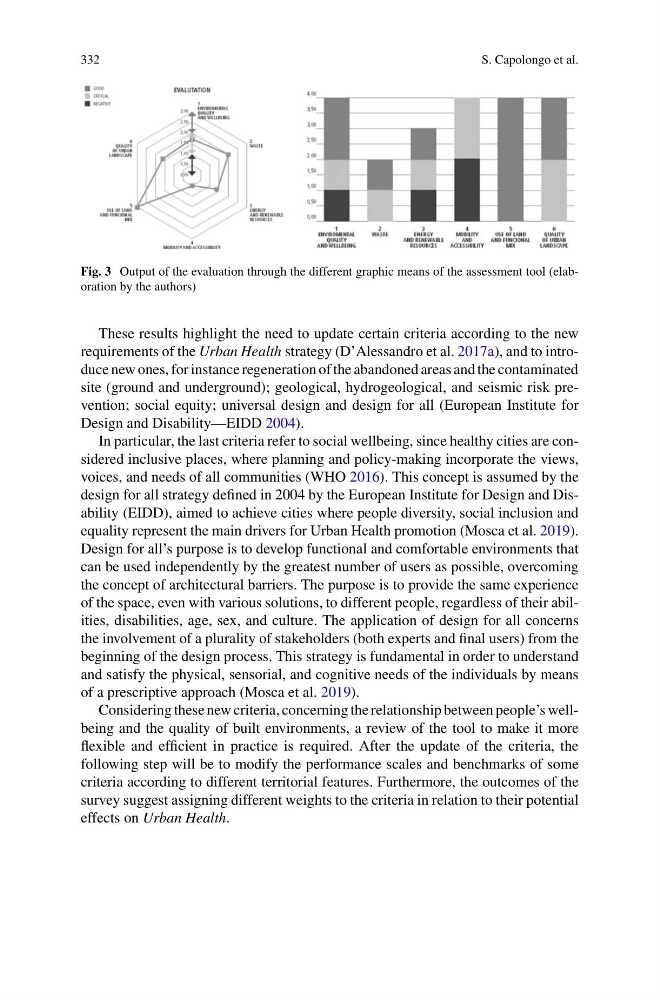
Fig. 3 Output of the evaluation through the different graphic means of the assessment tool (elaboration by the authors)
These results highlight the need to update certain criteria according to the new
requirements of the Urban Health strategy (D’Alessandro et al. 2017a), and to introduce new ones, for instance regeneration of the abandoned areas and the contaminated
site (ground and underground); geological, hydrogeological, and seismic risk prevention; social equity; universal design and design for all (European Institute for
Design and Disability—EIDD 2004).
In particular, the last criteria refer to social wellbeing, since healthy cities are considered inclusive places, where planning and policy-making incorporate the views,
voices, and needs of all communities (WHO 2016). This concept is assumed by the
design for all strategy defined in 2004 by the European Institute for Design and Disability (EIDD), aimed to achieve cities where people diversity, social inclusion and
equality represent the main drivers for Urban Health promotion (Mosca et al. 2019).
Design for all’s purpose is to develop functional and comfortable environments that
can be used independently by the greatest number of users as possible, overcoming
the concept of architectural barriers. The purpose is to provide the same experience
of the space, even with various solutions, to different people, regardless of their abilities, disabilities, age, sex, and culture. The application of design for all concerns
the involvement of a plurality of stakeholders (both experts and final users) from the
beginning of the design process. This strategy is fundamental in order to understand
and satisfy the physical, sensorial, and cognitive needs of the individuals by means
of a prescriptive approach (Mosca et al. 2019).
Considering these new criteria, concerning the relationship between people’s wellbeing and the quality of built environments, a review of the tool to make it more
flexible and efficient in practice is required. After the update of the criteria, the
following step will be to modify the performance scales and benchmarks of some
criteria according to different territorial features. Furthermore, the outcomes of the
survey suggest assigning different weights to the criteria in relation to their potential
effects on Urban Health.
S. Capolongo et al.
Fig. 3 Output of the evaluation through the different graphic means of the assessment tool (elaboration by the authors)
These results highlight the need to update certain criteria according to the new
requirements of the Urban Health strategy (D’Alessandro et al. 2017a), and to introduce new ones, for instance regeneration of the abandoned areas and the contaminated
site (ground and underground); geological, hydrogeological, and seismic risk prevention; social equity; universal design and design for all (European Institute for
Design and Disability—EIDD 2004).
In particular, the last criteria refer to social wellbeing, since healthy cities are considered inclusive places, where planning and policy-making incorporate the views,
voices, and needs of all communities (WHO 2016). This concept is assumed by the
design for all strategy defined in 2004 by the European Institute for Design and Disability (EIDD), aimed to achieve cities where people diversity, social inclusion and
equality represent the main drivers for Urban Health promotion (Mosca et al. 2019).
Design for all’s purpose is to develop functional and comfortable environments that
can be used independently by the greatest number of users as possible, overcoming
the concept of architectural barriers. The purpose is to provide the same experience
of the space, even with various solutions, to different people, regardless of their abilities, disabilities, age, sex, and culture. The application of design for all concerns
the involvement of a plurality of stakeholders (both experts and final users) from the
beginning of the design process. This strategy is fundamental in order to understand
and satisfy the physical, sensorial, and cognitive needs of the individuals by means
of a prescriptive approach (Mosca et al. 2019).
Considering these new criteria, concerning the relationship between people’s wellbeing and the quality of built environments, a review of the tool to make it more
flexible and efficient in practice is required. After the update of the criteria, the
following step will be to modify the performance scales and benchmarks of some
criteria according to different territorial features. Furthermore, the outcomes of the
survey suggest assigning different weights to the criteria in relation to their potential
effects on Urban Health.