

274
A. Zanelli et al.
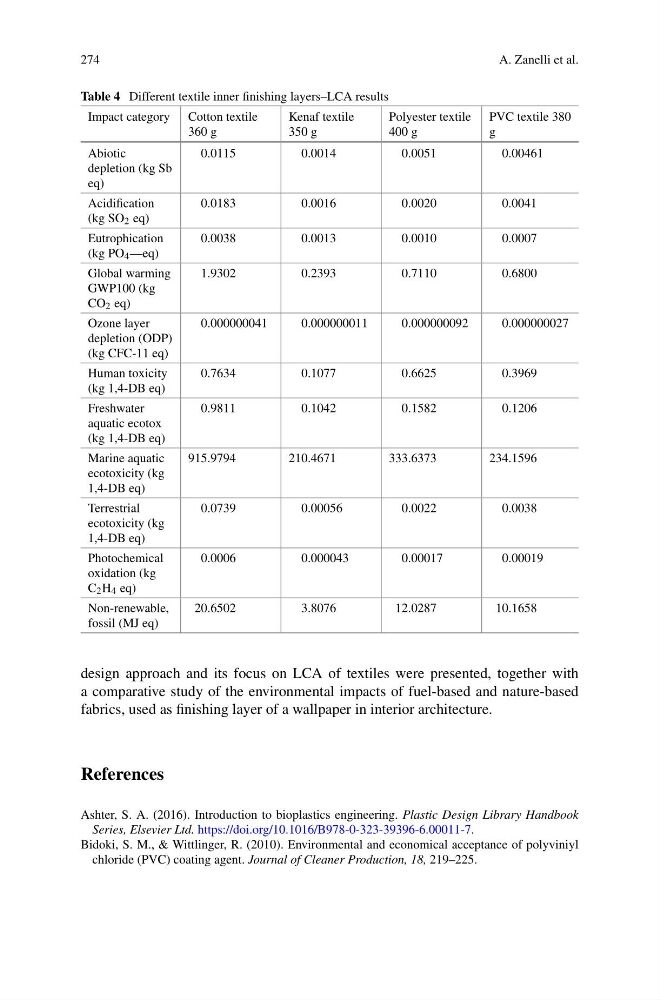
Table 4 Different textile inner finishing layers–LCA results
Impact category Cotton textile
360 g
Kenaf textile
350 g
Polyester textile
400 g
PVC textile 380
g
Abiotic
depletion (kg Sb
eq)
0.0115
0.0014
0.0051
0.00461
Acidification
(kg SO 2 eq)
0.0183
0.0016
0.0020
0.0041
Eutrophication
(kg PO 4 —eq)
0.0038
0.0013
0.0010
0.0007
Global warming
GWP100 (kg
CO 2 eq)
1.9302
0.2393
0.7110
0.6800
Ozone layer
depletion (ODP)
(kg CFC-11 eq)
0.000000041
0.000000011
0.000000092
0.000000027
Human toxicity
(kg 1,4-DB eq)
0.7634
0.1077
0.6625
0.3969
Freshwater
aquatic ecotox
(kg 1,4-DB eq)
0.9811
0.1042
0.1582
0.1206
Marine aquatic
ecotoxicity (kg
1,4-DB eq)
915.9794
210.4671
333.6373
234.1596
Terrestrial
ecotoxicity (kg
1,4-DB eq)
0.0739
0.00056
0.0022
0.0038
Photochemical
oxidation (kg
C 2 H 4 eq)
0.0006
0.000043
0.00017
0.00019
Non-renewable,
fossil (MJ eq)
20.6502
3.8076
12.0287
10.1658
design approach and its focus on LCA of textiles were presented, together with
a comparative study of the environmental impacts of fuel-based and nature-based
fabrics, used as finishing layer of a wallpaper in interior architecture.
References
Ashter, S. A. (2016). Introduction to bioplastics engineering. Plastic Design Library Handbook
Series, Elsevier Ltd. https://doi.org/10.1016/B978-0-323-39396-6.00011-7.
Bidoki, S. M., & Wittlinger, R. (2010). Environmental and economical acceptance of polyviniyl
chloride (PVC) coating agent. Journal of Cleaner Production, 18, 219–225.
A. Zanelli et al.
Table 4 Different textile inner finishing layers–LCA results
Impact category Cotton textile
360 g
Kenaf textile
350 g
Polyester textile
400 g
PVC textile 380
g
Abiotic
depletion (kg Sb
eq)
0.0115
0.0014
0.0051
0.00461
Acidification
(kg SO 2 eq)
0.0183
0.0016
0.0020
0.0041
Eutrophication
(kg PO 4 —eq)
0.0038
0.0013
0.0010
0.0007
Global warming
GWP100 (kg
CO 2 eq)
1.9302
0.2393
0.7110
0.6800
Ozone layer
depletion (ODP)
(kg CFC-11 eq)
0.000000041
0.000000011
0.000000092
0.000000027
Human toxicity
(kg 1,4-DB eq)
0.7634
0.1077
0.6625
0.3969
Freshwater
aquatic ecotox
(kg 1,4-DB eq)
0.9811
0.1042
0.1582
0.1206
Marine aquatic
ecotoxicity (kg
1,4-DB eq)
915.9794
210.4671
333.6373
234.1596
Terrestrial
ecotoxicity (kg
1,4-DB eq)
0.0739
0.00056
0.0022
0.0038
Photochemical
oxidation (kg
C 2 H 4 eq)
0.0006
0.000043
0.00017
0.00019
Non-renewable,
fossil (MJ eq)
20.6502
3.8076
12.0287
10.1658
design approach and its focus on LCA of textiles were presented, together with
a comparative study of the environmental impacts of fuel-based and nature-based
fabrics, used as finishing layer of a wallpaper in interior architecture.
References
Ashter, S. A. (2016). Introduction to bioplastics engineering. Plastic Design Library Handbook
Series, Elsevier Ltd. https://doi.org/10.1016/B978-0-323-39396-6.00011-7.
Bidoki, S. M., & Wittlinger, R. (2010). Environmental and economical acceptance of polyviniyl
chloride (PVC) coating agent. Journal of Cleaner Production, 18, 219–225.