

Participated Strategies for Small Towns Regeneration …
95
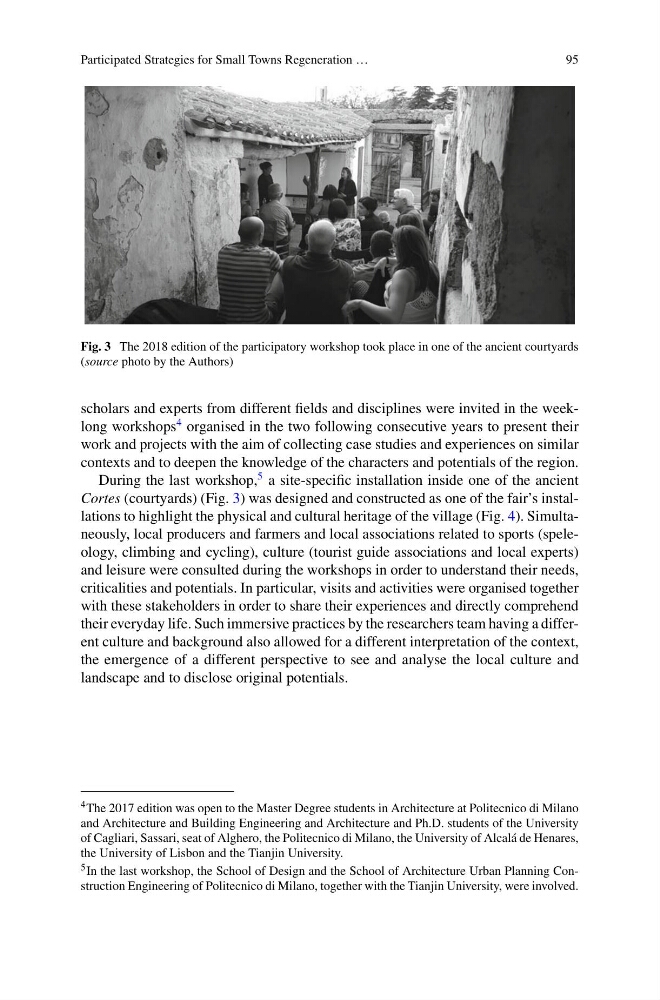
Fig. 3 The 2018 edition of the participatory workshop took place in one of the ancient courtyards
(source photo by the Authors)
scholars and experts from different fields and disciplines were invited in the weeklong workshops
4 organised in the two following consecutive years to present their
work and projects with the aim of collecting case studies and experiences on similar
contexts and to deepen the knowledge of the characters and potentials of the region.
During the last workshop,
5 a site-specific installation inside one of the ancient
Cortes (courtyards) (Fig. 3) was designed and constructed as one of the fair’s installations to highlight the physical and cultural heritage of the village (Fig. 4). Simultaneously, local producers and farmers and local associations related to sports (speleology, climbing and cycling), culture (tourist guide associations and local experts)
and leisure were consulted during the workshops in order to understand their needs,
criticalities and potentials. In particular, visits and activities were organised together
with these stakeholders in order to share their experiences and directly comprehend
their everyday life. Such immersive practices by the researchers team having a different culture and background also allowed for a different interpretation of the context,
the emergence of a different perspective to see and analyse the local culture and
landscape and to disclose original potentials.
4 The 2017 edition was open to the Master Degree students in Architecture at Politecnico di Milano
and Architecture and Building Engineering and Architecture and Ph.D. students of the University
of Cagliari, Sassari, seat of Alghero, the Politecnico di Milano, the University of Alcalá de Henares,
the University of Lisbon and the Tianjin University.
5 In the last workshop, the School of Design and the School of Architecture Urban Planning Construction Engineering of Politecnico di Milano, together with the Tianjin University, were involved.
95
Fig. 3 The 2018 edition of the participatory workshop took place in one of the ancient courtyards
(source photo by the Authors)
scholars and experts from different fields and disciplines were invited in the weeklong workshops
4 organised in the two following consecutive years to present their
work and projects with the aim of collecting case studies and experiences on similar
contexts and to deepen the knowledge of the characters and potentials of the region.
During the last workshop,
5 a site-specific installation inside one of the ancient
Cortes (courtyards) (Fig. 3) was designed and constructed as one of the fair’s installations to highlight the physical and cultural heritage of the village (Fig. 4). Simultaneously, local producers and farmers and local associations related to sports (speleology, climbing and cycling), culture (tourist guide associations and local experts)
and leisure were consulted during the workshops in order to understand their needs,
criticalities and potentials. In particular, visits and activities were organised together
with these stakeholders in order to share their experiences and directly comprehend
their everyday life. Such immersive practices by the researchers team having a different culture and background also allowed for a different interpretation of the context,
the emergence of a different perspective to see and analyse the local culture and
landscape and to disclose original potentials.
4 The 2017 edition was open to the Master Degree students in Architecture at Politecnico di Milano
and Architecture and Building Engineering and Architecture and Ph.D. students of the University
of Cagliari, Sassari, seat of Alghero, the Politecnico di Milano, the University of Alcalá de Henares,
the University of Lisbon and the Tianjin University.
5 In the last workshop, the School of Design and the School of Architecture Urban Planning Construction Engineering of Politecnico di Milano, together with the Tianjin University, were involved.