

From our research (Michelini and Stefanel 2014), a successful condition for
professional development is the integration of the three models of teacher education:
Metacultural, Experiential and Situated (PCK in action), including the personal
involvement of teachers on the conceptual nodes (PCK test), the multi-perspective
individual and group reflections, the design and experimentation of didactic paths,
and the documentation and the discussion/analysis of learning progression. These
are the indispensable conditions of success for the professional development that
consolidates partial competences (Davis and Smithey 2009; Michelini and Stefanel
2014). In particular, the cultural model provided for the critical discussion between
researchers and teachers on a disciplinary, didactic and pedagogical level; in the
experiential model, the trainee year teachers personally tested the didactic proposals,
through tutorials, to reflect on the conceptual nodes, recognize the characteristics
of coherent paths that promote the reasoning and the involvement of children in
the learning process, build activities based on problematization (inquiry-based
learning).
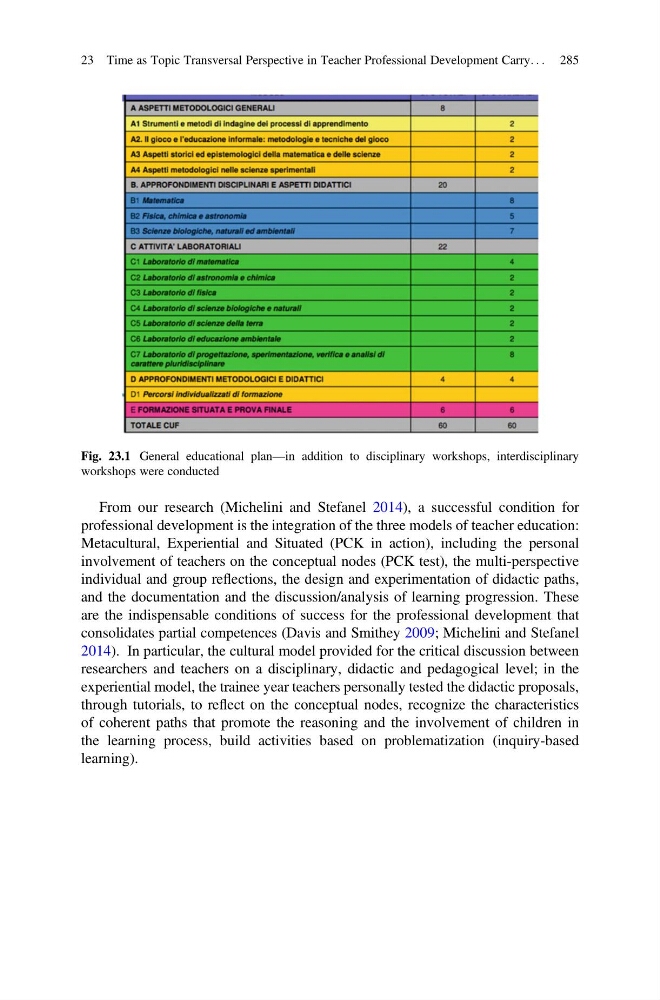
Fig. 23.1 General educational plan—in addition to disciplinary workshops, interdisciplinary
workshops were conducted
23 Time as Topic Transversal Perspective in Teacher Professional Development Carry. . . 285
professional development is the integration of the three models of teacher education:
Metacultural, Experiential and Situated (PCK in action), including the personal
involvement of teachers on the conceptual nodes (PCK test), the multi-perspective
individual and group reflections, the design and experimentation of didactic paths,
and the documentation and the discussion/analysis of learning progression. These
are the indispensable conditions of success for the professional development that
consolidates partial competences (Davis and Smithey 2009; Michelini and Stefanel
2014). In particular, the cultural model provided for the critical discussion between
researchers and teachers on a disciplinary, didactic and pedagogical level; in the
experiential model, the trainee year teachers personally tested the didactic proposals,
through tutorials, to reflect on the conceptual nodes, recognize the characteristics
of coherent paths that promote the reasoning and the involvement of children in
the learning process, build activities based on problematization (inquiry-based
learning).
Fig. 23.1 General educational plan—in addition to disciplinary workshops, interdisciplinary
workshops were conducted
23 Time as Topic Transversal Perspective in Teacher Professional Development Carry. . . 285