

the considered case, the short range character of the interaction has to be considered
explicitly.
To obtain a more general result, we suggest the discussion of the situation of
Fig. 10.2 where an uniform beam of (identical) particles collide with a target of
evenly distributed (identical) particles. The probability that an incident particle
interacts with a target particle within the area A and give rise to a certain result S i ,
will be given by: P ¼ P 1 P 2 P int , where P 1 is the probability that the incident particle
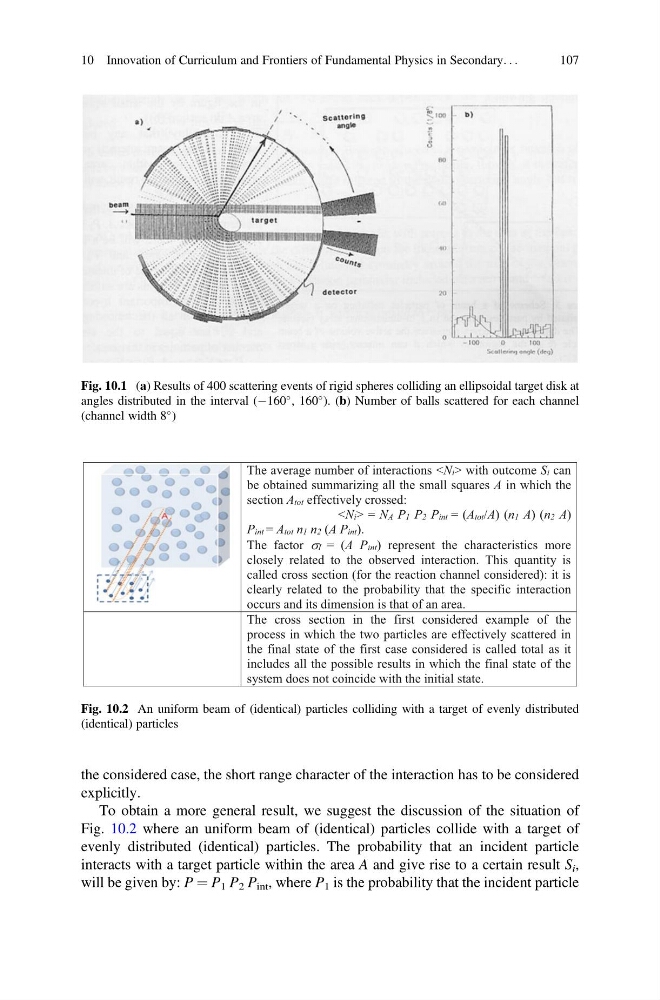
Fig. 10.1 (a) Results of 400 scattering events of rigid spheres colliding an ellipsoidal target disk at
angles distributed in the interval (À160
, 160
). (b) Number of balls scattered for each channel
(channel width 8
)
The average number of interactions with outcome Si can
be obtained summarizing all the small squares A in which the
section Atot effectively crossed:
= NA P1 P2 Pint = (Atot/A) (n1 A) (n2 A)
Pint = Atot n1 n2 (A Pint).
The factor
= (A Pint) represent the characteristics more
closely related to the observed interaction. This quantity is
called cross section (for the reaction channel considered): it is
clearly related to the probability that the specific interaction
occurs and its dimension is that of an area.
The cross section in the first considered example of the
process in which the two particles are effectively scattered in
the final state of the first case considered is called total as it
includes all the possible results in which the final state of the
system does not coincide with the initial state.
Fig. 10.2 An uniform beam of (identical) particles colliding with a target of evenly distributed
(identical) particles
10 Innovation of Curriculum and Frontiers of Fundamental Physics in Secondary. . .
107
explicitly.
To obtain a more general result, we suggest the discussion of the situation of
Fig. 10.2 where an uniform beam of (identical) particles collide with a target of
evenly distributed (identical) particles. The probability that an incident particle
interacts with a target particle within the area A and give rise to a certain result S i ,
will be given by: P ¼ P 1 P 2 P int , where P 1 is the probability that the incident particle
Fig. 10.1 (a) Results of 400 scattering events of rigid spheres colliding an ellipsoidal target disk at
angles distributed in the interval (À160
, 160
). (b) Number of balls scattered for each channel
(channel width 8
)
The average number of interactions
be obtained summarizing all the small squares A in which the
section Atot effectively crossed:
Pint = Atot n1 n2 (A Pint).
The factor
= (A Pint) represent the characteristics more
closely related to the observed interaction. This quantity is
called cross section (for the reaction channel considered): it is
clearly related to the probability that the specific interaction
occurs and its dimension is that of an area.
The cross section in the first considered example of the
process in which the two particles are effectively scattered in
the final state of the first case considered is called total as it
includes all the possible results in which the final state of the
system does not coincide with the initial state.
Fig. 10.2 An uniform beam of (identical) particles colliding with a target of evenly distributed
(identical) particles
10 Innovation of Curriculum and Frontiers of Fundamental Physics in Secondary. . .
107