

A similar feature is observed for CO 2 , NOCl, alkyl- and perfluoroalkyl iodide in
the vacuum ultraviolet spectral range (see [3, 75–79] and references). The u CO 2 ðkÞ
value depends on CO 2 pressure: u CO 2 k ¼ 155 À 167nm
ð
Þ ! 1 at p CO 2 ! 0, and
less than 1 at p CO 2 > 20 Torr (see Table 4.5 and Fig. 4.28).
The mechanism of this effect may be different, but the dissociation of excited
states should be impossible for energy reasons for any mechanism: the populated
state does not correlate with the products of dissociation lying below the PES region
populated in the optical transition (Fig. 4.29a). or there is a potential barrier on this
state decay path, which, for example, is a consequence of the non-intersection rule
(Fig. 4.29b). In this case, predissociation is either impossible for energy reasons
(curves 1 in Fig. 4.29a, b) or proceed at a slow rate due to the existence of any
prohibitions (curves 2 in Fig. 4.29a, b).
A situation similar to that shown in Fig. 4.24a (curve 1) is characteristic of
optical transitions to Rydberg states, accompanied by the population of their lower
vibrational levels (for example, the photodecay of alkyl- and perfluoroalkyl iodides
in the VUV region of the spectrum. The situation, similar to that shown in
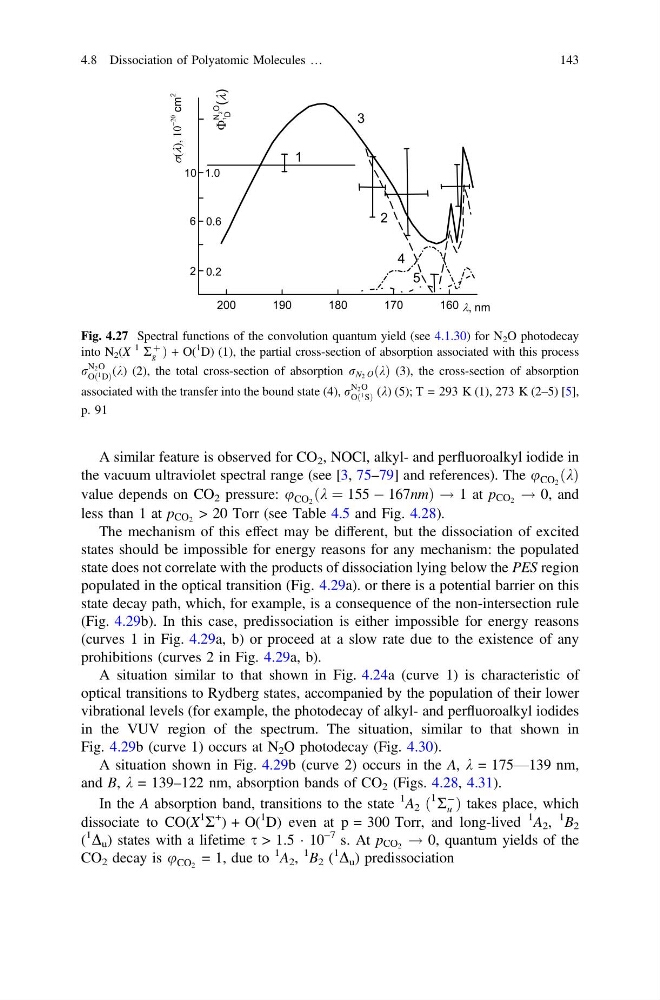
Fig. 4.29b (curve 1) occurs at N 2 O photodecay (Fig. 4.30).
A situation shown in Fig. 4.29b (curve 2) occurs in the A, k = 175—139 nm,
and B, k = 139–122 nm, absorption bands of CO 2 (Figs. 4.28, 4.31).
In the A absorption band, transitions to the state
1
A 2 ð
1 R
À
u Þ takes place, which
dissociate to CO(X
1 R
+
) + O(
1 D) even at p = 300 Torr, and long-lived
1
A 2 ,
1
B 2
(
1 D u ) states with a lifetime s > 1.5 Á 10
–7 s. At p CO 2 ! 0, quantum yields of the
CO 2 decay is u CO 2 = 1, due to
1
A 2 ,
1
B 2 (
1 D u ) predissociation
Fig. 4.27 Spectral functions of the convolution quantum yield (see 4.1.30) for N 2 O photodecay
into N 2 (X
1 R
þ
g Þ + O(
1
D) (1), the partial cross-section of absorption associated with this process
r
N2O
O 1 D
ð Þ (k) (2), the total cross-section of absorption r N2 O ðkÞ (3), the cross-section of absorption
associated with the transfer into the bound state (4), r
N2O
O 1 S
ð Þ
(k) (5); T = 293 K (1), 273 K (2–5) [5],
p. 91
4.8 Dissociation of Polyatomic Molecules …
143
the vacuum ultraviolet spectral range (see [3, 75–79] and references). The u CO 2 ðkÞ
value depends on CO 2 pressure: u CO 2 k ¼ 155 À 167nm
ð
Þ ! 1 at p CO 2 ! 0, and
less than 1 at p CO 2 > 20 Torr (see Table 4.5 and Fig. 4.28).
The mechanism of this effect may be different, but the dissociation of excited
states should be impossible for energy reasons for any mechanism: the populated
state does not correlate with the products of dissociation lying below the PES region
populated in the optical transition (Fig. 4.29a). or there is a potential barrier on this
state decay path, which, for example, is a consequence of the non-intersection rule
(Fig. 4.29b). In this case, predissociation is either impossible for energy reasons
(curves 1 in Fig. 4.29a, b) or proceed at a slow rate due to the existence of any
prohibitions (curves 2 in Fig. 4.29a, b).
A situation similar to that shown in Fig. 4.24a (curve 1) is characteristic of
optical transitions to Rydberg states, accompanied by the population of their lower
vibrational levels (for example, the photodecay of alkyl- and perfluoroalkyl iodides
in the VUV region of the spectrum. The situation, similar to that shown in
Fig. 4.29b (curve 1) occurs at N 2 O photodecay (Fig. 4.30).
A situation shown in Fig. 4.29b (curve 2) occurs in the A, k = 175—139 nm,
and B, k = 139–122 nm, absorption bands of CO 2 (Figs. 4.28, 4.31).
In the A absorption band, transitions to the state
1
A 2 ð
1 R
À
u Þ takes place, which
dissociate to CO(X
1 R
+
) + O(
1 D) even at p = 300 Torr, and long-lived
1
A 2 ,
1
B 2
(
1 D u ) states with a lifetime s > 1.5 Á 10
–7 s. At p CO 2 ! 0, quantum yields of the
CO 2 decay is u CO 2 = 1, due to
1
A 2 ,
1
B 2 (
1 D u ) predissociation
Fig. 4.27 Spectral functions of the convolution quantum yield (see 4.1.30) for N 2 O photodecay
into N 2 (X
1 R
þ
g Þ + O(
1
D) (1), the partial cross-section of absorption associated with this process
r
N2O
O 1 D
ð Þ (k) (2), the total cross-section of absorption r N2 O ðkÞ (3), the cross-section of absorption
associated with the transfer into the bound state (4), r
N2O
O 1 S
ð Þ
(k) (5); T = 293 K (1), 273 K (2–5) [5],
p. 91
4.8 Dissociation of Polyatomic Molecules …
143