

1. From a common origin, draw a normal to each crystal plane (in 3-D) or line
(in 2-D).
2. Set the length of each normal equal to 2p times the reciprocal of interplanar
spacing, d hkl (separation between two consecutive planes in 3-D, lines in
2-D and points in 1-D).
3. Mark a point at the end of each normal, called the reciprocal lattice point.
4. A collection of points obtained in this way is known as reciprocal lattice.
If the direct lattice of the conventional unit cell is non-primitive, then the above
procedure can be applied to obtain the reciprocal lattice after making necessary
modifications as provided in Table 2.1.
(b) The coordinates of reciprocal lattice point is denoted by the symbol hkl or hk0
(without brackets) represents (hkl) plane or (hk0) line of the direct lattice of 3-D
or 2-D, respectively. The reciprocal lattice preserves all the important characteristics of the plane in 3-D (or lines in 2-D) they represent:
1. The direction from the origin preserves the orientation of the plane (or line).
2. The distance of the reciprocal lattice point from the origin preserves the
interplanar spacing (or separation between two consecutive planes in 3-D)
of the set of planes (or lines in 2-D) it represents in the direct lattice.
(c) The dimension wise relationships between the direct lattice and reciprocal
lattice are:
1. The reciprocal lattice translation for a given one-dimensional direct (primitive) lattice with translation vector “a” is given by
a
Ã
: a ¼ a : a
Ã
¼ 2p
or a* ¼
2p
a
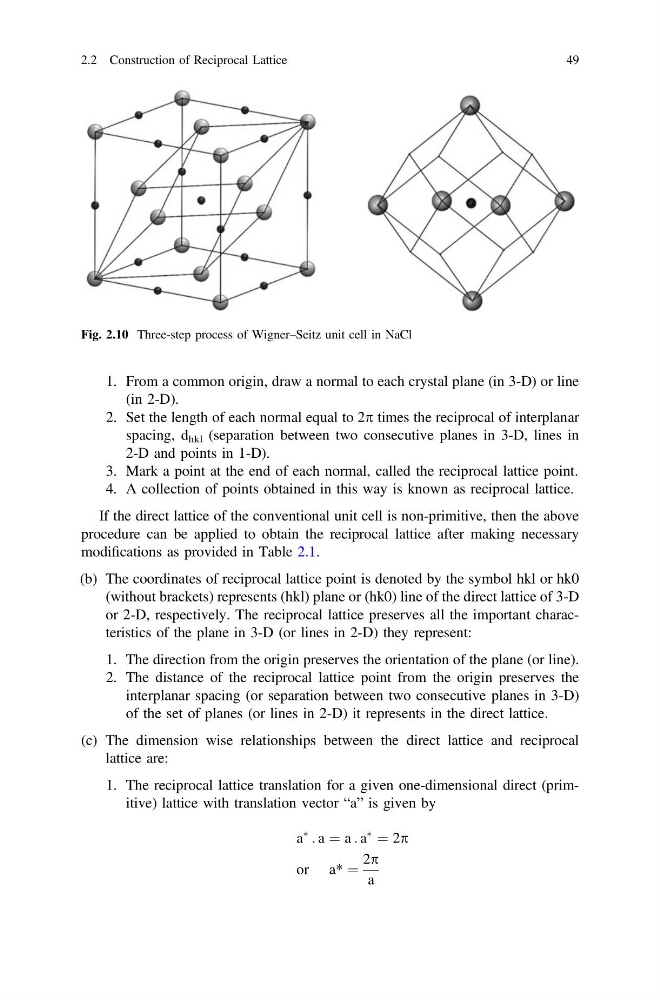
Fig. 2.10 Three-step process of Wigner–Seitz unit cell in NaCl
2.2 Construction of Reciprocal Lattice
49
(in 2-D).
2. Set the length of each normal equal to 2p times the reciprocal of interplanar
spacing, d hkl (separation between two consecutive planes in 3-D, lines in
2-D and points in 1-D).
3. Mark a point at the end of each normal, called the reciprocal lattice point.
4. A collection of points obtained in this way is known as reciprocal lattice.
If the direct lattice of the conventional unit cell is non-primitive, then the above
procedure can be applied to obtain the reciprocal lattice after making necessary
modifications as provided in Table 2.1.
(b) The coordinates of reciprocal lattice point is denoted by the symbol hkl or hk0
(without brackets) represents (hkl) plane or (hk0) line of the direct lattice of 3-D
or 2-D, respectively. The reciprocal lattice preserves all the important characteristics of the plane in 3-D (or lines in 2-D) they represent:
1. The direction from the origin preserves the orientation of the plane (or line).
2. The distance of the reciprocal lattice point from the origin preserves the
interplanar spacing (or separation between two consecutive planes in 3-D)
of the set of planes (or lines in 2-D) it represents in the direct lattice.
(c) The dimension wise relationships between the direct lattice and reciprocal
lattice are:
1. The reciprocal lattice translation for a given one-dimensional direct (primitive) lattice with translation vector “a” is given by
a
Ã
: a ¼ a : a
Ã
¼ 2p
or a* ¼
2p
a
Fig. 2.10 Three-step process of Wigner–Seitz unit cell in NaCl
2.2 Construction of Reciprocal Lattice
49