

crystal systems becomes increasingly cumbersome. However, they can be worked
out by adopting the following procedure.
1. Select a coordinate system of axes appropriate to the crystal system, for
example, orthogonal or crystallographic.
2. Consider a point (consisting of asymmetric group of atom/atoms), define its
coordinates and then apply the given symmetries one by one to explore other
possible equivalent positions.
3. Each symmetry operation transforms the axes and gives rise the corresponding
matrix, with the help of which one can successively generate the fractional
coordinates of other equivalent positions under a given point group.
4. Total number of equivalent positions (N) for a given point group is the product
of number of equivalent points (N Ep ) of each independent symmetry element/
operation with the number of independent symmetry elements/operations (N S )
in the point group, that is,
N ¼ N Ep  Ns
(a)
(b)
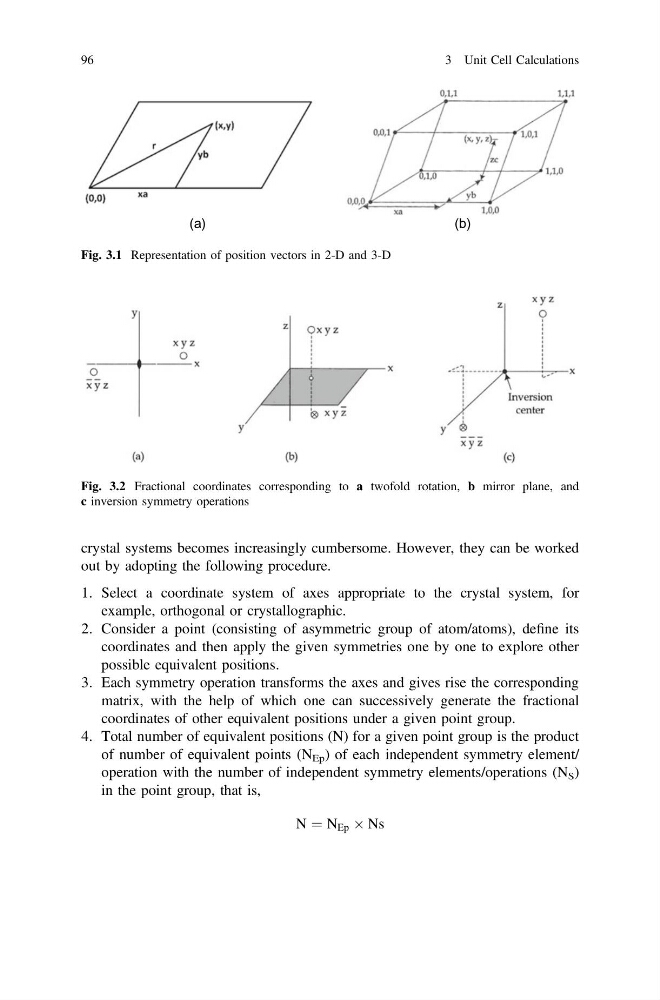
Fig. 3.1 Representation of position vectors in 2-D and 3-D
Fig. 3.2 Fractional coordinates corresponding to a twofold rotation, b mirror plane, and
c inversion symmetry operations
96
3 Unit Cell Calculations
out by adopting the following procedure.
1. Select a coordinate system of axes appropriate to the crystal system, for
example, orthogonal or crystallographic.
2. Consider a point (consisting of asymmetric group of atom/atoms), define its
coordinates and then apply the given symmetries one by one to explore other
possible equivalent positions.
3. Each symmetry operation transforms the axes and gives rise the corresponding
matrix, with the help of which one can successively generate the fractional
coordinates of other equivalent positions under a given point group.
4. Total number of equivalent positions (N) for a given point group is the product
of number of equivalent points (N Ep ) of each independent symmetry element/
operation with the number of independent symmetry elements/operations (N S )
in the point group, that is,
N ¼ N Ep  Ns
(a)
(b)
Fig. 3.1 Representation of position vectors in 2-D and 3-D
Fig. 3.2 Fractional coordinates corresponding to a twofold rotation, b mirror plane, and
c inversion symmetry operations
96
3 Unit Cell Calculations