

288
W. Qiu and X.-Y. Liu
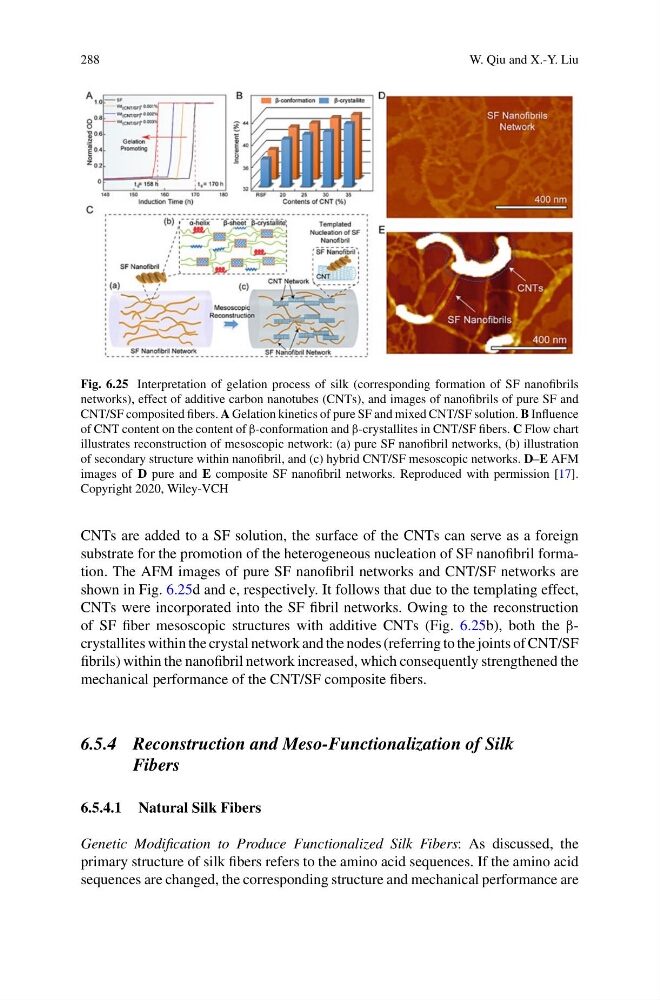
Fig. 6.25 Interpretation of gelation process of silk (corresponding formation of SF nanofibrils
networks), effect of additive carbon nanotubes (CNTs), and images of nanofibrils of pure SF and
CNT/SF composited fibers. A Gelation kinetics of pure SF and mixed CNT/SF solution. B Influence
of CNT content on the content of β-conformation and β-crystallites in CNT/SF fibers. C Flow chart
illustrates reconstruction of mesoscopic network: (a) pure SF nanofibril networks, (b) illustration
of secondary structure within nanofibril, and (c) hybrid CNT/SF mesoscopic networks. D–E AFM
images of D pure and E composite SF nanofibril networks. Reproduced with permission [17].
Copyright 2020, Wiley-VCH
CNTs are added to a SF solution, the surface of the CNTs can serve as a foreign
substrate for the promotion of the heterogeneous nucleation of SF nanofibril formation. The AFM images of pure SF nanofibril networks and CNT/SF networks are
shown in Fig. 6.25d and e, respectively. It follows that due to the templating effect,
CNTs were incorporated into the SF fibril networks. Owing to the reconstruction
of SF fiber mesoscopic structures with additive CNTs (Fig. 6.25b), both the βcrystallites within the crystal network and the nodes (referring to the joints of CNT/SF
fibrils) within the nanofibril network increased, which consequently strengthened the
mechanical performance of the CNT/SF composite fibers.
6.5.4 Reconstruction and Meso-Functionalization of Silk
Fibers
6.5.4.1 Natural Silk Fibers
Genetic Modification to Produce Functionalized Silk Fibers: As discussed, the
primary structure of silk fibers refers to the amino acid sequences. If the amino acid
sequences are changed, the corresponding structure and mechanical performance are
W. Qiu and X.-Y. Liu
Fig. 6.25 Interpretation of gelation process of silk (corresponding formation of SF nanofibrils
networks), effect of additive carbon nanotubes (CNTs), and images of nanofibrils of pure SF and
CNT/SF composited fibers. A Gelation kinetics of pure SF and mixed CNT/SF solution. B Influence
of CNT content on the content of β-conformation and β-crystallites in CNT/SF fibers. C Flow chart
illustrates reconstruction of mesoscopic network: (a) pure SF nanofibril networks, (b) illustration
of secondary structure within nanofibril, and (c) hybrid CNT/SF mesoscopic networks. D–E AFM
images of D pure and E composite SF nanofibril networks. Reproduced with permission [17].
Copyright 2020, Wiley-VCH
CNTs are added to a SF solution, the surface of the CNTs can serve as a foreign
substrate for the promotion of the heterogeneous nucleation of SF nanofibril formation. The AFM images of pure SF nanofibril networks and CNT/SF networks are
shown in Fig. 6.25d and e, respectively. It follows that due to the templating effect,
CNTs were incorporated into the SF fibril networks. Owing to the reconstruction
of SF fiber mesoscopic structures with additive CNTs (Fig. 6.25b), both the βcrystallites within the crystal network and the nodes (referring to the joints of CNT/SF
fibrils) within the nanofibril network increased, which consequently strengthened the
mechanical performance of the CNT/SF composite fibers.
6.5.4 Reconstruction and Meso-Functionalization of Silk
Fibers
6.5.4.1 Natural Silk Fibers
Genetic Modification to Produce Functionalized Silk Fibers: As discussed, the
primary structure of silk fibers refers to the amino acid sequences. If the amino acid
sequences are changed, the corresponding structure and mechanical performance are