

282
W. Qiu and X.-Y. Liu
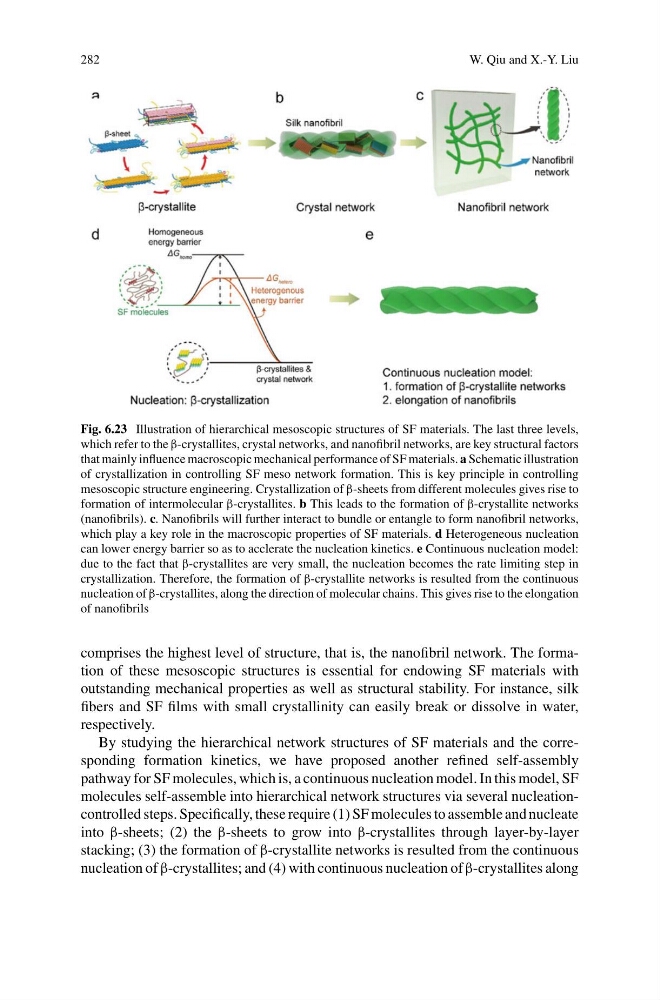
Fig. 6.23 Illustration of hierarchical mesoscopic structures of SF materials. The last three levels,
which refer to the β-crystallites, crystal networks, and nanofibril networks, are key structural factors
that mainly influence macroscopic mechanical performance of SF materials. a Schematic illustration
of crystallization in controlling SF meso network formation. This is key principle in controlling
mesoscopic structure engineering. Crystallization of β-sheets from different molecules gives rise to
formation of intermolecular β-crystallites. b This leads to the formation of β-crystallite networks
(nanofibrils). c. Nanofibrils will further interact to bundle or entangle to form nanofibril networks,
which play a key role in the macroscopic properties of SF materials. d Heterogeneous nucleation
can lower energy barrier so as to acclerate the nucleation kinetics. e Continuous nucleation model:
due to the fact that β-crystallites are very small, the nucleation becomes the rate limiting step in
crystallization. Therefore, the formation of β-crystallite networks is resulted from the continuous
nucleation of β-crystallites, along the direction of molecular chains. This gives rise to the elongation
of nanofibrils
comprises the highest level of structure, that is, the nanofibril network. The formation of these mesoscopic structures is essential for endowing SF materials with
outstanding mechanical properties as well as structural stability. For instance, silk
fibers and SF films with small crystallinity can easily break or dissolve in water,
respectively.
By studying the hierarchical network structures of SF materials and the corresponding formation kinetics, we have proposed another refined self-assembly
pathway for SF molecules, which is, a continuous nucleation model. In this model, SF
molecules self-assemble into hierarchical network structures via several nucleationcontrolled steps. Specifically, these require (1) SF molecules to assemble and nucleate
into β-sheets; (2) the β-sheets to grow into β-crystallites through layer-by-layer
stacking; (3) the formation of β-crystallite networks is resulted from the continuous
nucleation of β-crystallites; and (4) with continuous nucleation of β-crystallites along
W. Qiu and X.-Y. Liu
Fig. 6.23 Illustration of hierarchical mesoscopic structures of SF materials. The last three levels,
which refer to the β-crystallites, crystal networks, and nanofibril networks, are key structural factors
that mainly influence macroscopic mechanical performance of SF materials. a Schematic illustration
of crystallization in controlling SF meso network formation. This is key principle in controlling
mesoscopic structure engineering. Crystallization of β-sheets from different molecules gives rise to
formation of intermolecular β-crystallites. b This leads to the formation of β-crystallite networks
(nanofibrils). c. Nanofibrils will further interact to bundle or entangle to form nanofibril networks,
which play a key role in the macroscopic properties of SF materials. d Heterogeneous nucleation
can lower energy barrier so as to acclerate the nucleation kinetics. e Continuous nucleation model:
due to the fact that β-crystallites are very small, the nucleation becomes the rate limiting step in
crystallization. Therefore, the formation of β-crystallite networks is resulted from the continuous
nucleation of β-crystallites, along the direction of molecular chains. This gives rise to the elongation
of nanofibrils
comprises the highest level of structure, that is, the nanofibril network. The formation of these mesoscopic structures is essential for endowing SF materials with
outstanding mechanical properties as well as structural stability. For instance, silk
fibers and SF films with small crystallinity can easily break or dissolve in water,
respectively.
By studying the hierarchical network structures of SF materials and the corresponding formation kinetics, we have proposed another refined self-assembly
pathway for SF molecules, which is, a continuous nucleation model. In this model, SF
molecules self-assemble into hierarchical network structures via several nucleationcontrolled steps. Specifically, these require (1) SF molecules to assemble and nucleate
into β-sheets; (2) the β-sheets to grow into β-crystallites through layer-by-layer
stacking; (3) the formation of β-crystallite networks is resulted from the continuous
nucleation of β-crystallites; and (4) with continuous nucleation of β-crystallites along