

4 An Introduction to Emergence Dynamics in Complex Systems
145
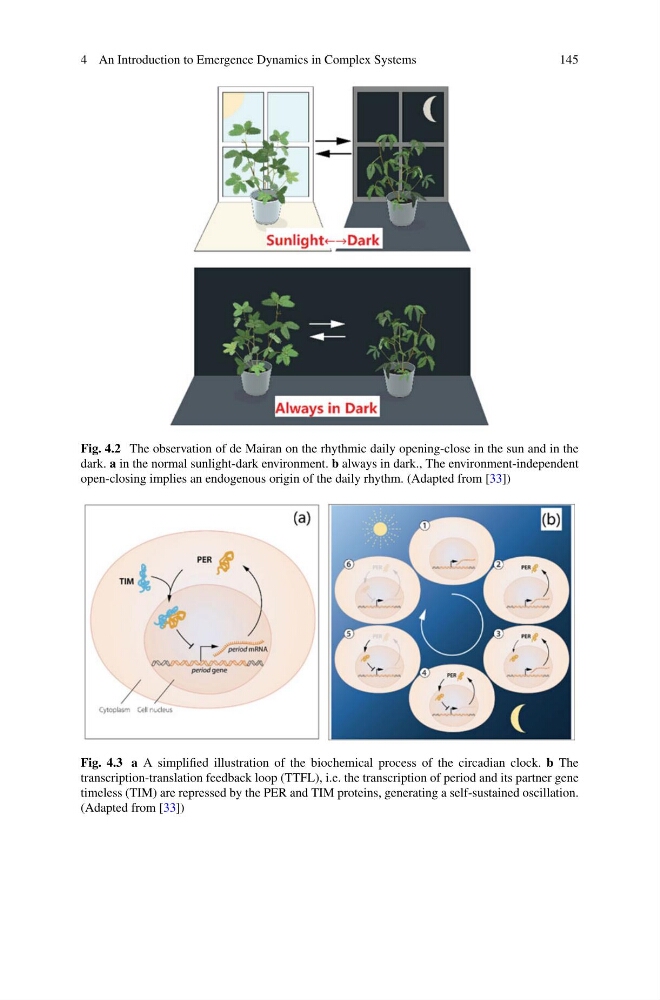
Fig. 4.2 The observation of de Mairan on the rhythmic daily opening-close in the sun and in the
dark. a in the normal sunlight-dark environment. b always in dark., The environment-independent
open-closing implies an endogenous origin of the daily rhythm. (Adapted from [33])
Fig. 4.3 a A simplified illustration of the biochemical process of the circadian clock. b The
transcription-translation feedback loop (TTFL), i.e. the transcription of period and its partner gene
timeless (TIM) are repressed by the PER and TIM proteins, generating a self-sustained oscillation.
(Adapted from [33])
145
Fig. 4.2 The observation of de Mairan on the rhythmic daily opening-close in the sun and in the
dark. a in the normal sunlight-dark environment. b always in dark., The environment-independent
open-closing implies an endogenous origin of the daily rhythm. (Adapted from [33])
Fig. 4.3 a A simplified illustration of the biochemical process of the circadian clock. b The
transcription-translation feedback loop (TTFL), i.e. the transcription of period and its partner gene
timeless (TIM) are repressed by the PER and TIM proteins, generating a self-sustained oscillation.
(Adapted from [33])