

218
5 Blow That Horn: An Elementary Model of Brass Playing
theoretical and computational techniques used to identify the oscillatory states of
the elementary model are explained in more detail, and predictions of the model are
compared with the behaviour experienced by players of real brass instruments.
5.1 The Three Equations of the Brass Instrument Model
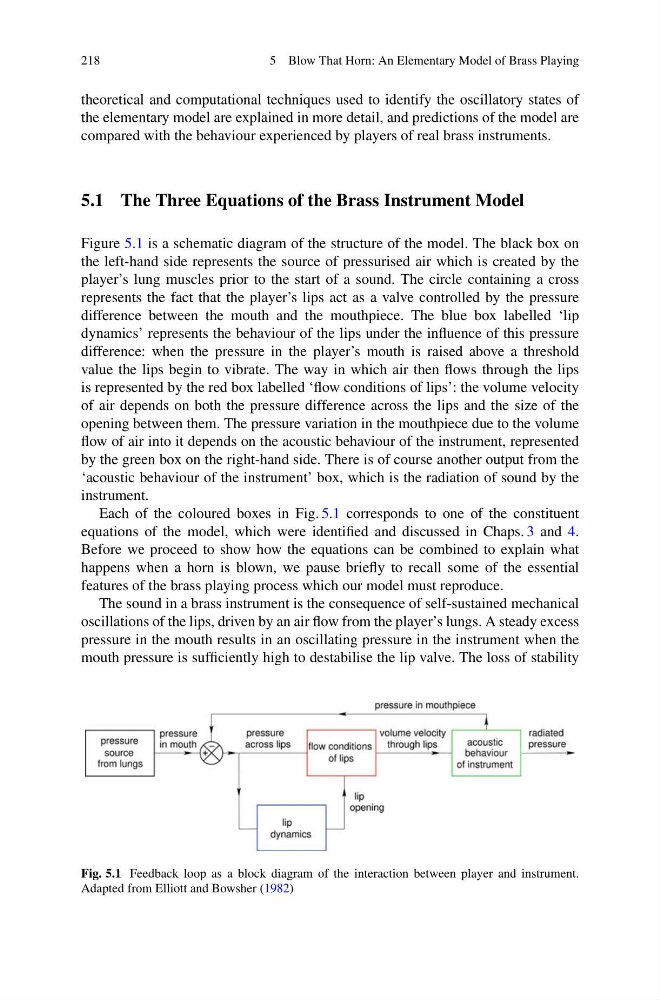
Figure 5.1 is a schematic diagram of the structure of the model. The black box on
the left-hand side represents the source of pressurised air which is created by the
player’s lung muscles prior to the start of a sound. The circle containing a cross
represents the fact that the player’s lips act as a valve controlled by the pressure
difference between the mouth and the mouthpiece. The blue box labelled ‘lip
dynamics’ represents the behaviour of the lips under the influence of this pressure
difference: when the pressure in the player’s mouth is raised above a threshold
value the lips begin to vibrate. The way in which air then flows through the lips
is represented by the red box labelled ‘flow conditions of lips’: the volume velocity
of air depends on both the pressure difference across the lips and the size of the
opening between them. The pressure variation in the mouthpiece due to the volume
flow of air into it depends on the acoustic behaviour of the instrument, represented
by the green box on the right-hand side. There is of course another output from the
‘acoustic behaviour of the instrument’ box, which is the radiation of sound by the
instrument.
Each of the coloured boxes in Fig. 5.1 corresponds to one of the constituent
equations of the model, which were identified and discussed in Chaps. 3 and 4.
Before we proceed to show how the equations can be combined to explain what
happens when a horn is blown, we pause briefly to recall some of the essential
features of the brass playing process which our model must reproduce.
The sound in a brass instrument is the consequence of self-sustained mechanical
oscillations of the lips, driven by an air flow from the player’s lungs. A steady excess
pressure in the mouth results in an oscillating pressure in the instrument when the
mouth pressure is sufficiently high to destabilise the lip valve. The loss of stability
Fig. 5.1 Feedback loop as a block diagram of the interaction between player and instrument.
Adapted from Elliott and Bowsher (1982)
5 Blow That Horn: An Elementary Model of Brass Playing
theoretical and computational techniques used to identify the oscillatory states of
the elementary model are explained in more detail, and predictions of the model are
compared with the behaviour experienced by players of real brass instruments.
5.1 The Three Equations of the Brass Instrument Model
Figure 5.1 is a schematic diagram of the structure of the model. The black box on
the left-hand side represents the source of pressurised air which is created by the
player’s lung muscles prior to the start of a sound. The circle containing a cross
represents the fact that the player’s lips act as a valve controlled by the pressure
difference between the mouth and the mouthpiece. The blue box labelled ‘lip
dynamics’ represents the behaviour of the lips under the influence of this pressure
difference: when the pressure in the player’s mouth is raised above a threshold
value the lips begin to vibrate. The way in which air then flows through the lips
is represented by the red box labelled ‘flow conditions of lips’: the volume velocity
of air depends on both the pressure difference across the lips and the size of the
opening between them. The pressure variation in the mouthpiece due to the volume
flow of air into it depends on the acoustic behaviour of the instrument, represented
by the green box on the right-hand side. There is of course another output from the
‘acoustic behaviour of the instrument’ box, which is the radiation of sound by the
instrument.
Each of the coloured boxes in Fig. 5.1 corresponds to one of the constituent
equations of the model, which were identified and discussed in Chaps. 3 and 4.
Before we proceed to show how the equations can be combined to explain what
happens when a horn is blown, we pause briefly to recall some of the essential
features of the brass playing process which our model must reproduce.
The sound in a brass instrument is the consequence of self-sustained mechanical
oscillations of the lips, driven by an air flow from the player’s lungs. A steady excess
pressure in the mouth results in an oscillating pressure in the instrument when the
mouth pressure is sufficiently high to destabilise the lip valve. The loss of stability
Fig. 5.1 Feedback loop as a block diagram of the interaction between player and instrument.
Adapted from Elliott and Bowsher (1982)