

4.7 Going Further: Calculating Input Impedance
197
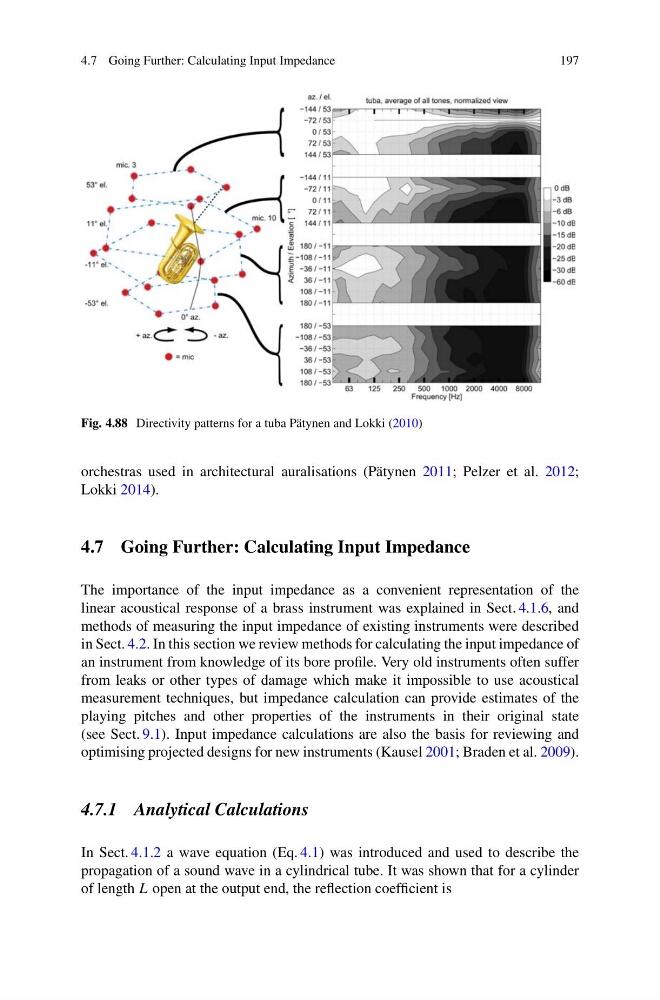
Fig. 4.88 Directivity patterns for a tuba Pätynen and Lokki (2010)
orchestras used in architectural auralisations (Pätynen 2011; Pelzer et al. 2012;
Lokki 2014).
4.7 Going Further: Calculating Input Impedance
The importance of the input impedance as a convenient representation of the
linear acoustical response of a brass instrument was explained in Sect. 4.1.6, and
methods of measuring the input impedance of existing instruments were described
in Sect. 4.2. In this section we review methods for calculating the input impedance of
an instrument from knowledge of its bore profile. Very old instruments often suffer
from leaks or other types of damage which make it impossible to use acoustical
measurement techniques, but impedance calculation can provide estimates of the
playing pitches and other properties of the instruments in their original state
(see Sect. 9.1). Input impedance calculations are also the basis for reviewing and
optimising projected designs for new instruments (Kausel 2001; Braden et al. 2009).
4.7.1 Analytical Calculations
In Sect. 4.1.2 a wave equation (Eq. 4.1) was introduced and used to describe the
propagation of a sound wave in a cylindrical tube. It was shown that for a cylinder
of length L open at the output end, the reflection coefficient is
197
Fig. 4.88 Directivity patterns for a tuba Pätynen and Lokki (2010)
orchestras used in architectural auralisations (Pätynen 2011; Pelzer et al. 2012;
Lokki 2014).
4.7 Going Further: Calculating Input Impedance
The importance of the input impedance as a convenient representation of the
linear acoustical response of a brass instrument was explained in Sect. 4.1.6, and
methods of measuring the input impedance of existing instruments were described
in Sect. 4.2. In this section we review methods for calculating the input impedance of
an instrument from knowledge of its bore profile. Very old instruments often suffer
from leaks or other types of damage which make it impossible to use acoustical
measurement techniques, but impedance calculation can provide estimates of the
playing pitches and other properties of the instruments in their original state
(see Sect. 9.1). Input impedance calculations are also the basis for reviewing and
optimising projected designs for new instruments (Kausel 2001; Braden et al. 2009).
4.7.1 Analytical Calculations
In Sect. 4.1.2 a wave equation (Eq. 4.1) was introduced and used to describe the
propagation of a sound wave in a cylindrical tube. It was shown that for a cylinder
of length L open at the output end, the reflection coefficient is