

6
E. Bonnet
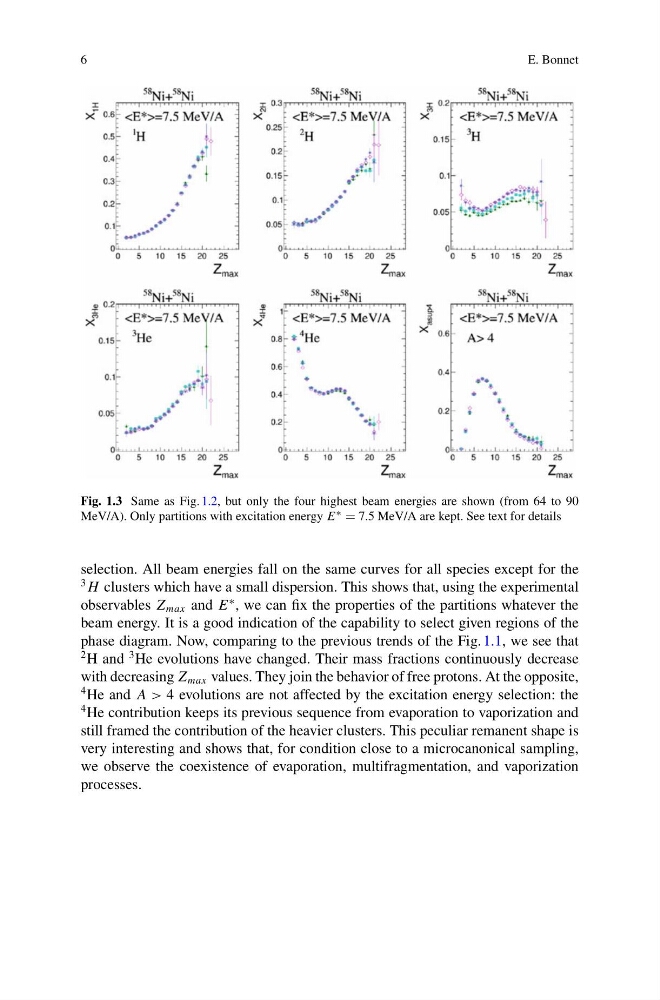
Fig. 1.3 Same as Fig. 1.2, but only the four highest beam energies are shown (from 64 to 90
MeV/A). Only partitions with excitation energy E ∗ = 7.5 MeV/A are kept. See text for details
selection. All beam energies fall on the same curves for all species except for the
3 H clusters which have a small dispersion. This shows that, using the experimental
observables Z max and E
∗ , we can fix the properties of the partitions whatever the
beam energy. It is a good indication of the capability to select given regions of the
phase diagram. Now, comparing to the previous trends of the Fig. 1.1, we see that
2 H and
3 He evolutions have changed. Their mass fractions continuously decrease
with decreasing Z max values. They join the behavior of free protons. At the opposite,
4 He and A > 4 evolutions are not affected by the excitation energy selection: the
4 He contribution keeps its previous sequence from evaporation to vaporization and
still framed the contribution of the heavier clusters. This peculiar remanent shape is
very interesting and shows that, for condition close to a microcanonical sampling,
we observe the coexistence of evaporation, multifragmentation, and vaporization
processes.
E. Bonnet
Fig. 1.3 Same as Fig. 1.2, but only the four highest beam energies are shown (from 64 to 90
MeV/A). Only partitions with excitation energy E ∗ = 7.5 MeV/A are kept. See text for details
selection. All beam energies fall on the same curves for all species except for the
3 H clusters which have a small dispersion. This shows that, using the experimental
observables Z max and E
∗ , we can fix the properties of the partitions whatever the
beam energy. It is a good indication of the capability to select given regions of the
phase diagram. Now, comparing to the previous trends of the Fig. 1.1, we see that
2 H and
3 He evolutions have changed. Their mass fractions continuously decrease
with decreasing Z max values. They join the behavior of free protons. At the opposite,
4 He and A > 4 evolutions are not affected by the excitation energy selection: the
4 He contribution keeps its previous sequence from evaporation to vaporization and
still framed the contribution of the heavier clusters. This peculiar remanent shape is
very interesting and shows that, for condition close to a microcanonical sampling,
we observe the coexistence of evaporation, multifragmentation, and vaporization
processes.