

56
3 System Design of Lunar Lander
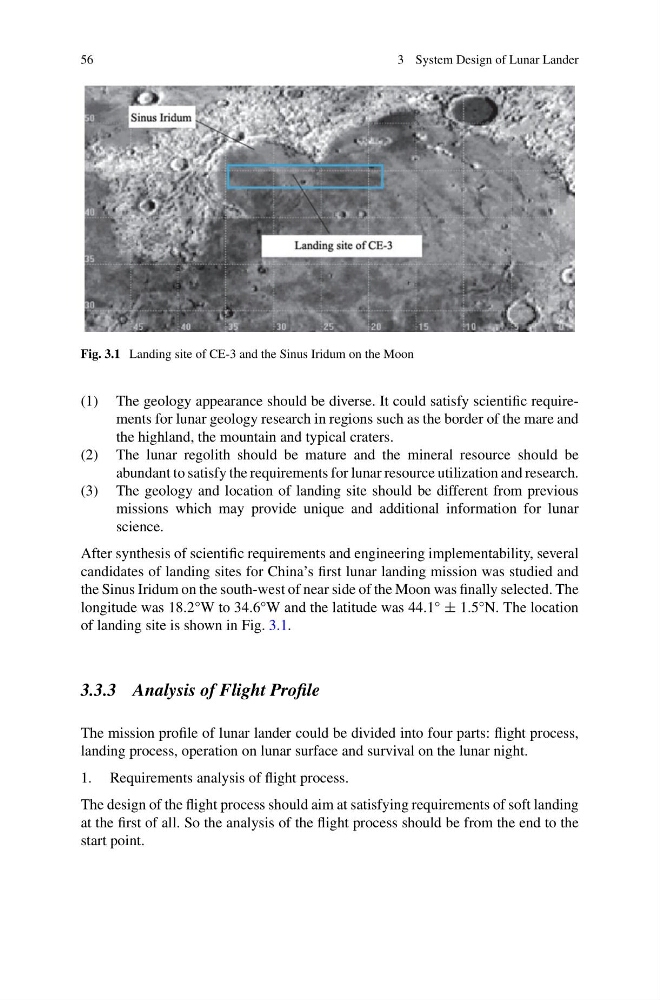
Fig. 3.1 Landing site of CE-3 and the Sinus Iridum on the Moon
(1) The geology appearance should be diverse. It could satisfy scientific requirements for lunar geology research in regions such as the border of the mare and
the highland, the mountain and typical craters.
(2) The lunar regolith should be mature and the mineral resource should be
abundant to satisfy the requirements for lunar resource utilization and research.
(3) The geology and location of landing site should be different from previous
missions which may provide unique and additional information for lunar
science.
After synthesis of scientific requirements and engineering implementability, several
candidates of landing sites for China’s first lunar landing mission was studied and
the Sinus Iridum on the south-west of near side of the Moon was finally selected. The
longitude was 18.2°W to 34.6°W and the latitude was 44.1° ± 1.5°N. The location
of landing site is shown in Fig. 3.1.
3.3.3 Analysis of Flight Profile
The mission profile of lunar lander could be divided into four parts: flight process,
landing process, operation on lunar surface and survival on the lunar night.
1. Requirements analysis of flight process.
The design of the flight process should aim at satisfying requirements of soft landing
at the first of all. So the analysis of the flight process should be from the end to the
start point.
3 System Design of Lunar Lander
Fig. 3.1 Landing site of CE-3 and the Sinus Iridum on the Moon
(1) The geology appearance should be diverse. It could satisfy scientific requirements for lunar geology research in regions such as the border of the mare and
the highland, the mountain and typical craters.
(2) The lunar regolith should be mature and the mineral resource should be
abundant to satisfy the requirements for lunar resource utilization and research.
(3) The geology and location of landing site should be different from previous
missions which may provide unique and additional information for lunar
science.
After synthesis of scientific requirements and engineering implementability, several
candidates of landing sites for China’s first lunar landing mission was studied and
the Sinus Iridum on the south-west of near side of the Moon was finally selected. The
longitude was 18.2°W to 34.6°W and the latitude was 44.1° ± 1.5°N. The location
of landing site is shown in Fig. 3.1.
3.3.3 Analysis of Flight Profile
The mission profile of lunar lander could be divided into four parts: flight process,
landing process, operation on lunar surface and survival on the lunar night.
1. Requirements analysis of flight process.
The design of the flight process should aim at satisfying requirements of soft landing
at the first of all. So the analysis of the flight process should be from the end to the
start point.