

15.9 Test of Plume Effect on Thermal Control
515
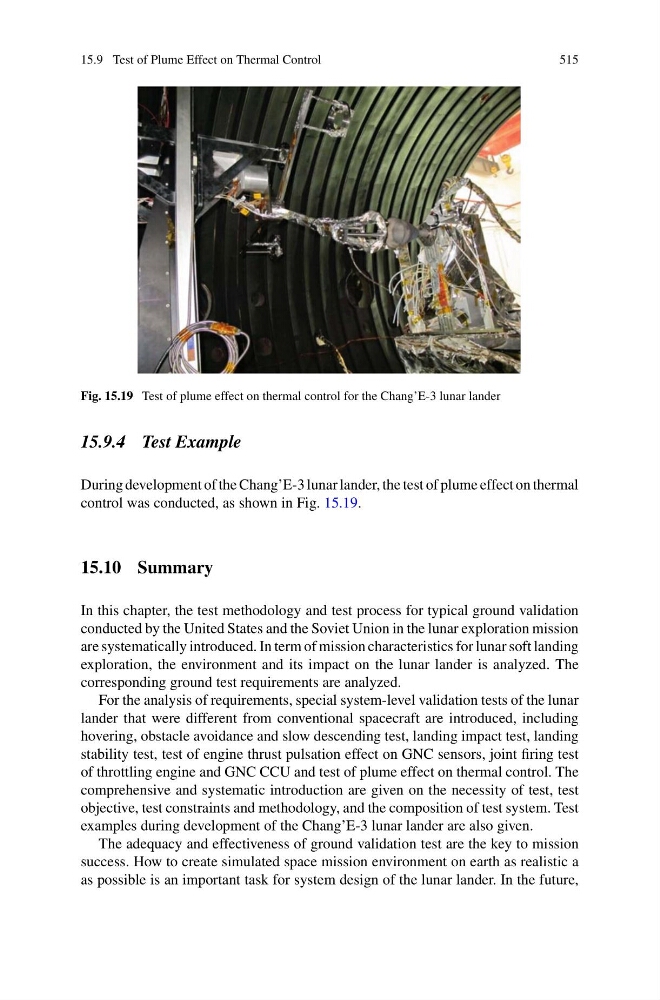
Fig. 15.19 Test of plume effect on thermal control for the Chang’E-3 lunar lander
15.9.4 Test Example
During development of the Chang’E-3 lunar lander, the test of plume effect on thermal
control was conducted, as shown in Fig. 15.19.
15.10 Summary
In this chapter, the test methodology and test process for typical ground validation
conducted by the United States and the Soviet Union in the lunar exploration mission
are systematically introduced. In term of mission characteristics for lunar soft landing
exploration, the environment and its impact on the lunar lander is analyzed. The
corresponding ground test requirements are analyzed.
For the analysis of requirements, special system-level validation tests of the lunar
lander that were different from conventional spacecraft are introduced, including
hovering, obstacle avoidance and slow descending test, landing impact test, landing
stability test, test of engine thrust pulsation effect on GNC sensors, joint firing test
of throttling engine and GNC CCU and test of plume effect on thermal control. The
comprehensive and systematic introduction are given on the necessity of test, test
objective, test constraints and methodology, and the composition of test system. Test
examples during development of the Chang’E-3 lunar lander are also given.
The adequacy and effectiveness of ground validation test are the key to mission
success. How to create simulated space mission environment on earth as realistic a
as possible is an important task for system design of the lunar lander. In the future,
515
Fig. 15.19 Test of plume effect on thermal control for the Chang’E-3 lunar lander
15.9.4 Test Example
During development of the Chang’E-3 lunar lander, the test of plume effect on thermal
control was conducted, as shown in Fig. 15.19.
15.10 Summary
In this chapter, the test methodology and test process for typical ground validation
conducted by the United States and the Soviet Union in the lunar exploration mission
are systematically introduced. In term of mission characteristics for lunar soft landing
exploration, the environment and its impact on the lunar lander is analyzed. The
corresponding ground test requirements are analyzed.
For the analysis of requirements, special system-level validation tests of the lunar
lander that were different from conventional spacecraft are introduced, including
hovering, obstacle avoidance and slow descending test, landing impact test, landing
stability test, test of engine thrust pulsation effect on GNC sensors, joint firing test
of throttling engine and GNC CCU and test of plume effect on thermal control. The
comprehensive and systematic introduction are given on the necessity of test, test
objective, test constraints and methodology, and the composition of test system. Test
examples during development of the Chang’E-3 lunar lander are also given.
The adequacy and effectiveness of ground validation test are the key to mission
success. How to create simulated space mission environment on earth as realistic a
as possible is an important task for system design of the lunar lander. In the future,