

14.4 Electrical Testing Plan
467
Self-check
test
Joint test of
Lander and
Rover
Phase A
Phase B
Phase C
Joint Test
Phase D
Phase A
Phase B
Phase C
Cable plug
status setting
OBDH subsystem
interface check
TT&C uplink
channel check
Electrical Power
subsystem
interface check
Telecommand
interface check
TT&C downlink
channel check
Other Subsystem
power supply
interface check
TT&C and
telecommunication
subsystem test
OBDH
subsystem test
Electrical
Power
subsystem test
Thermal
Control
subsystem test
Directional Antenna
subsystem test
Structure &
Mechanism
subsystem test
Propulsion
subsystem test
GNC subsystem
test
Landing gears
subsystem test
Scientific payload
subsystem test
Engineering
parameter
subsystem test
Launch and LTO
flight simulation
test
LLO and powered
descent flight
simulation test
Operation on lunar
surface simulation
test
Hibernation&
awakened flight
simulation test
Failure mode test
Flight simulation
test (backup)
Wireless mode
test
Self-check
test
Flight simulation
test
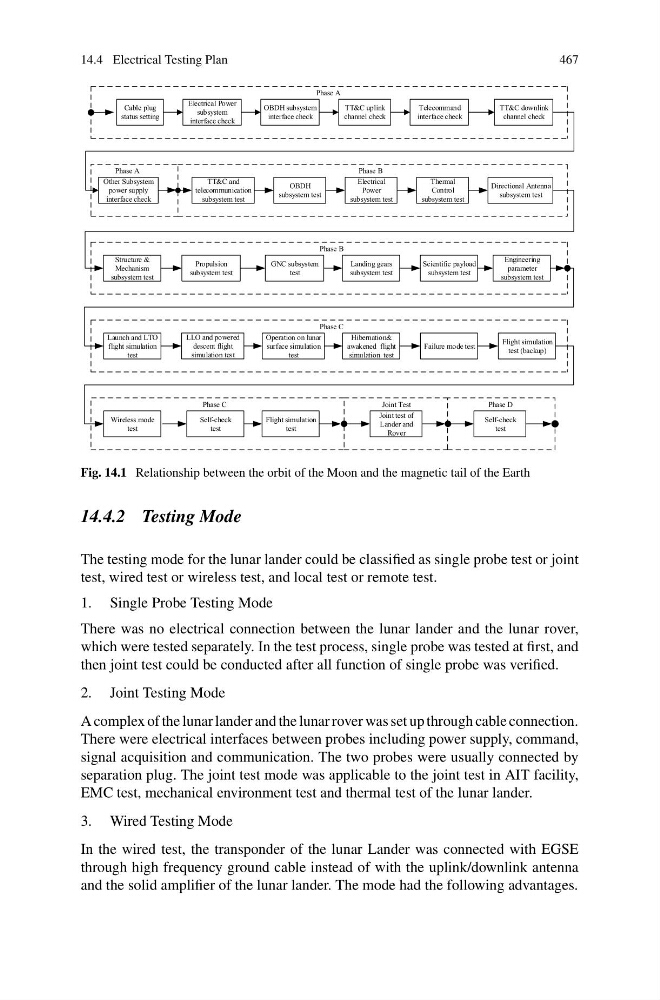
Fig. 14.1 Relationship between the orbit of the Moon and the magnetic tail of the Earth
14.4.2 Testing Mode
The testing mode for the lunar lander could be classified as single probe test or joint
test, wired test or wireless test, and local test or remote test.
1. Single Probe Testing Mode
There was no electrical connection between the lunar lander and the lunar rover,
which were tested separately. In the test process, single probe was tested at first, and
then joint test could be conducted after all function of single probe was verified.
2. Joint Testing Mode
A complex of the lunar lander and the lunar rover was set up through cable connection.
There were electrical interfaces between probes including power supply, command,
signal acquisition and communication. The two probes were usually connected by
separation plug. The joint test mode was applicable to the joint test in AIT facility,
EMC test, mechanical environment test and thermal test of the lunar lander.
3. Wired Testing Mode
In the wired test, the transponder of the lunar Lander was connected with EGSE
through high frequency ground cable instead of with the uplink/downlink antenna
and the solid amplifier of the lunar lander. The mode had the following advantages.
467
Self-check
test
Joint test of
Lander and
Rover
Phase A
Phase B
Phase C
Joint Test
Phase D
Phase A
Phase B
Phase C
Cable plug
status setting
OBDH subsystem
interface check
TT&C uplink
channel check
Electrical Power
subsystem
interface check
Telecommand
interface check
TT&C downlink
channel check
Other Subsystem
power supply
interface check
TT&C and
telecommunication
subsystem test
OBDH
subsystem test
Electrical
Power
subsystem test
Thermal
Control
subsystem test
Directional Antenna
subsystem test
Structure &
Mechanism
subsystem test
Propulsion
subsystem test
GNC subsystem
test
Landing gears
subsystem test
Scientific payload
subsystem test
Engineering
parameter
subsystem test
Launch and LTO
flight simulation
test
LLO and powered
descent flight
simulation test
Operation on lunar
surface simulation
test
Hibernation&
awakened flight
simulation test
Failure mode test
Flight simulation
test (backup)
Wireless mode
test
Self-check
test
Flight simulation
test
Fig. 14.1 Relationship between the orbit of the Moon and the magnetic tail of the Earth
14.4.2 Testing Mode
The testing mode for the lunar lander could be classified as single probe test or joint
test, wired test or wireless test, and local test or remote test.
1. Single Probe Testing Mode
There was no electrical connection between the lunar lander and the lunar rover,
which were tested separately. In the test process, single probe was tested at first, and
then joint test could be conducted after all function of single probe was verified.
2. Joint Testing Mode
A complex of the lunar lander and the lunar rover was set up through cable connection.
There were electrical interfaces between probes including power supply, command,
signal acquisition and communication. The two probes were usually connected by
separation plug. The joint test mode was applicable to the joint test in AIT facility,
EMC test, mechanical environment test and thermal test of the lunar lander.
3. Wired Testing Mode
In the wired test, the transponder of the lunar Lander was connected with EGSE
through high frequency ground cable instead of with the uplink/downlink antenna
and the solid amplifier of the lunar lander. The mode had the following advantages.