

12.5 Typical Application of System Integration and Assembly
427
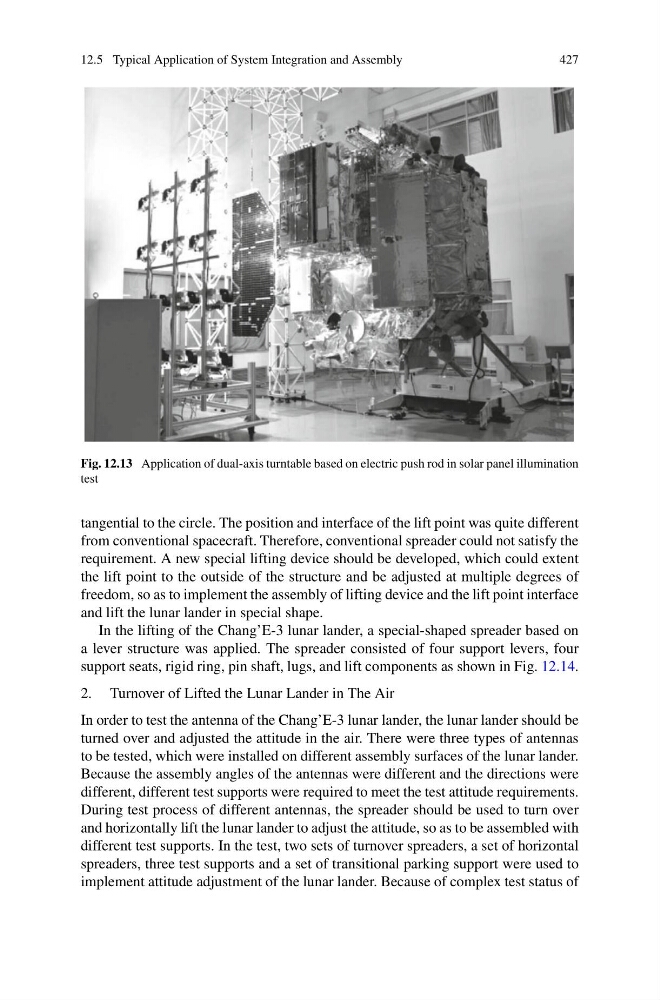
Fig. 12.13 Application of dual-axis turntable based on electric push rod in solar panel illumination
test
tangential to the circle. The position and interface of the lift point was quite different
from conventional spacecraft. Therefore, conventional spreader could not satisfy the
requirement. A new special lifting device should be developed, which could extent
the lift point to the outside of the structure and be adjusted at multiple degrees of
freedom, so as to implement the assembly of lifting device and the lift point interface
and lift the lunar lander in special shape.
In the lifting of the Chang’E-3 lunar lander, a special-shaped spreader based on
a lever structure was applied. The spreader consisted of four support levers, four
support seats, rigid ring, pin shaft, lugs, and lift components as shown in Fig. 12.14.
2. Turnover of Lifted the Lunar Lander in The Air
In order to test the antenna of the Chang’E-3 lunar lander, the lunar lander should be
turned over and adjusted the attitude in the air. There were three types of antennas
to be tested, which were installed on different assembly surfaces of the lunar lander.
Because the assembly angles of the antennas were different and the directions were
different, different test supports were required to meet the test attitude requirements.
During test process of different antennas, the spreader should be used to turn over
and horizontally lift the lunar lander to adjust the attitude, so as to be assembled with
different test supports. In the test, two sets of turnover spreaders, a set of horizontal
spreaders, three test supports and a set of transitional parking support were used to
implement attitude adjustment of the lunar lander. Because of complex test status of
427
Fig. 12.13 Application of dual-axis turntable based on electric push rod in solar panel illumination
test
tangential to the circle. The position and interface of the lift point was quite different
from conventional spacecraft. Therefore, conventional spreader could not satisfy the
requirement. A new special lifting device should be developed, which could extent
the lift point to the outside of the structure and be adjusted at multiple degrees of
freedom, so as to implement the assembly of lifting device and the lift point interface
and lift the lunar lander in special shape.
In the lifting of the Chang’E-3 lunar lander, a special-shaped spreader based on
a lever structure was applied. The spreader consisted of four support levers, four
support seats, rigid ring, pin shaft, lugs, and lift components as shown in Fig. 12.14.
2. Turnover of Lifted the Lunar Lander in The Air
In order to test the antenna of the Chang’E-3 lunar lander, the lunar lander should be
turned over and adjusted the attitude in the air. There were three types of antennas
to be tested, which were installed on different assembly surfaces of the lunar lander.
Because the assembly angles of the antennas were different and the directions were
different, different test supports were required to meet the test attitude requirements.
During test process of different antennas, the spreader should be used to turn over
and horizontally lift the lunar lander to adjust the attitude, so as to be assembled with
different test supports. In the test, two sets of turnover spreaders, a set of horizontal
spreaders, three test supports and a set of transitional parking support were used to
implement attitude adjustment of the lunar lander. Because of complex test status of