

388
11 Landing Gear Technology of Lunar Lander
Landing dynamics
simulation
Safety boundary analysis
Monte Carlo landing
stability analysis
Rigid dynamics model
Flexable dynamics model
Modeling method
selection
Optimum modeling
method
Typical extreme landing
conditions analysis
Correlation with test
results
Acquiring safety landing
boundaries
Model correction
Great consistency?
Landing dynamics
analysis report
Probability distribution of
input parameters
Input total times of
random simulation N
Set current time n = 0
Construct a random
landing condition
Set n = n + 1
Landing stability analysis
Test n = N ?
Acquiring reliability of
stable landing
No
Yes
Yes
No
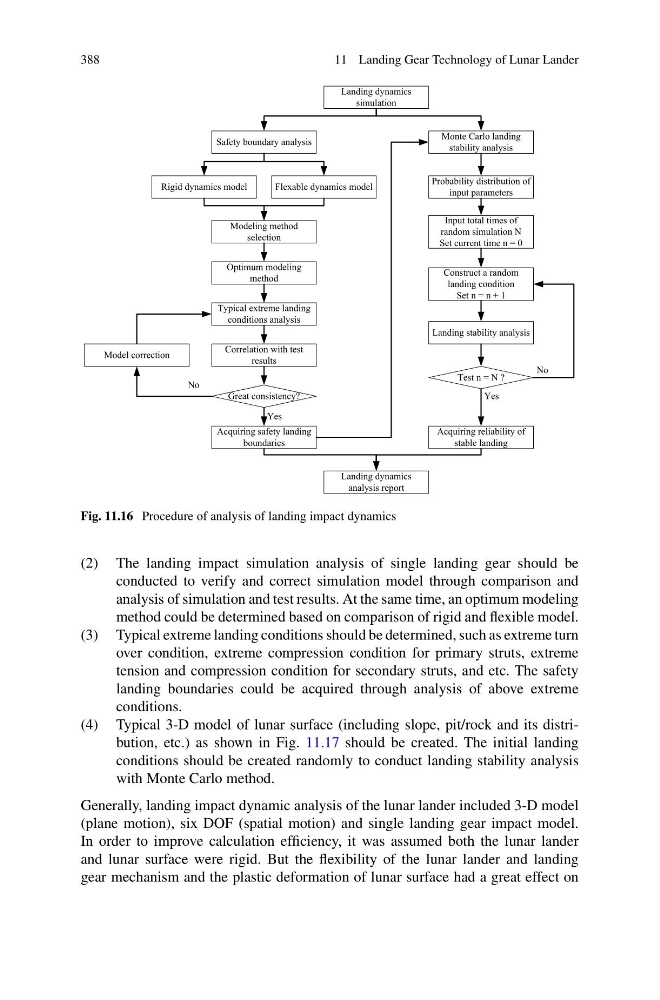
Fig. 11.16 Procedure of analysis of landing impact dynamics
(2) The landing impact simulation analysis of single landing gear should be
conducted to verify and correct simulation model through comparison and
analysis of simulation and test results. At the same time, an optimum modeling
method could be determined based on comparison of rigid and flexible model.
(3) Typical extreme landing conditions should be determined, such as extreme turn
over condition, extreme compression condition for primary struts, extreme
tension and compression condition for secondary struts, and etc. The safety
landing boundaries could be acquired through analysis of above extreme
conditions.
(4) Typical 3-D model of lunar surface (including slope, pit/rock and its distribution, etc.) as shown in Fig. 11.17 should be created. The initial landing
conditions should be created randomly to conduct landing stability analysis
with Monte Carlo method.
Generally, landing impact dynamic analysis of the lunar lander included 3-D model
(plane motion), six DOF (spatial motion) and single landing gear impact model.
In order to improve calculation efficiency, it was assumed both the lunar lander
and lunar surface were rigid. But the flexibility of the lunar lander and landing
gear mechanism and the plastic deformation of lunar surface had a great effect on
11 Landing Gear Technology of Lunar Lander
Landing dynamics
simulation
Safety boundary analysis
Monte Carlo landing
stability analysis
Rigid dynamics model
Flexable dynamics model
Modeling method
selection
Optimum modeling
method
Typical extreme landing
conditions analysis
Correlation with test
results
Acquiring safety landing
boundaries
Model correction
Great consistency?
Landing dynamics
analysis report
Probability distribution of
input parameters
Input total times of
random simulation N
Set current time n = 0
Construct a random
landing condition
Set n = n + 1
Landing stability analysis
Test n = N ?
Acquiring reliability of
stable landing
No
Yes
Yes
No
Fig. 11.16 Procedure of analysis of landing impact dynamics
(2) The landing impact simulation analysis of single landing gear should be
conducted to verify and correct simulation model through comparison and
analysis of simulation and test results. At the same time, an optimum modeling
method could be determined based on comparison of rigid and flexible model.
(3) Typical extreme landing conditions should be determined, such as extreme turn
over condition, extreme compression condition for primary struts, extreme
tension and compression condition for secondary struts, and etc. The safety
landing boundaries could be acquired through analysis of above extreme
conditions.
(4) Typical 3-D model of lunar surface (including slope, pit/rock and its distribution, etc.) as shown in Fig. 11.17 should be created. The initial landing
conditions should be created randomly to conduct landing stability analysis
with Monte Carlo method.
Generally, landing impact dynamic analysis of the lunar lander included 3-D model
(plane motion), six DOF (spatial motion) and single landing gear impact model.
In order to improve calculation efficiency, it was assumed both the lunar lander
and lunar surface were rigid. But the flexibility of the lunar lander and landing
gear mechanism and the plastic deformation of lunar surface had a great effect on