

10
1 Introduction
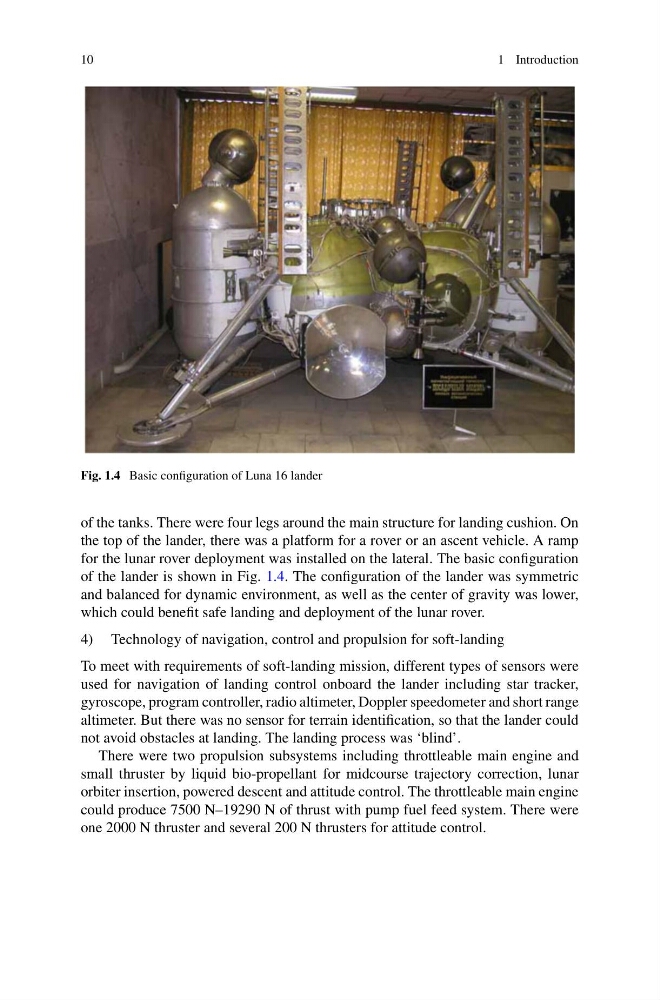
Fig. 1.4 Basic configuration of Luna 16 lander
of the tanks. There were four legs around the main structure for landing cushion. On
the top of the lander, there was a platform for a rover or an ascent vehicle. A ramp
for the lunar rover deployment was installed on the lateral. The basic configuration
of the lander is shown in Fig. 1.4. The configuration of the lander was symmetric
and balanced for dynamic environment, as well as the center of gravity was lower,
which could benefit safe landing and deployment of the lunar rover.
4) Technology of navigation, control and propulsion for soft-landing
To meet with requirements of soft-landing mission, different types of sensors were
used for navigation of landing control onboard the lander including star tracker,
gyroscope, program controller, radio altimeter, Doppler speedometer and short range
altimeter. But there was no sensor for terrain identification, so that the lander could
not avoid obstacles at landing. The landing process was ‘blind’.
There were two propulsion subsystems including throttleable main engine and
small thruster by liquid bio-propellant for midcourse trajectory correction, lunar
orbiter insertion, powered descent and attitude control. The throttleable main engine
could produce 7500 N–19290 N of thrust with pump fuel feed system. There were
one 2000 N thruster and several 200 N thrusters for attitude control.
1 Introduction
Fig. 1.4 Basic configuration of Luna 16 lander
of the tanks. There were four legs around the main structure for landing cushion. On
the top of the lander, there was a platform for a rover or an ascent vehicle. A ramp
for the lunar rover deployment was installed on the lateral. The basic configuration
of the lander is shown in Fig. 1.4. The configuration of the lander was symmetric
and balanced for dynamic environment, as well as the center of gravity was lower,
which could benefit safe landing and deployment of the lunar rover.
4) Technology of navigation, control and propulsion for soft-landing
To meet with requirements of soft-landing mission, different types of sensors were
used for navigation of landing control onboard the lander including star tracker,
gyroscope, program controller, radio altimeter, Doppler speedometer and short range
altimeter. But there was no sensor for terrain identification, so that the lander could
not avoid obstacles at landing. The landing process was ‘blind’.
There were two propulsion subsystems including throttleable main engine and
small thruster by liquid bio-propellant for midcourse trajectory correction, lunar
orbiter insertion, powered descent and attitude control. The throttleable main engine
could produce 7500 N–19290 N of thrust with pump fuel feed system. There were
one 2000 N thruster and several 200 N thrusters for attitude control.