

9.4 Design Methodology
309
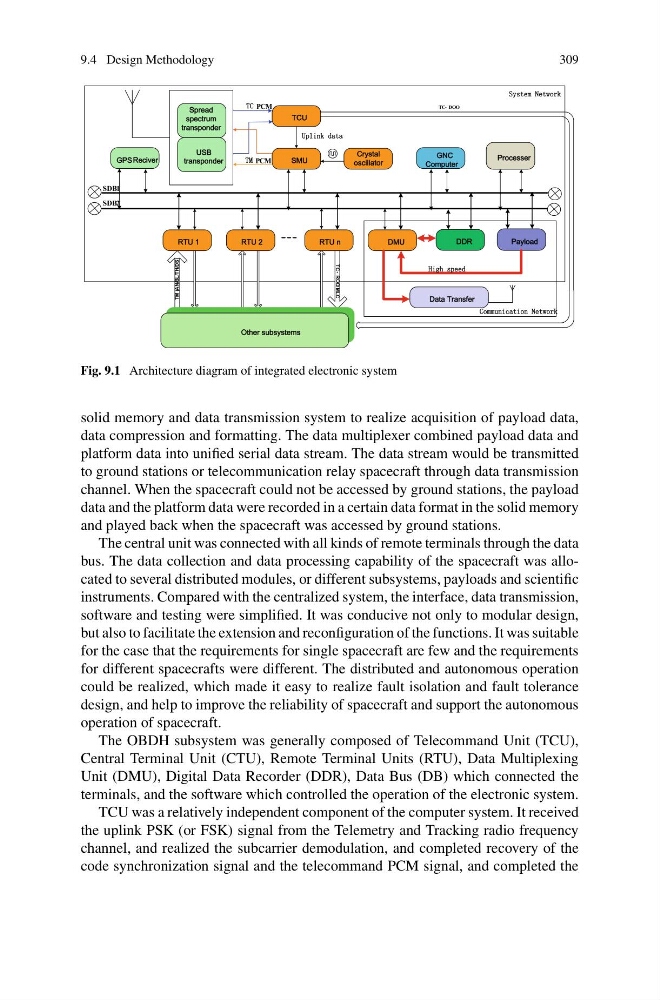
Fig. 9.1 Architecture diagram of integrated electronic system
solid memory and data transmission system to realize acquisition of payload data,
data compression and formatting. The data multiplexer combined payload data and
platform data into unified serial data stream. The data stream would be transmitted
to ground stations or telecommunication relay spacecraft through data transmission
channel. When the spacecraft could not be accessed by ground stations, the payload
data and the platform data were recorded in a certain data format in the solid memory
and played back when the spacecraft was accessed by ground stations.
The central unit was connected with all kinds of remote terminals through the data
bus. The data collection and data processing capability of the spacecraft was allocated to several distributed modules, or different subsystems, payloads and scientific
instruments. Compared with the centralized system, the interface, data transmission,
software and testing were simplified. It was conducive not only to modular design,
but also to facilitate the extension and reconfiguration of the functions. It was suitable
for the case that the requirements for single spacecraft are few and the requirements
for different spacecrafts were different. The distributed and autonomous operation
could be realized, which made it easy to realize fault isolation and fault tolerance
design, and help to improve the reliability of spacecraft and support the autonomous
operation of spacecraft.
The OBDH subsystem was generally composed of Telecommand Unit (TCU),
Central Terminal Unit (CTU), Remote Terminal Units (RTU), Data Multiplexing
Unit (DMU), Digital Data Recorder (DDR), Data Bus (DB) which connected the
terminals, and the software which controlled the operation of the electronic system.
TCU was a relatively independent component of the computer system. It received
the uplink PSK (or FSK) signal from the Telemetry and Tracking radio frequency
channel, and realized the subcarrier demodulation, and completed recovery of the
code synchronization signal and the telecommand PCM signal, and completed the
309
Fig. 9.1 Architecture diagram of integrated electronic system
solid memory and data transmission system to realize acquisition of payload data,
data compression and formatting. The data multiplexer combined payload data and
platform data into unified serial data stream. The data stream would be transmitted
to ground stations or telecommunication relay spacecraft through data transmission
channel. When the spacecraft could not be accessed by ground stations, the payload
data and the platform data were recorded in a certain data format in the solid memory
and played back when the spacecraft was accessed by ground stations.
The central unit was connected with all kinds of remote terminals through the data
bus. The data collection and data processing capability of the spacecraft was allocated to several distributed modules, or different subsystems, payloads and scientific
instruments. Compared with the centralized system, the interface, data transmission,
software and testing were simplified. It was conducive not only to modular design,
but also to facilitate the extension and reconfiguration of the functions. It was suitable
for the case that the requirements for single spacecraft are few and the requirements
for different spacecrafts were different. The distributed and autonomous operation
could be realized, which made it easy to realize fault isolation and fault tolerance
design, and help to improve the reliability of spacecraft and support the autonomous
operation of spacecraft.
The OBDH subsystem was generally composed of Telecommand Unit (TCU),
Central Terminal Unit (CTU), Remote Terminal Units (RTU), Data Multiplexing
Unit (DMU), Digital Data Recorder (DDR), Data Bus (DB) which connected the
terminals, and the software which controlled the operation of the electronic system.
TCU was a relatively independent component of the computer system. It received
the uplink PSK (or FSK) signal from the Telemetry and Tracking radio frequency
channel, and realized the subcarrier demodulation, and completed recovery of the
code synchronization signal and the telecommand PCM signal, and completed the