

5.3 Thermal Technical Characteristics
161
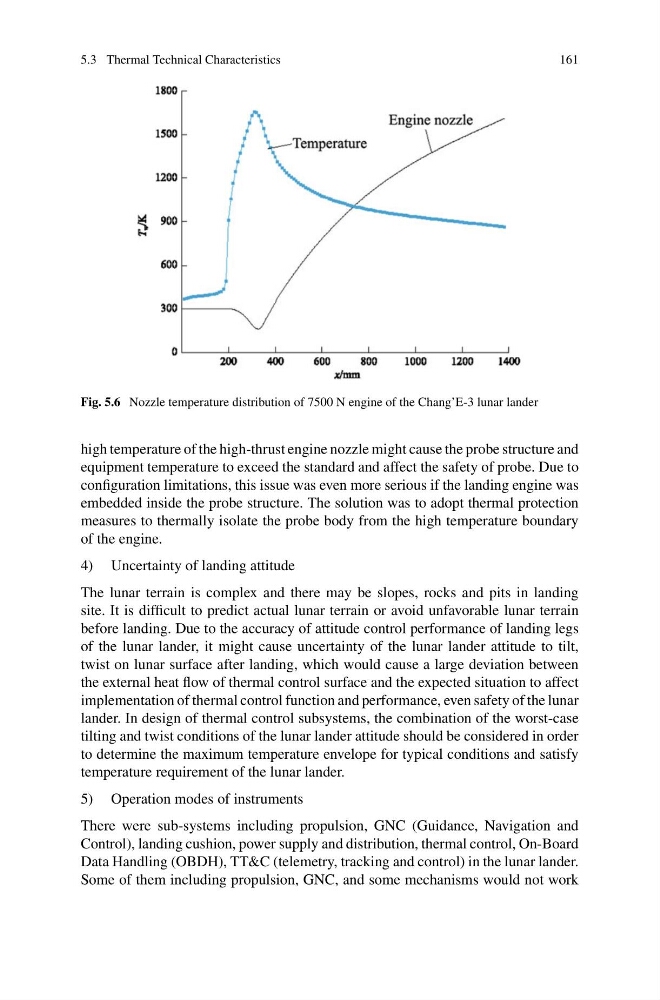
Fig. 5.6 Nozzle temperature distribution of 7500 N engine of the Chang’E-3 lunar lander
high temperature of the high-thrust engine nozzle might cause the probe structure and
equipment temperature to exceed the standard and affect the safety of probe. Due to
configuration limitations, this issue was even more serious if the landing engine was
embedded inside the probe structure. The solution was to adopt thermal protection
measures to thermally isolate the probe body from the high temperature boundary
of the engine.
4) Uncertainty of landing attitude
The lunar terrain is complex and there may be slopes, rocks and pits in landing
site. It is difficult to predict actual lunar terrain or avoid unfavorable lunar terrain
before landing. Due to the accuracy of attitude control performance of landing legs
of the lunar lander, it might cause uncertainty of the lunar lander attitude to tilt,
twist on lunar surface after landing, which would cause a large deviation between
the external heat flow of thermal control surface and the expected situation to affect
implementation of thermal control function and performance, even safety of the lunar
lander. In design of thermal control subsystems, the combination of the worst-case
tilting and twist conditions of the lunar lander attitude should be considered in order
to determine the maximum temperature envelope for typical conditions and satisfy
temperature requirement of the lunar lander.
5) Operation modes of instruments
There were sub-systems including propulsion, GNC (Guidance, Navigation and
Control), landing cushion, power supply and distribution, thermal control, On-Board
Data Handling (OBDH), TT&C (telemetry, tracking and control) in the lunar lander.
Some of them including propulsion, GNC, and some mechanisms would not work
161
Fig. 5.6 Nozzle temperature distribution of 7500 N engine of the Chang’E-3 lunar lander
high temperature of the high-thrust engine nozzle might cause the probe structure and
equipment temperature to exceed the standard and affect the safety of probe. Due to
configuration limitations, this issue was even more serious if the landing engine was
embedded inside the probe structure. The solution was to adopt thermal protection
measures to thermally isolate the probe body from the high temperature boundary
of the engine.
4) Uncertainty of landing attitude
The lunar terrain is complex and there may be slopes, rocks and pits in landing
site. It is difficult to predict actual lunar terrain or avoid unfavorable lunar terrain
before landing. Due to the accuracy of attitude control performance of landing legs
of the lunar lander, it might cause uncertainty of the lunar lander attitude to tilt,
twist on lunar surface after landing, which would cause a large deviation between
the external heat flow of thermal control surface and the expected situation to affect
implementation of thermal control function and performance, even safety of the lunar
lander. In design of thermal control subsystems, the combination of the worst-case
tilting and twist conditions of the lunar lander attitude should be considered in order
to determine the maximum temperature envelope for typical conditions and satisfy
temperature requirement of the lunar lander.
5) Operation modes of instruments
There were sub-systems including propulsion, GNC (Guidance, Navigation and
Control), landing cushion, power supply and distribution, thermal control, On-Board
Data Handling (OBDH), TT&C (telemetry, tracking and control) in the lunar lander.
Some of them including propulsion, GNC, and some mechanisms would not work