

134
4 Structure and Mechanism Technology of Lunar Lander
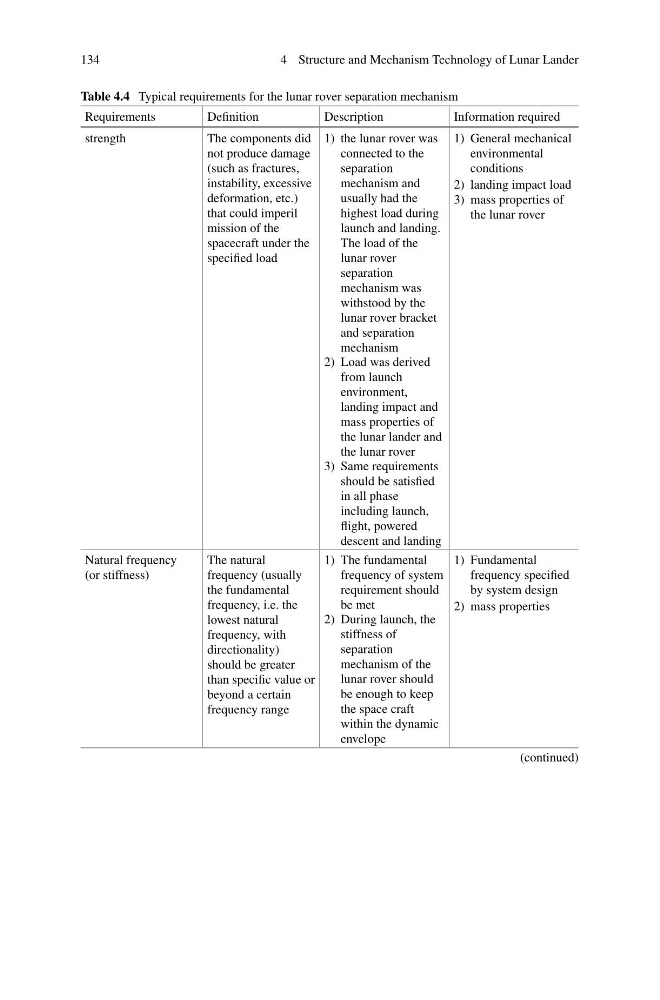
Table 4.4 Typical requirements for the lunar rover separation mechanism
Requirements
Definition
Description
Information required
strength
The components did
not produce damage
(such as fractures,
instability, excessive
deformation, etc.)
that could imperil
mission of the
spacecraft under the
specified load
1) the lunar rover was
connected to the
separation
mechanism and
usually had the
highest load during
launch and landing.
The load of the
lunar rover
separation
mechanism was
withstood by the
lunar rover bracket
and separation
mechanism
2) Load was derived
from launch
environment,
landing impact and
mass properties of
the lunar lander and
the lunar rover
3) Same requirements
should be satisfied
in all phase
including launch,
flight, powered
descent and landing
1) General mechanical
environmental
conditions
2) landing impact load
3) mass properties of
the lunar rover
Natural frequency
(or stiffness)
The natural
frequency (usually
the fundamental
frequency, i.e. the
lowest natural
frequency, with
directionality)
should be greater
than specific value or
beyond a certain
frequency range
1) The fundamental
frequency of system
requirement should
be met
2) During launch, the
stiffness of
separation
mechanism of the
lunar rover should
be enough to keep
the space craft
within the dynamic
envelope
1) Fundamental
frequency specified
by system design
2) mass properties
(continued)
4 Structure and Mechanism Technology of Lunar Lander
Table 4.4 Typical requirements for the lunar rover separation mechanism
Requirements
Definition
Description
Information required
strength
The components did
not produce damage
(such as fractures,
instability, excessive
deformation, etc.)
that could imperil
mission of the
spacecraft under the
specified load
1) the lunar rover was
connected to the
separation
mechanism and
usually had the
highest load during
launch and landing.
The load of the
lunar rover
separation
mechanism was
withstood by the
lunar rover bracket
and separation
mechanism
2) Load was derived
from launch
environment,
landing impact and
mass properties of
the lunar lander and
the lunar rover
3) Same requirements
should be satisfied
in all phase
including launch,
flight, powered
descent and landing
1) General mechanical
environmental
conditions
2) landing impact load
3) mass properties of
the lunar rover
Natural frequency
(or stiffness)
The natural
frequency (usually
the fundamental
frequency, i.e. the
lowest natural
frequency, with
directionality)
should be greater
than specific value or
beyond a certain
frequency range
1) The fundamental
frequency of system
requirement should
be met
2) During launch, the
stiffness of
separation
mechanism of the
lunar rover should
be enough to keep
the space craft
within the dynamic
envelope
1) Fundamental
frequency specified
by system design
2) mass properties
(continued)