

126
4 Structure and Mechanism Technology of Lunar Lander
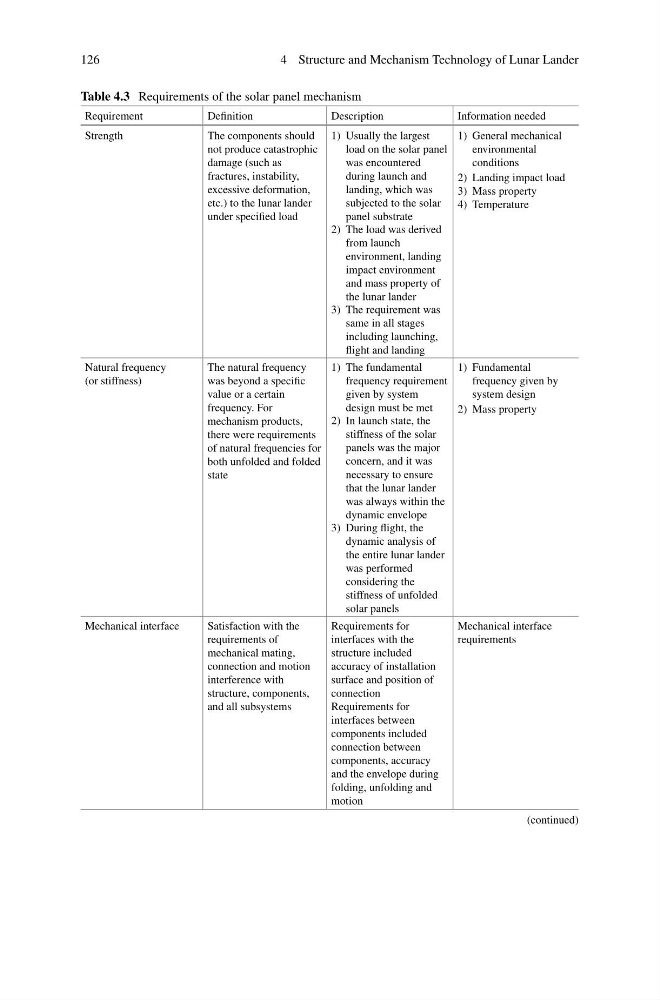
Table 4.3 Requirements of the solar panel mechanism
Requirement
Definition
Description
Information needed
Strength
The components should
not produce catastrophic
damage (such as
fractures, instability,
excessive deformation,
etc.) to the lunar lander
under specified load
1) Usually the largest
load on the solar panel
was encountered
during launch and
landing, which was
subjected to the solar
panel substrate
2) The load was derived
from launch
environment, landing
impact environment
and mass property of
the lunar lander
3) The requirement was
same in all stages
including launching,
flight and landing
1) General mechanical
environmental
conditions
2) Landing impact load
3) Mass property
4) Temperature
Natural frequency
(or stiffness)
The natural frequency
was beyond a specific
value or a certain
frequency. For
mechanism products,
there were requirements
of natural frequencies for
both unfolded and folded
state
1) The fundamental
frequency requirement
given by system
design must be met
2) In launch state, the
stiffness of the solar
panels was the major
concern, and it was
necessary to ensure
that the lunar lander
was always within the
dynamic envelope
3) During flight, the
dynamic analysis of
the entire lunar lander
was performed
considering the
stiffness of unfolded
solar panels
1) Fundamental
frequency given by
system design
2) Mass property
Mechanical interface
Satisfaction with the
requirements of
mechanical mating,
connection and motion
interference with
structure, components,
and all subsystems
Requirements for
interfaces with the
structure included
accuracy of installation
surface and position of
connection
Requirements for
interfaces between
components included
connection between
components, accuracy
and the envelope during
folding, unfolding and
motion
Mechanical interface
requirements
(continued)
4 Structure and Mechanism Technology of Lunar Lander
Table 4.3 Requirements of the solar panel mechanism
Requirement
Definition
Description
Information needed
Strength
The components should
not produce catastrophic
damage (such as
fractures, instability,
excessive deformation,
etc.) to the lunar lander
under specified load
1) Usually the largest
load on the solar panel
was encountered
during launch and
landing, which was
subjected to the solar
panel substrate
2) The load was derived
from launch
environment, landing
impact environment
and mass property of
the lunar lander
3) The requirement was
same in all stages
including launching,
flight and landing
1) General mechanical
environmental
conditions
2) Landing impact load
3) Mass property
4) Temperature
Natural frequency
(or stiffness)
The natural frequency
was beyond a specific
value or a certain
frequency. For
mechanism products,
there were requirements
of natural frequencies for
both unfolded and folded
state
1) The fundamental
frequency requirement
given by system
design must be met
2) In launch state, the
stiffness of the solar
panels was the major
concern, and it was
necessary to ensure
that the lunar lander
was always within the
dynamic envelope
3) During flight, the
dynamic analysis of
the entire lunar lander
was performed
considering the
stiffness of unfolded
solar panels
1) Fundamental
frequency given by
system design
2) Mass property
Mechanical interface
Satisfaction with the
requirements of
mechanical mating,
connection and motion
interference with
structure, components,
and all subsystems
Requirements for
interfaces with the
structure included
accuracy of installation
surface and position of
connection
Requirements for
interfaces between
components included
connection between
components, accuracy
and the envelope during
folding, unfolding and
motion
Mechanical interface
requirements
(continued)