

4.2 Structural and Mechanism Features of Lunar Lander
103
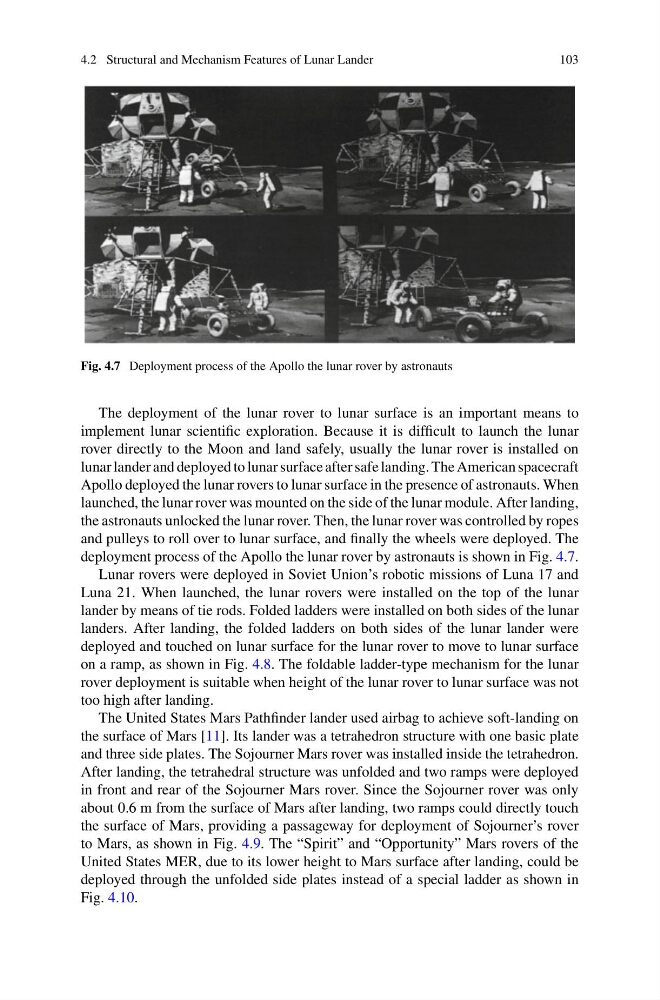
Fig. 4.7 Deployment process of the Apollo the lunar rover by astronauts
The deployment of the lunar rover to lunar surface is an important means to
implement lunar scientific exploration. Because it is difficult to launch the lunar
rover directly to the Moon and land safely, usually the lunar rover is installed on
lunar lander and deployed to lunar surface after safe landing. The American spacecraft
Apollo deployed the lunar rovers to lunar surface in the presence of astronauts. When
launched, the lunar rover was mounted on the side of the lunar module. After landing,
the astronauts unlocked the lunar rover. Then, the lunar rover was controlled by ropes
and pulleys to roll over to lunar surface, and finally the wheels were deployed. The
deployment process of the Apollo the lunar rover by astronauts is shown in Fig. 4.7.
Lunar rovers were deployed in Soviet Union’s robotic missions of Luna 17 and
Luna 21. When launched, the lunar rovers were installed on the top of the lunar
lander by means of tie rods. Folded ladders were installed on both sides of the lunar
landers. After landing, the folded ladders on both sides of the lunar lander were
deployed and touched on lunar surface for the lunar rover to move to lunar surface
on a ramp, as shown in Fig. 4.8. The foldable ladder-type mechanism for the lunar
rover deployment is suitable when height of the lunar rover to lunar surface was not
too high after landing.
The United States Mars Pathfinder lander used airbag to achieve soft-landing on
the surface of Mars [11]. Its lander was a tetrahedron structure with one basic plate
and three side plates. The Sojourner Mars rover was installed inside the tetrahedron.
After landing, the tetrahedral structure was unfolded and two ramps were deployed
in front and rear of the Sojourner Mars rover. Since the Sojourner rover was only
about 0.6 m from the surface of Mars after landing, two ramps could directly touch
the surface of Mars, providing a passageway for deployment of Sojourner’s rover
to Mars, as shown in Fig. 4.9. The “Spirit” and “Opportunity” Mars rovers of the
United States MER, due to its lower height to Mars surface after landing, could be
deployed through the unfolded side plates instead of a special ladder as shown in
Fig. 4.10.
103
Fig. 4.7 Deployment process of the Apollo the lunar rover by astronauts
The deployment of the lunar rover to lunar surface is an important means to
implement lunar scientific exploration. Because it is difficult to launch the lunar
rover directly to the Moon and land safely, usually the lunar rover is installed on
lunar lander and deployed to lunar surface after safe landing. The American spacecraft
Apollo deployed the lunar rovers to lunar surface in the presence of astronauts. When
launched, the lunar rover was mounted on the side of the lunar module. After landing,
the astronauts unlocked the lunar rover. Then, the lunar rover was controlled by ropes
and pulleys to roll over to lunar surface, and finally the wheels were deployed. The
deployment process of the Apollo the lunar rover by astronauts is shown in Fig. 4.7.
Lunar rovers were deployed in Soviet Union’s robotic missions of Luna 17 and
Luna 21. When launched, the lunar rovers were installed on the top of the lunar
lander by means of tie rods. Folded ladders were installed on both sides of the lunar
landers. After landing, the folded ladders on both sides of the lunar lander were
deployed and touched on lunar surface for the lunar rover to move to lunar surface
on a ramp, as shown in Fig. 4.8. The foldable ladder-type mechanism for the lunar
rover deployment is suitable when height of the lunar rover to lunar surface was not
too high after landing.
The United States Mars Pathfinder lander used airbag to achieve soft-landing on
the surface of Mars [11]. Its lander was a tetrahedron structure with one basic plate
and three side plates. The Sojourner Mars rover was installed inside the tetrahedron.
After landing, the tetrahedral structure was unfolded and two ramps were deployed
in front and rear of the Sojourner Mars rover. Since the Sojourner rover was only
about 0.6 m from the surface of Mars after landing, two ramps could directly touch
the surface of Mars, providing a passageway for deployment of Sojourner’s rover
to Mars, as shown in Fig. 4.9. The “Spirit” and “Opportunity” Mars rovers of the
United States MER, due to its lower height to Mars surface after landing, could be
deployed through the unfolded side plates instead of a special ladder as shown in
Fig. 4.10.