

3.6 System Configuration Design
87
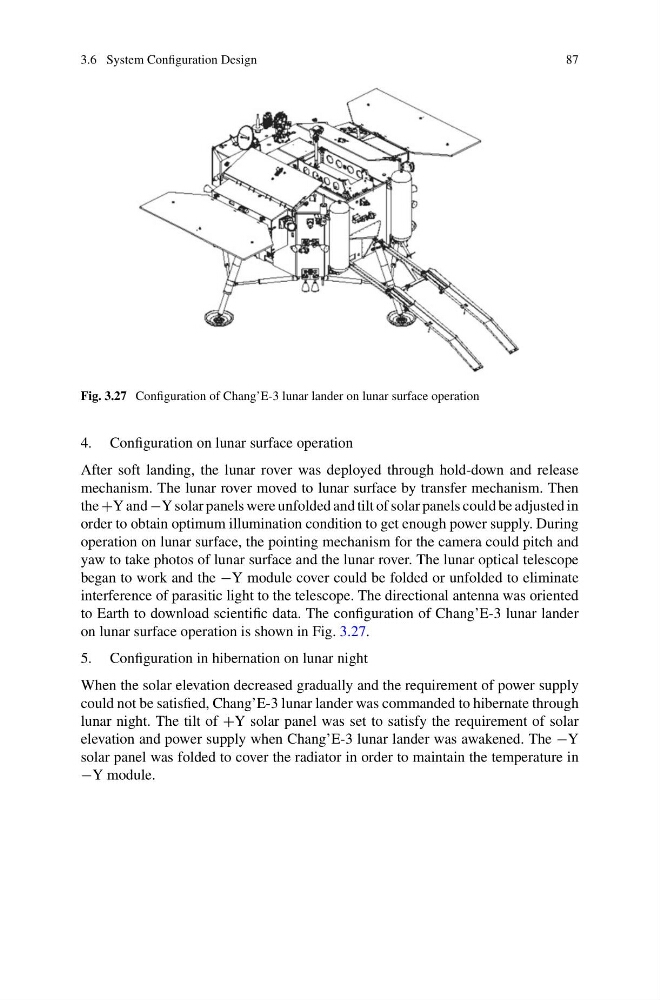
Fig. 3.27 Configuration of Chang’E-3 lunar lander on lunar surface operation
4. Configuration on lunar surface operation
After soft landing, the lunar rover was deployed through hold-down and release
mechanism. The lunar rover moved to lunar surface by transfer mechanism. Then
the +Y and −Y solar panels were unfolded and tilt of solar panels could be adjusted in
order to obtain optimum illumination condition to get enough power supply. During
operation on lunar surface, the pointing mechanism for the camera could pitch and
yaw to take photos of lunar surface and the lunar rover. The lunar optical telescope
began to work and the −Y module cover could be folded or unfolded to eliminate
interference of parasitic light to the telescope. The directional antenna was oriented
to Earth to download scientific data. The configuration of Chang’E-3 lunar lander
on lunar surface operation is shown in Fig. 3.27.
5. Configuration in hibernation on lunar night
When the solar elevation decreased gradually and the requirement of power supply
could not be satisfied, Chang’E-3 lunar lander was commanded to hibernate through
lunar night. The tilt of +Y solar panel was set to satisfy the requirement of solar
elevation and power supply when Chang’E-3 lunar lander was awakened. The −Y
solar panel was folded to cover the radiator in order to maintain the temperature in
−Y module.
87
Fig. 3.27 Configuration of Chang’E-3 lunar lander on lunar surface operation
4. Configuration on lunar surface operation
After soft landing, the lunar rover was deployed through hold-down and release
mechanism. The lunar rover moved to lunar surface by transfer mechanism. Then
the +Y and −Y solar panels were unfolded and tilt of solar panels could be adjusted in
order to obtain optimum illumination condition to get enough power supply. During
operation on lunar surface, the pointing mechanism for the camera could pitch and
yaw to take photos of lunar surface and the lunar rover. The lunar optical telescope
began to work and the −Y module cover could be folded or unfolded to eliminate
interference of parasitic light to the telescope. The directional antenna was oriented
to Earth to download scientific data. The configuration of Chang’E-3 lunar lander
on lunar surface operation is shown in Fig. 3.27.
5. Configuration in hibernation on lunar night
When the solar elevation decreased gradually and the requirement of power supply
could not be satisfied, Chang’E-3 lunar lander was commanded to hibernate through
lunar night. The tilt of +Y solar panel was set to satisfy the requirement of solar
elevation and power supply when Chang’E-3 lunar lander was awakened. The −Y
solar panel was folded to cover the radiator in order to maintain the temperature in
−Y module.