

3.3.4 CNES
Many countries and their support contractors have gondola designs for a variety of
scientific purposes. This is just one example: a representative list of gondolas used
by the Centre National d’Etudes Spatiales (CNES). They are also used by Canada
and Australia. These four generally apply to science categories.
• BANA: 2 × 0.8 × 1 m (6.56 × 2.6 × 3.28 ft).
• HELIOS: 2.06 × 1.43 × 1.44 m (6.8 × 4.7 × 4.7 ft).
• CARMENCITA: 2.45 × 1.85 × 2.20 m (8 × 6 × 7.2 ft).
• CARMEN: 2.45 × 1.85 × 3 m (8 × 6 × 9.8 ft).
Depending on the payload, the gondolas provide the usual support equipment such as
power, instrumentation, pointing, temperature control, data links, and communications.
The largest of the abovementioned (CARMEN) is a multi-payload stabilized
gondola that was developed with several concepts in mind:
• Modularity to allow the inclusion of several instruments devoted to the
same or different research areas during a single mission.
• Reusability to overcome the difficulty of adapting a platform specifically designed
around an instrument to another, thereby reducing the cost and development time.
• The cargo volume can be maximized to allow the installation of many
instruments onboard.
It was introduced by the CNES team in late 2012.
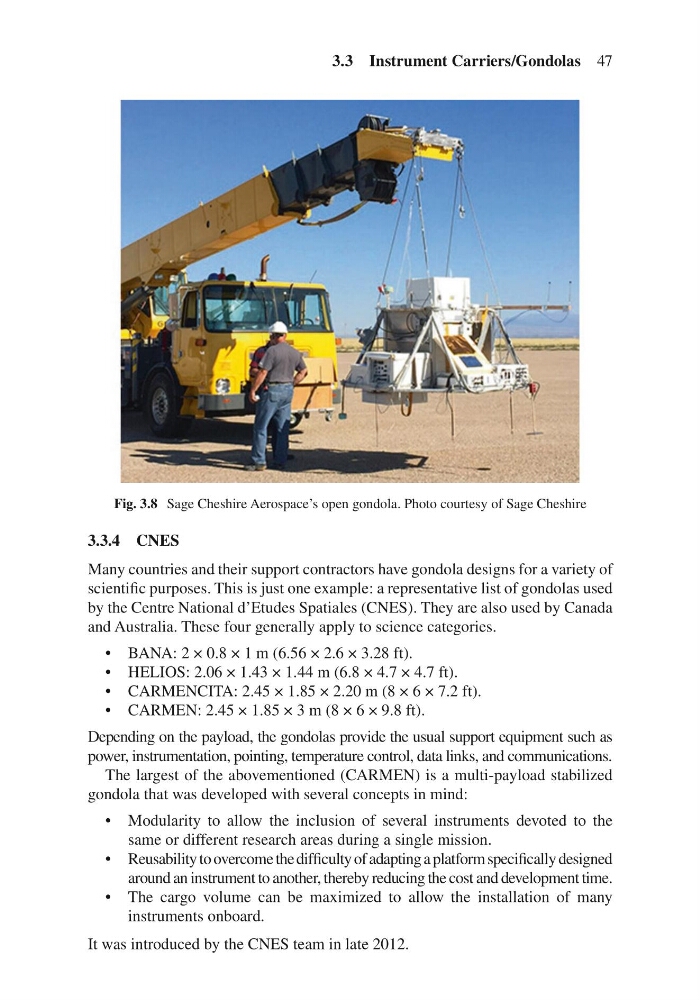
Fig. 3.8 Sage Cheshire Aerospace’s open gondola. Photo courtesy of Sage Cheshire
3.3 Instrument Carriers/Gondolas 47
Many countries and their support contractors have gondola designs for a variety of
scientific purposes. This is just one example: a representative list of gondolas used
by the Centre National d’Etudes Spatiales (CNES). They are also used by Canada
and Australia. These four generally apply to science categories.
• BANA: 2 × 0.8 × 1 m (6.56 × 2.6 × 3.28 ft).
• HELIOS: 2.06 × 1.43 × 1.44 m (6.8 × 4.7 × 4.7 ft).
• CARMENCITA: 2.45 × 1.85 × 2.20 m (8 × 6 × 7.2 ft).
• CARMEN: 2.45 × 1.85 × 3 m (8 × 6 × 9.8 ft).
Depending on the payload, the gondolas provide the usual support equipment such as
power, instrumentation, pointing, temperature control, data links, and communications.
The largest of the abovementioned (CARMEN) is a multi-payload stabilized
gondola that was developed with several concepts in mind:
• Modularity to allow the inclusion of several instruments devoted to the
same or different research areas during a single mission.
• Reusability to overcome the difficulty of adapting a platform specifically designed
around an instrument to another, thereby reducing the cost and development time.
• The cargo volume can be maximized to allow the installation of many
instruments onboard.
It was introduced by the CNES team in late 2012.
Fig. 3.8 Sage Cheshire Aerospace’s open gondola. Photo courtesy of Sage Cheshire
3.3 Instrument Carriers/Gondolas 47