

Amateur radio plays a strong role in EOSS operations, and many of its members are licensed amateur radio operators, but licensing is not a requirement. Many
of its members have earned their ham licenses shortly after discovering how useful and fun ham radio is! Its members utilize amateur radio and balloons to advance
study of the upper atmosphere, working with the Colorado NASA Space Grant
colleges, including the University of Colorado to offer valuable opportunities to
enhance their students’ studies of science, mathematics and technology through
real hands-on experience.
In recent years EOSS has conducted 13 or more flight days in a year, sending
radio-equipped payloads high into the stratosphere over eastern Colorado. All student payloads were recovered in order to enable students to complete their curriculum requirements. The typical apogee is above 99% of the atmosphere, where
the sky is black and the highest clouds remain far below. VHF and UHF signals
transmitted from this height may be received across a radius of 650 km (400 mi).
Owing to the low cost of balloon flight expendables and recovery of payloads
flown to the “edge of space”, one local high school teacher described EOSS as the
“Poor Man’s Space Program”.
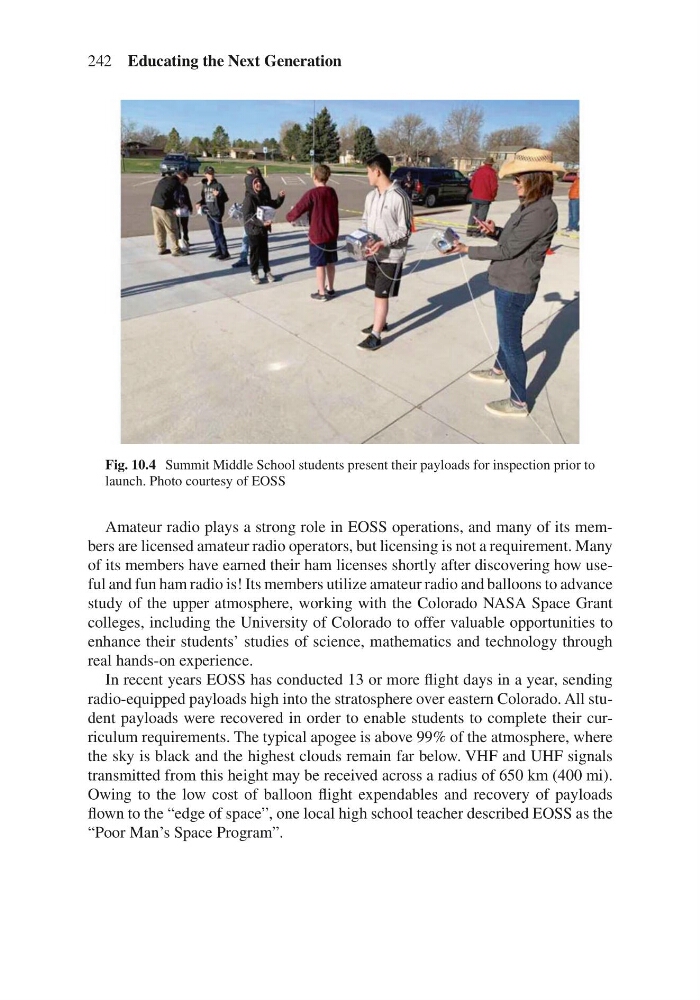
Fig. 10.4 Summit Middle School students present their payloads for inspection prior to
launch. Photo courtesy of EOSS
242 Educating the Next Generation
of its members have earned their ham licenses shortly after discovering how useful and fun ham radio is! Its members utilize amateur radio and balloons to advance
study of the upper atmosphere, working with the Colorado NASA Space Grant
colleges, including the University of Colorado to offer valuable opportunities to
enhance their students’ studies of science, mathematics and technology through
real hands-on experience.
In recent years EOSS has conducted 13 or more flight days in a year, sending
radio-equipped payloads high into the stratosphere over eastern Colorado. All student payloads were recovered in order to enable students to complete their curriculum requirements. The typical apogee is above 99% of the atmosphere, where
the sky is black and the highest clouds remain far below. VHF and UHF signals
transmitted from this height may be received across a radius of 650 km (400 mi).
Owing to the low cost of balloon flight expendables and recovery of payloads
flown to the “edge of space”, one local high school teacher described EOSS as the
“Poor Man’s Space Program”.
Fig. 10.4 Summit Middle School students present their payloads for inspection prior to
launch. Photo courtesy of EOSS
242 Educating the Next Generation