

Having won the NASA scientific balloon contract in 1987, PSL-NMSU
defended it four times in competitive bid processes, but in 2014 NASA awarded
the support contract to Orbital ATK (later taken over by Northrup Grumman).
Orbital started to transition into its new responsibilities on December 1, and took
over operation on February 1, 2015.
One of the last PSL-NMSU flights in 2014 was the unique launch from the
U.S. Navy’s Pacific Missile Range in Kauai, HI of NASA’s Low-Density
Supersonic Decelerator (LDSD). On June 28, 2014 a Raven ZPB carried the
3,175 kg (7,000 lb) saucer-shaped vehicle to an altitude of 36.27 km (119,000 ft),
whereupon the vehicle’s rocket fired to boost its speed to Mach 4 in order to simulate an actual orbital reentry operation in the thin atmosphere of Mars. The final
objective was to demonstrate and evaluate the Supersonic Inflatable Aerodynamic
Decelerator (SIAD) which is an inflatable Kevlar tube around the saucer designed
to serve as a ballute, to create atmospheric drag to help to slow it down, and the
Supersonic Disk-Sail (SSDS) which was a parachute similar to the one currently
used when landing probes on Mars but twice as large.
Then, in September 2014 the team accomplished another extraordinary feat.
For the first time in the 27 year launch history in Fort Sumner, NM, the CSBF
team launched three balloon experiments on consecutive days for NASA. This
was a spectacular closing out the PSL support to the NASA Balloon Program.
The PSL employees provided research, engineering and operational expertise
for more than 2,000 launches in areas as diverse as New Mexico, Texas, Hawaii
and Antarctica. The team achieved outstanding performance reviews throughout
their contract as manager and operator of the Columbia Scientific Balloon Facility
in Palestine, TX.
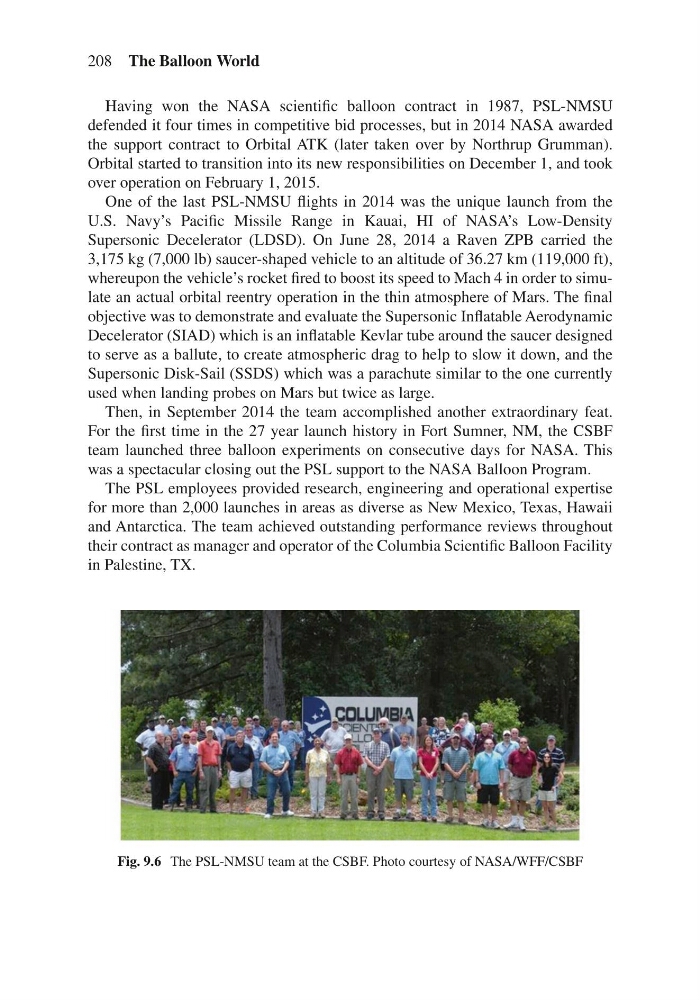
Fig. 9.6 The PSL-NMSU team at the CSBF. Photo courtesy of NASA/WFF/CSBF
208 The Balloon World
defended it four times in competitive bid processes, but in 2014 NASA awarded
the support contract to Orbital ATK (later taken over by Northrup Grumman).
Orbital started to transition into its new responsibilities on December 1, and took
over operation on February 1, 2015.
One of the last PSL-NMSU flights in 2014 was the unique launch from the
U.S. Navy’s Pacific Missile Range in Kauai, HI of NASA’s Low-Density
Supersonic Decelerator (LDSD). On June 28, 2014 a Raven ZPB carried the
3,175 kg (7,000 lb) saucer-shaped vehicle to an altitude of 36.27 km (119,000 ft),
whereupon the vehicle’s rocket fired to boost its speed to Mach 4 in order to simulate an actual orbital reentry operation in the thin atmosphere of Mars. The final
objective was to demonstrate and evaluate the Supersonic Inflatable Aerodynamic
Decelerator (SIAD) which is an inflatable Kevlar tube around the saucer designed
to serve as a ballute, to create atmospheric drag to help to slow it down, and the
Supersonic Disk-Sail (SSDS) which was a parachute similar to the one currently
used when landing probes on Mars but twice as large.
Then, in September 2014 the team accomplished another extraordinary feat.
For the first time in the 27 year launch history in Fort Sumner, NM, the CSBF
team launched three balloon experiments on consecutive days for NASA. This
was a spectacular closing out the PSL support to the NASA Balloon Program.
The PSL employees provided research, engineering and operational expertise
for more than 2,000 launches in areas as diverse as New Mexico, Texas, Hawaii
and Antarctica. The team achieved outstanding performance reviews throughout
their contract as manager and operator of the Columbia Scientific Balloon Facility
in Palestine, TX.
Fig. 9.6 The PSL-NMSU team at the CSBF. Photo courtesy of NASA/WFF/CSBF
208 The Balloon World