

PSL took on all of the existing operational staff and most of the engineering and
support staff. The PSL Program Manager Art Gilcrease, the NSBF Site Manager
Dwight Bawcom, and the NSBF Administrative Manager Terri Kuenstler, were
the only current PSL-NMSU staff to go from Las Cruces, NM to Palestine,
TX. The majority of the technical support staff simply transitioned to the new
outfit. This brought about structural changes in the business of scientific ballooning for those in the community, but it was an industry in transition.
In November 2014, NASA announced that it had awarded the next high altitude
scientific balloon contract to the Orbital Sciences Corporation (now Northrup
Grumman) based upon a lower proposed and lower probable cost than the PSL
proposal. Orbital began to transition on December 1 and took over operation of the
facility on February 1, 2015. It is the current support contractor.
9.1.4 National Science Foundation
The National Science Foundation (NSF) coordinates almost all U.S. scientific
research in Antarctica through the U.S. Antarctic Program (USAP). NSF is an independent federal agency that supports research in almost all disciplines of science
and engineering. It seeks to understand the Antarctic and its associated ecosystems;
to understand the continent’s effects on (and responses to) global processes such as
climate; and to use Antarctica’s unique features for scientific research which cannot
be conducted as well elsewhere. Among the disciplines within this broad mandate
are astronomy, atmospheric sciences, biology, Earth science, environmental science, geology, glaciology, oceanography, geophysics and marine biology. It operates three U.S. all-year-round research stations: the McMurdo Station on Ross
Island, the Amundsen-Scott South Pole Station at the geographic South Pole, and
the Palmer Station on Anvers Island in the Antarctic Peninsula region.
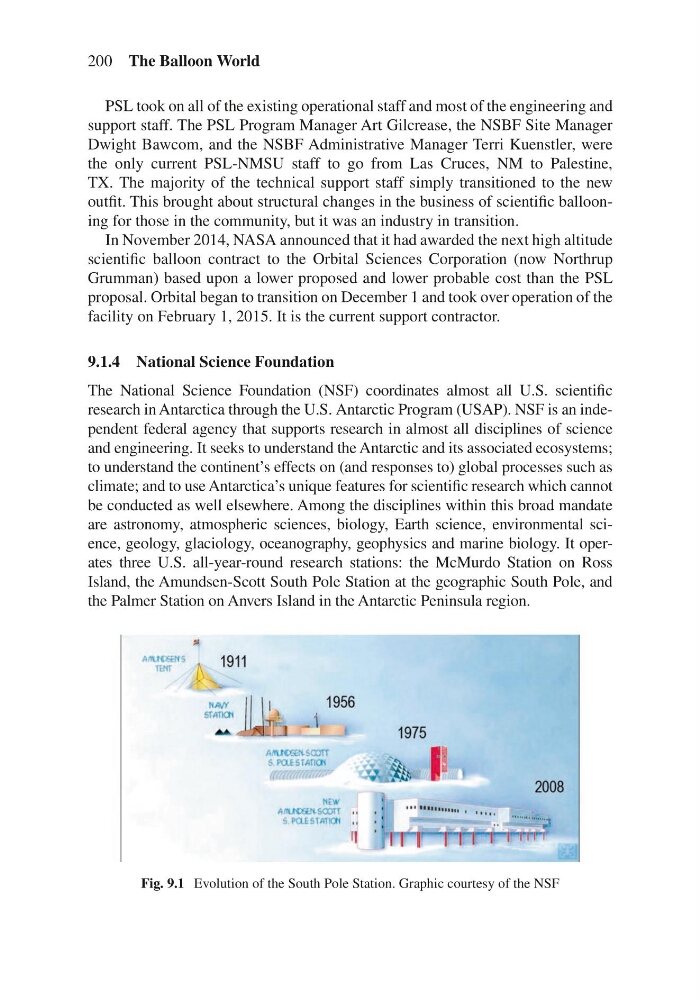
Fig. 9.1 Evolution of the South Pole Station. Graphic courtesy of the NSF
200 The Balloon World
support staff. The PSL Program Manager Art Gilcrease, the NSBF Site Manager
Dwight Bawcom, and the NSBF Administrative Manager Terri Kuenstler, were
the only current PSL-NMSU staff to go from Las Cruces, NM to Palestine,
TX. The majority of the technical support staff simply transitioned to the new
outfit. This brought about structural changes in the business of scientific ballooning for those in the community, but it was an industry in transition.
In November 2014, NASA announced that it had awarded the next high altitude
scientific balloon contract to the Orbital Sciences Corporation (now Northrup
Grumman) based upon a lower proposed and lower probable cost than the PSL
proposal. Orbital began to transition on December 1 and took over operation of the
facility on February 1, 2015. It is the current support contractor.
9.1.4 National Science Foundation
The National Science Foundation (NSF) coordinates almost all U.S. scientific
research in Antarctica through the U.S. Antarctic Program (USAP). NSF is an independent federal agency that supports research in almost all disciplines of science
and engineering. It seeks to understand the Antarctic and its associated ecosystems;
to understand the continent’s effects on (and responses to) global processes such as
climate; and to use Antarctica’s unique features for scientific research which cannot
be conducted as well elsewhere. Among the disciplines within this broad mandate
are astronomy, atmospheric sciences, biology, Earth science, environmental science, geology, glaciology, oceanography, geophysics and marine biology. It operates three U.S. all-year-round research stations: the McMurdo Station on Ross
Island, the Amundsen-Scott South Pole Station at the geographic South Pole, and
the Palmer Station on Anvers Island in the Antarctic Peninsula region.
Fig. 9.1 Evolution of the South Pole Station. Graphic courtesy of the NSF
200 The Balloon World