

During the first ANITA flight in 2006, the payload not only set the best world
limits on ultra-high energy neutrino fluxes but made a serendipitous observation of
radio emission from 16 ultra-high energy cosmic rays which interacted in the
Antarctic atmosphere to create a narrow radio beam which then reflected off the ice
surface up to the instrument. This unexpected discovery wasn’t the first time radio
pulses had been associated with cosmic rays, but it was the highest energy set of
such events ever recorded, and was unique in that the instrument was self- triggered.
This is a unique capability, not achievable using ground or spacecraft instruments.
Flying at 37 km (120,000 ft), ANITA can observe approximately 1.5 million
km
2
(0.6 million mi
2
) of ice below. But neutrino interactions are so rare that even
with a detection area of that size the scientists did not expect to see more than
about a hundred events.
For a 2:05 video of ANITA narrated by Dr. Peter Gorham, go to:
https://youtu.be/BUOd_oJYF2I
8.1.4 Sensors
Owing to their ability to take heavy payloads to the edge of space, high altitude
balloons offer the prospect of using large aperture telescopes (diameters greater
than 5 m) with sophisticated cryogenic instruments at a fraction of the cost and
time associated with achieving similar capabilities on an orbital mission. With
such observatories, it will be possible to probe the intricacies of star and planet
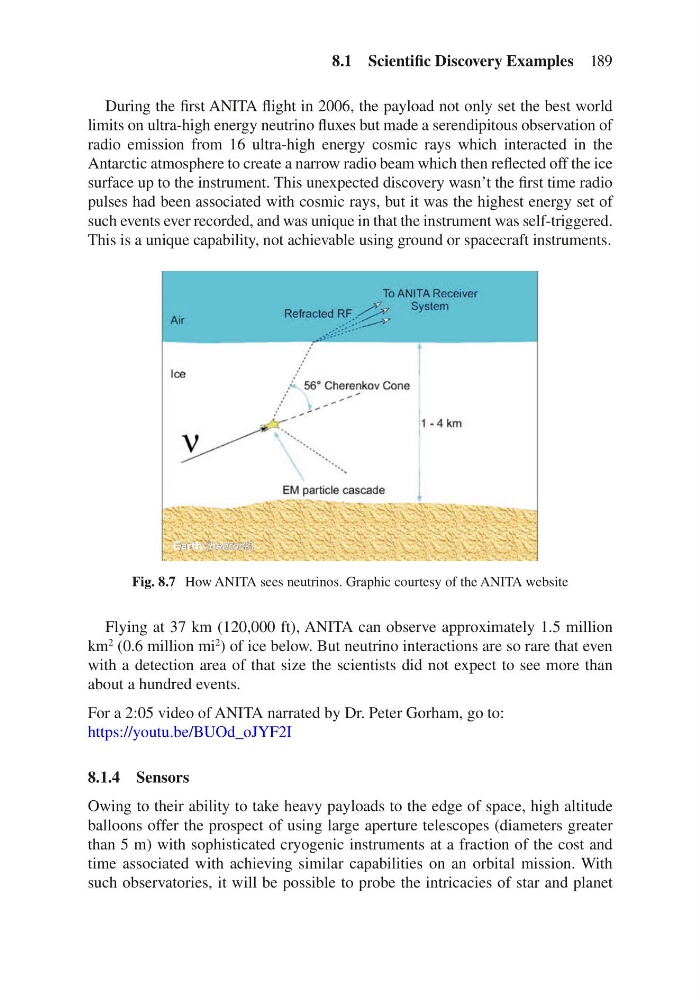
Fig. 8.7 How ANITA sees neutrinos. Graphic courtesy of the ANITA website
8.1 Scientific Discovery Examples 189
limits on ultra-high energy neutrino fluxes but made a serendipitous observation of
radio emission from 16 ultra-high energy cosmic rays which interacted in the
Antarctic atmosphere to create a narrow radio beam which then reflected off the ice
surface up to the instrument. This unexpected discovery wasn’t the first time radio
pulses had been associated with cosmic rays, but it was the highest energy set of
such events ever recorded, and was unique in that the instrument was self- triggered.
This is a unique capability, not achievable using ground or spacecraft instruments.
Flying at 37 km (120,000 ft), ANITA can observe approximately 1.5 million
km
2
(0.6 million mi
2
) of ice below. But neutrino interactions are so rare that even
with a detection area of that size the scientists did not expect to see more than
about a hundred events.
For a 2:05 video of ANITA narrated by Dr. Peter Gorham, go to:
https://youtu.be/BUOd_oJYF2I
8.1.4 Sensors
Owing to their ability to take heavy payloads to the edge of space, high altitude
balloons offer the prospect of using large aperture telescopes (diameters greater
than 5 m) with sophisticated cryogenic instruments at a fraction of the cost and
time associated with achieving similar capabilities on an orbital mission. With
such observatories, it will be possible to probe the intricacies of star and planet
Fig. 8.7 How ANITA sees neutrinos. Graphic courtesy of the ANITA website
8.1 Scientific Discovery Examples 189