

The CREAM instrument included:
• Timing Charge Detector (TCD).
• Cherenkov Detector (CD).
• Transition Radiation Detector (TRD).
• Cherenkov Camera (CherCam).
• Silicon Charge Detector (SCD).
• Scintillating fiber hodoscopes (used in particle detectors to detect passing
charged particles and determine their trajectories).
• Tungsten-scintillating fiber calorimeter.
Seven successful CREAM flights were made over Antarctica from 2004 to 2016,
respectively called CREAM-I, -II, -III, -IV, -V, -VI and BACCUS. They flew on
zero-pressure balloons of 1.1 million m
3
(40 million ft
3
) that floated the detectors
at altitudes of 38-40 km (125,000-131,000 ft). The project achieved a cumulative
exposure of about 191 days.
The experiment was modified for sending to the International Space Station (ISS)
and dubbed ISS-CREAM (pronounced “ice cream”) to increase the data collection
by an order of magnitude and reach the highest energy that is practical with direct
measurements. The instrument was successfully installed and activated on the ISS
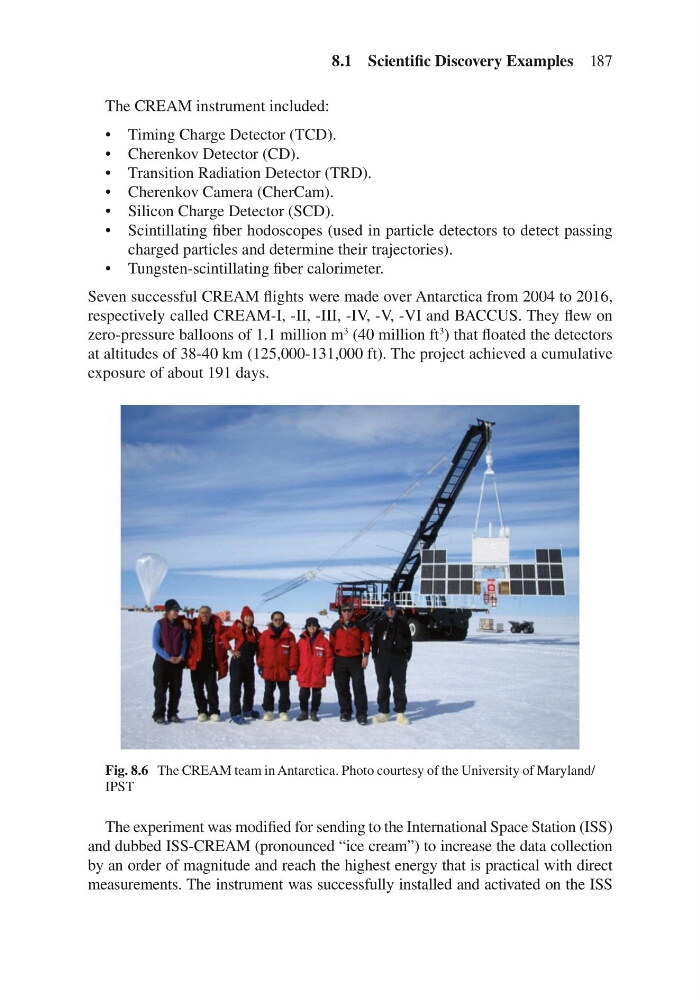
Fig. 8.6 The CREAM team in Antarctica. Photo courtesy of the University of Maryland/
IPST
8.1 Scientific Discovery Examples 187
• Timing Charge Detector (TCD).
• Cherenkov Detector (CD).
• Transition Radiation Detector (TRD).
• Cherenkov Camera (CherCam).
• Silicon Charge Detector (SCD).
• Scintillating fiber hodoscopes (used in particle detectors to detect passing
charged particles and determine their trajectories).
• Tungsten-scintillating fiber calorimeter.
Seven successful CREAM flights were made over Antarctica from 2004 to 2016,
respectively called CREAM-I, -II, -III, -IV, -V, -VI and BACCUS. They flew on
zero-pressure balloons of 1.1 million m
3
(40 million ft
3
) that floated the detectors
at altitudes of 38-40 km (125,000-131,000 ft). The project achieved a cumulative
exposure of about 191 days.
The experiment was modified for sending to the International Space Station (ISS)
and dubbed ISS-CREAM (pronounced “ice cream”) to increase the data collection
by an order of magnitude and reach the highest energy that is practical with direct
measurements. The instrument was successfully installed and activated on the ISS
Fig. 8.6 The CREAM team in Antarctica. Photo courtesy of the University of Maryland/
IPST
8.1 Scientific Discovery Examples 187