

The most massive stars forge elements up to iron in their cores and then explode
as supernovas, dispersing most of their material into space. The explosions also
produce a brief, intense flood of neutrons, many of which “stick” to iron nuclei.
Some of the neutrons subsequently decay into protons, producing new elements
heavier than iron (it is the number of protons in a nucleus, known as the atomic
number that determines the element). As the shock wave from a supernova blast
expands through space it accelerates these heavy particles to energies so extreme
they roam free as cosmic rays.
Evidence accumulated from NASA’s Advanced Composition Explorer satellite
launched in 1997 and from the balloon-borne TIGER instrument (precursor for
SuperTiger) provided a general picture of cosmic ray sources. Roughly 20% of
cosmic rays were believed to arise from massive stars and supernovas and 80%
from interstellar dust and gas with chemical quantities similar to that present in
the solar system.
Neutron stars, the crushed cores of massive stars that became supernovas are
the densest objects scientists can study directly. In situations where two neutron
stars orbit each other in binary systems they emit gravitational waves, ripples in
space-time predicted by the General Theory of Relativity. These waves remove
orbital energy, causing the stars to draw ever closer until they eventually crash
together and merge. Theorists calculated that these events would be so thick with
neutrons they could account for most of the very neutron-rich cosmic rays that are
heavier than nickel.
According to Professor Robert Binns, PI on SuperTIGER, it is possible neutron
star mergers are the main source of heavy neutron-rich cosmic rays, but different
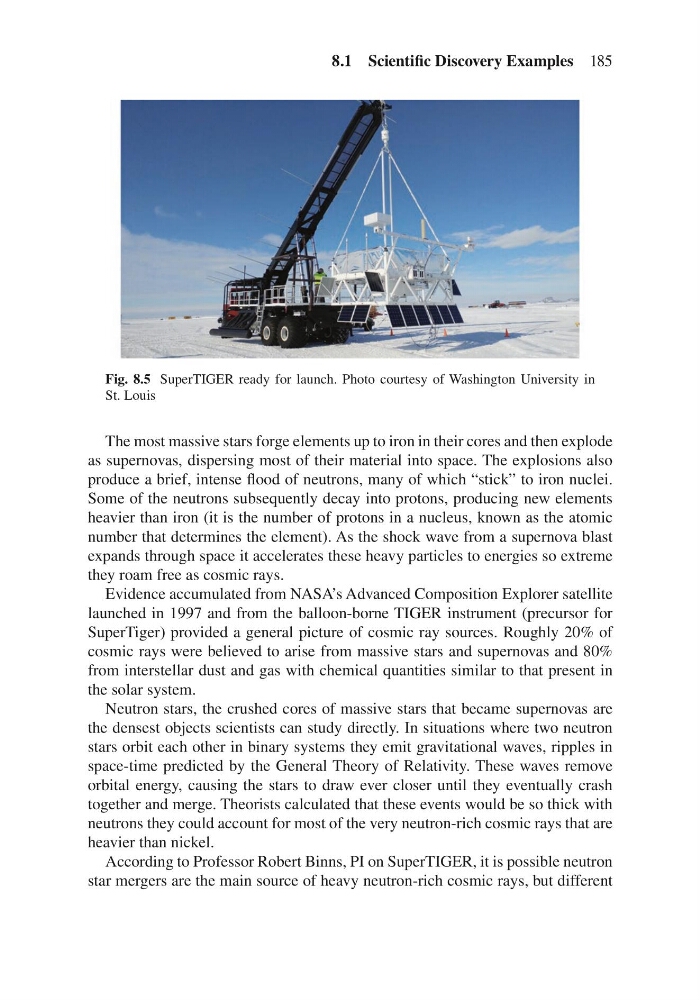
Fig. 8.5 SuperTIGER ready for launch. Photo courtesy of Washington University in
St. Louis
8.1 Scientific Discovery Examples 185
as supernovas, dispersing most of their material into space. The explosions also
produce a brief, intense flood of neutrons, many of which “stick” to iron nuclei.
Some of the neutrons subsequently decay into protons, producing new elements
heavier than iron (it is the number of protons in a nucleus, known as the atomic
number that determines the element). As the shock wave from a supernova blast
expands through space it accelerates these heavy particles to energies so extreme
they roam free as cosmic rays.
Evidence accumulated from NASA’s Advanced Composition Explorer satellite
launched in 1997 and from the balloon-borne TIGER instrument (precursor for
SuperTiger) provided a general picture of cosmic ray sources. Roughly 20% of
cosmic rays were believed to arise from massive stars and supernovas and 80%
from interstellar dust and gas with chemical quantities similar to that present in
the solar system.
Neutron stars, the crushed cores of massive stars that became supernovas are
the densest objects scientists can study directly. In situations where two neutron
stars orbit each other in binary systems they emit gravitational waves, ripples in
space-time predicted by the General Theory of Relativity. These waves remove
orbital energy, causing the stars to draw ever closer until they eventually crash
together and merge. Theorists calculated that these events would be so thick with
neutrons they could account for most of the very neutron-rich cosmic rays that are
heavier than nickel.
According to Professor Robert Binns, PI on SuperTIGER, it is possible neutron
star mergers are the main source of heavy neutron-rich cosmic rays, but different
Fig. 8.5 SuperTIGER ready for launch. Photo courtesy of Washington University in
St. Louis
8.1 Scientific Discovery Examples 185